Tag: Payment Processing

  • Restaurant EPOS System: The Ultimate UK Merchant’s Guide for 2026

    Restaurant EPOS System: The Ultimate UK Merchant’s Guide for 2026

    Did you know that 60% of UK restaurant owners are entering 2026 with deep concerns about staffing shortages? This reality makes your restaurant epos system the central hub of your entire operation. You have likely seen opaque transaction charges eating into slim hospitality margins. It is frustrating to wait days for your own money to arrive whilst hardware fails during a frantic Saturday night service. We understand that you need a solution that is as dependable as your head chef.

    You deserve a partner that offers pure transparency and next-day funding to manage your suppliers better. This guide shows you how to choose an integrated EPOS to streamline your operations and slash unnecessary transaction costs. We will explore the latest PCI DSS 4.0 compliance standards and the shift toward AI-driven automation. You will learn how to achieve faster table turnover and a transparent, transaction-based pricing model that protects your hard-earned profit.

    Key Takeaways

    • Learn how a modern restaurant epos system acts as a digital hub to bridge the gap between front-of-house service and back-office efficiency.
    • Discover the essential features like floor plan management and Kitchen Display Systems that eliminate paper waste and accelerate table turnover.
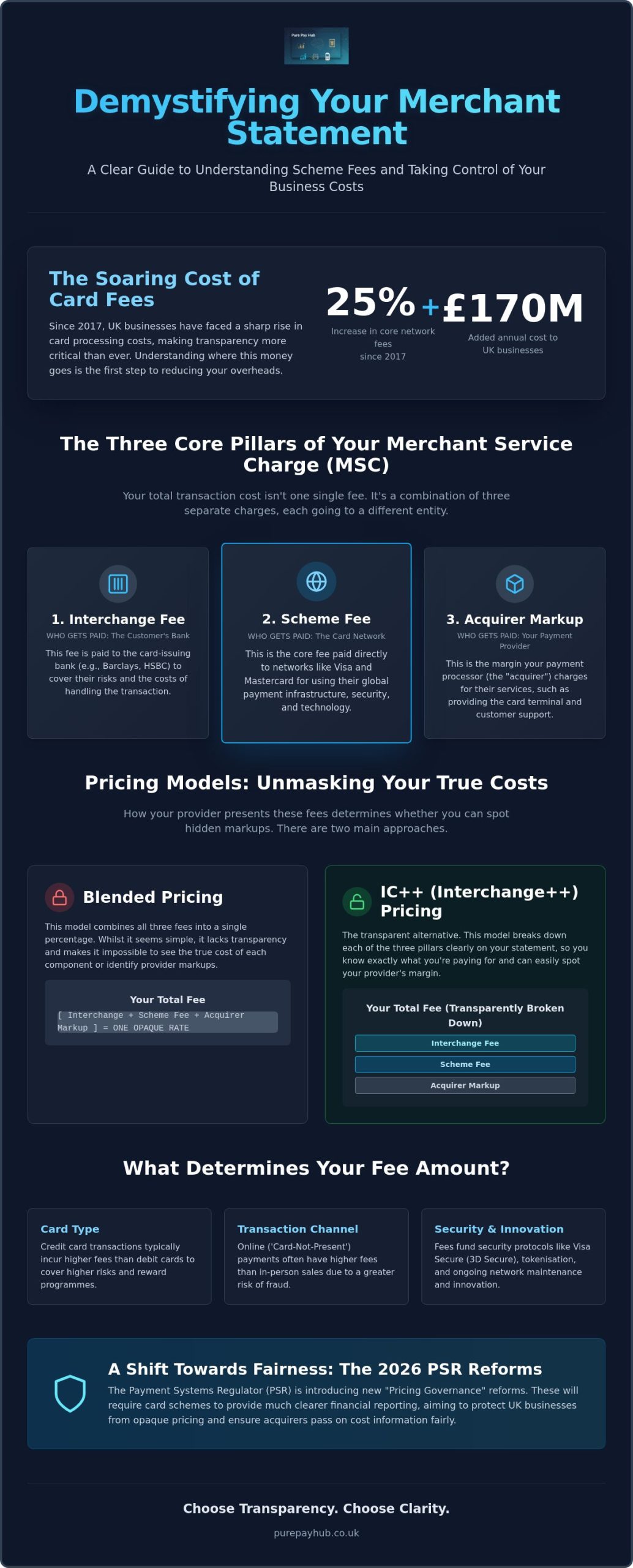
    • Demystify the complex world of interchange fees to ensure your profit isn’t eroded by hidden markups or opaque pricing structures.
    • Determine the ideal hardware mix for your service style, comparing the reliability of countertop units with the flexibility of portable machines.
    • See how next-day funding creates a stable cash flow environment, allowing you to settle with suppliers and staff without the usual banking delays.

    What is a Restaurant EPOS System and Why Does Your Venue Need One?

    A restaurant epos system is no longer just a digital till for holding cash. In the modern UK hospitality sector, it is the central heartbeat of your entire venue. Short for Electronic Point of Sale, this technology integrates hardware and software to manage sales, inventory, and staff performance in one place. Unlike the clunky, isolated registers of the past, these systems act as a “Hub” for your entire business operation. They ensure that a pint ordered at the bar is instantly reflected in your stock levels and financial reports. This level of synchronisation is what separates a struggling café from a thriving restaurant.

    The shift from traditional cash registers to integrated digital hubs has been rapid. A standard Point of Sale (POS) system now handles everything from table bookings to complex split-bill payments. This modernisation is a “Pure” necessity for any merchant aiming to grow in 2026. With contactless transactions making up 95% of in-store card payments as of 2024, your hardware must be fast and reliable. Customers expect a seamless experience. If your tech lags during a peak Saturday night, your reputation and your bottom line will suffer. Furthermore, with PCI DSS 4.0 requirements now mandatory, having a secure, updated system is essential to protect your business from data breaches and heavy fines.

    The Evolution of the Hospitality Hub

    We’ve moved beyond simple transactions into the era of data-driven guest management. Modern systems allow you to track customer preferences and dining habits with precision. This centralisation reduces human error significantly. When a waiter enters an order into a handheld device, it goes straight to the kitchen display. No more lost paper tickets or misread handwriting. Cloud-based technology is now the industry standard. It gives you the power to monitor your restaurant’s performance from your phone, whether you’re on-site or at home. You can adjust menu prices or check live sales figures in seconds.

    Key Benefits: Efficiency, Accuracy, and Growth

    Efficiency is the primary driver of profit in an industry with slim margins. An integrated restaurant epos system slashes “table-to-till” lag time, allowing your staff to focus on service rather than admin. Consider these key advantages:

    • Improved Accuracy: Precise order entry means fewer “comps” for incorrect dishes and less food waste in the kitchen.
    • Menu Engineering: Use integrated stats to identify your most profitable items. If a high-margin dish isn’t selling, you’ll know by Tuesday morning and can adjust your strategy.
    • Staff Management: Track which servers turn tables fastest and identify training needs based on hard data rather than guesswork.

    The UK hospitality market is projected to reach £99 billion by 2032. To claim your share, you need tools that support growth and scale with you. Accuracy in your kitchen leads to happier guests and better reviews. When your front-of-house and back-of-house are in perfect sync, your venue runs like a well-oiled machine. It’s about creating a transparent environment where every penny is accounted for and every customer feels valued.

    Core Features of a High-Performing Restaurant EPOS

    A high-performing restaurant epos system is defined by its ability to simplify complex tasks. It isn’t just about the hardware; it’s about the software’s capacity to mirror your physical space. Table and floor plan management allows you to customise layouts in real-time. This visual aid helps staff identify which tables are waiting for drinks or nearing the end of their meal. This clarity can increase table turnover speed by 20% during peak service. When every minute counts, having a clear view of your dining room is essential to maintaining a steady flow of guests.

    Integrating a Kitchen Display System (KDS) removes the chaos of paper tickets. Orders from the floor appear instantly on screens in the kitchen, organised by priority. This eliminates lost chits and ensures your head chef stays in control. Beyond the kitchen, automated inventory alerts protect your margins. You can set notifications for when favourite ingredients, like your Sunday roast essentials, run low. This proactive approach prevents the dreaded conversation where staff must tell a guest that a popular dish is unavailable. The cost of a POS system is often justified by these efficiency gains and the reduction in food waste.

    Staff management tools within the hub allow you to track individual performance with ease. You can see who is upselling effectively and organise rotas based on historical sales data. This level of insight turns a good venue into a highly profitable one. It creates a transparent environment where hard work is recognised and training needs are identified through hard data. If you’re looking to streamline your venue’s workflow, exploring an integrated restaurant epos system is the first step toward better management and long-term growth.

    Intuitive Order and Table Management

    The “park order” function is a game-changer for venues with a bar area. It allows staff to start a tab at the bar and seamlessly transfer it to a table once the party is seated. Split-billing capabilities are equally vital for a modern experience. In 2026, guests expect to pay for exactly what they consumed without a 10-minute struggle at the till. Making the end-of-meal process painless ensures your guests leave on a high note and are more likely to return.

    Advanced Kitchen and Inventory Sync

    KDS technology improves communication between chefs and servers by providing a real-time status of every dish. Front-of-house staff don’t have to interrupt the kitchen to ask for updates, which keeps the kitchen focused on quality. Ingredient-level tracking allows you to manage the cost versus profit on every plate you serve. By automating resupply orders, you ensure your kitchen is always stocked with the essentials. This level of automation reduces the administrative burden on your management team, allowing them to focus on guest satisfaction.

    Restaurant EPOS System: The Ultimate UK Merchant’s Guide for 2026

    Many UK merchants find the world of card processing intentionally murky. Traditional banks often use complex jargon to hide high interchange fees and service charges. A transparent restaurant epos system should do the exact opposite. Transaction-based pricing is the fairest model for the hospitality sector. It ensures you only pay for the service you actually use. Flat-rate models might seem simple at first glance, but they often result in you subsidising the provider’s risk. If your business processes a high volume of debit cards, paying a flat 1.75% fee is a significant and unnecessary drain on your weekly cash flow.

    We advocate for a “Pure” approach where debit rates start at a competitive 0.3%. This strategy prioritises your margins over corporate profit. Some owners worry that switching providers is too expensive or time-consuming. However, a 1% saving on a £500,000 annual turnover puts £5,000 back into your pocket every year. When choosing the best restaurant POS system, look for partners who offer clear, itemised reporting. This transparency is essential for your monthly accounting. It helps you spot any unexpected discrepancies early and ensures your financial records are always accurate.

    Understanding the Fee Structure

    Clarity starts with knowing exactly what you pay for each tap or insert. We break this down simply: debit card processing at 0.3% and credit cards at 0.5%. Many bundled contracts include “hidden markups” that inflate these base rates without providing extra value. These extra costs are often buried in the small print of a long-term agreement. Transparent reporting allows you to see the “interchange” cost versus the “service” fee. This level of detail is vital for maintaining a healthy balance sheet in a competitive market where every penny counts.

    Hardware Rental vs. Outright Purchase

    Choosing between renting or buying your hardware depends on your long-term growth plans. Monthly hardware rental is often the smarter choice for busy venues. It includes ongoing maintenance and technical support, ensuring you are never left stranded during a frantic Saturday night rush. Countertop units are reliable for fixed points like bars or takeaway counters. Portable machines are essential for full table service, allowing staff to take payments without leaving the guest’s side. This flexibility improves the customer experience and speeds up the final stage of the meal.

    All hardware must be compliant with PCI DSS 4.0 standards. These new requirements became mandatory on March 31, 2025. Failing to meet these updated security rules can lead to monthly non-compliance fines that quickly erode your savings. Investing in modern, compliant hardware is a direct investment in your business’s security and reputation. It provides peace of mind that your customer data is always protected from potential breaches. Reliable hardware means fewer service interruptions and a more professional environment for your staff and guests alike.

    Choosing the Right Hardware: Countertop vs. Portable Machines

    Your service style is the blueprint for your hardware needs. A bustling quick-service cafe has different requirements than a sophisticated full-service restaurant. In 2026, the visual appeal of your restaurant epos system matters as much as its processing speed. Sleek, modern aesthetics reflect your brand’s quality. Bulky, beige terminals are a thing of the past. You need hardware that blends into a high-end interior whilst remaining rugged enough for daily use. This balance of form and function ensures your staff feel confident and your guests feel impressed.

    Hospitality is a high-impact environment. Hardware must be durable. Spilt drinks and accidental drops are inevitable during a busy shift. Look for devices with high IP ratings for waterproofing and reinforced casings for drop-resistance. This longevity ensures your investment lasts for years rather than months. Reliability is the cornerstone of a successful service. When your hardware is built to last, you avoid the stress of mid-service failures that disrupt your operations and frustrate your team.

    Digital wallet integration is now a non-negotiable standard. With nearly 95% of in-store transactions being contactless as of 2024, your machines must support Apple Pay and Google Pay flawlessly. This speed at the point of sale keeps queues moving and customers happy. It also aligns with the removal of the mandatory £100 contactless limit in March 2026, giving your guests more flexibility in how they pay. If you’re ready to upgrade your hardware, view our range of sleek card machines designed for modern hospitality.

    The Countertop Powerhouse

    Fixed terminals are the workhorses of quick-service venues. They provide a stable point of sale for high-volume transactions at a single point. Integrated receipt printers and customer-facing displays create a professional “Hub” at the counter. We recommend a wired ethernet connection for these units. It provides the ultimate stability, especially in older UK buildings with thick walls that can interfere with Wi-Fi signals. A stable connection means no lag during the morning coffee rush.

    Mobile and Portable Flexibility

    Taking the till to the table is the gold standard for full table service. Portable machines allow staff to process orders and payments without leaving the guest’s side. This convenience naturally increases “upsell” opportunities. It’s much easier for a guest to order another round of drinks if the server can add it to the bill instantly. For outdoor seating areas or pop-up events, ensure your devices have 4G roaming capabilities. This prevents service interruptions when the Wi-Fi signal drops, ensuring a “Pure” and uninterrupted payment experience for every guest.

    The PurePay Hub Advantage: Seamless Integration and Next-Day Funding

    PurePay Hub acts as your dedicated merchant ally in a financial landscape that’s often far too complex. While many providers focus solely on software “bells and whistles”, we prioritise the lifeblood of your business: your cash flow. A restaurant epos system is only effective if it helps you access your hard-earned money without delay. We’ve built our service to be a stabilising force, providing the clarity and speed that traditional banks simply cannot match. Our partnership approach ensures you aren’t just another account number in a distant database.

    Cash flow management remains the biggest hurdle for the 176,685 hospitality businesses currently operating in the UK. With 99.6% of these being small or medium-sized enterprises, every day spent waiting for funds impacts your ability to grow. We provide Business Cash Advances that facilitate expansion based on your future card turnover. This means you can invest in new equipment or refurbish your dining room without the rigid constraints of a traditional bank loan. It’s a transparent way to fuel your ambition using the steady momentum of your own sales.

    Next-Day Access to Your Funds

    Waiting three to five working days for your funds to clear is a relic of the past that your business cannot afford. Faster funding allows you to negotiate significantly better terms with your food and drink suppliers, as you can settle invoices with confidence and speed. Next-Day Funding is the definitive operational standard for the UK hospitality sector in 2026. This rapid access ensures your weekend takings are available to cover staff wages or emergency repairs by Monday morning. It removes the stress of “penniless” weekends and puts you back in control of your financial destiny.

    Support and Partnership

    We provide UK-based technical support that’s available whilst your restaurant is actually open and serving guests. There’s nothing more frustrating than a system glitch during a Saturday night rush with no one to call. Our team understands the urgency of hospitality and speaks your language, avoiding corporate jargon at every turn. We also take the weight of PCI compliance management off your shoulders. By handling the complex security requirements of the 2025 PCI DSS 4.0 standards, we let you focus on what you do best: providing an exceptional dining experience. We believe in a no-nonsense onboarding process that gets your restaurant epos system live and taking payments in record time.

    Organise a transparent quote for your restaurant EPOS today and experience the difference of a partner that values your profit as much as you do.

    Secure Your Venue’s Future and Profitability

    Choosing the right restaurant epos system is the most impactful decision you’ll make for your venue this year. You’ve seen how integrated hardware and transparent, transaction-based pricing protect your margins whilst improving table turnover. By moving away from opaque fee structures, you reclaim total control over your business finances. We believe your success depends on a partnership built on honesty, clarity, and technical excellence. It’s about turning your payment terminal into a stabilising force for your entire operation.

    Accessing your funds shouldn’t be a waiting game in a fast-paced hospitality environment. With next-day funding as standard and debit card rates starting from 0.3%, we provide the stability you need to manage suppliers and staff with absolute confidence. There are no hidden monthly markups to surprise you when you check your statements. It’s time to simplify your operations and focus on delivering the exceptional service your guests expect. We’re here to help you grow with tools that work as hard as you do.

    Get your free, no-obligation restaurant EPOS quote from PurePay Hub and start your journey toward a fairer, more profitable future today. We look forward to supporting your restaurant’s growth.

    Frequently Asked Questions

    How much does a restaurant EPOS system cost in the UK?

    Typical monthly software costs range from £20 to £150, whilst upfront hardware bundles generally fall between £500 and £2,500. For instance, basic cloud-based plans from major providers often start around £69 per month. These costs vary based on the number of terminals and the complexity of your floor plan. Investing in a reliable restaurant epos system ensures you avoid the long-term costs of manual errors and slow service.

    Can I use my existing card machine with a new EPOS system?

    Integration depends on whether your current hardware is “open” or “locked” to a specific merchant acquirer. Many traditional providers lock their terminals to prevent you from switching to a fairer rate. We specialise in seamless integration to ensure your front-of-house hardware talks to your back-office software without friction. It’s best to check compatibility before signing a new contract to avoid unnecessary hardware replacement costs.

    What is the difference between an EPOS and a standard POS?

    An EPOS system is the modern, cloud-based evolution of a traditional Point of Sale. While a standard POS might only handle the final transaction, an EPOS acts as a digital hub for your entire operation. It manages inventory, tracks staff performance, and provides real-time sales data from any location. This connectivity is essential for the 176,685 hospitality businesses currently operating in the UK market.

    Does a restaurant EPOS system work offline if the Wi-Fi fails?

    Yes, most high-performing systems include an “offline mode” that allows you to continue taking payments if your Wi-Fi fails. The system securely stores transaction data and synchronises with the cloud once the connection is restored. This prevents service interruptions during a busy Saturday night shift. It’s a critical safety net that ensures you never have to turn away a guest due to temporary technical issues.

    How do I switch EPOS providers without paying massive exit fees?

    You should start by reviewing your current contract for specific notice periods or early exit clauses. Some modern providers offer incentives to help cover these costs when you switch to a more transparent, transaction-based model. We recommend moving toward a partnership that avoids hidden monthly markups. This approach protects your margins and makes the transition to a fairer service much easier for your business.

    What are the typical transaction rates for UK restaurants in 2026?

    Standard transaction fees in 2026 typically sit between 1% and 2.5% for most UK providers. However, we advocate for a fairer approach, offering debit rates from 0.3% to help you retain more of your hard-earned profit. This transparency protects your annual balance sheet and overall growth, especially as digital wallets continue to dominate the payment landscape.

    Is next-day funding available for all card types?

    Next-day funding is standard for major card types like Visa and Mastercard through our integrated restaurant epos system. This ensures your weekend takings are in your account by Monday morning to help with urgent supplier payments. Some niche cards may have slightly different clearing cycles depending on the provider. Faster access to your money is a “Pure” necessity for managing a modern hospitality cash flow effectively.

    How does an EPOS system help with VAT and MTD compliance?

    Your system automates VAT calculations for every sale and integrates directly with accounting software for Making Tax Digital (MTD) compliance. This removes the need for manual data entry and reduces the risk of expensive errors in your HMRC submissions. By synchronising your daily sales with platforms like Xero or QuickBooks, you save hours of administrative work every week. It provides a transparent audit trail that simplifies your year-end accounting.

  • Lowest Card Machine Rates for Small Business UK: The 2026 Merchant Guide

    Lowest Card Machine Rates for Small Business UK: The 2026 Merchant Guide

    The “flat-rate” 1.75% fee you are currently paying might feel simple, but it is likely the most expensive way to run your shop or cafe. Whilst providers like Square and SumUp offer predictability, they often mask the reality that UK domestic debit card interchange fees are capped at a mere 0.2%. If you are hunting for the lowest card machine rates for small business UK, chasing a single headline figure is a trap that hides significant markups. You need a payment partner that prioritises transaction purity over padded margins.

    We know you are tired of seeing your cash flow throttled by three-day settlement delays and confusing monthly statements. This guide promises to show you how to slash transaction costs to sub-0.5% for debit cards while securing the next-day funding your business requires. We will break down the 2026 market landscape, explain the impact of the latest PSD3 regulations, and reveal the most transparent providers available today. It is time to stop settling for opaque pricing and start keeping more of every pound you earn.

    Key Takeaways

    • Understand why the “lowest” rate is subjective and depends entirely on your specific turnover, average transaction value, and industry sector.
    • Learn to decode your merchant statement by identifying the core interchange fee and spotting hidden markups that inflate your monthly costs.
    • Discover why moving from a flat-rate fee to an Interchange Plus model is the most effective way to unlock the lowest card machine rates for small business UK.
    • Follow a clear framework to audit your current payment setup and use your annual card turnover to negotiate a fairer, more transparent deal.
    • Explore how transaction-based purity can provide your business with sub-0.5% rates and next-day funding to significantly improve your cash flow.

    Understanding the UK Card Machine Market in 2026

    Traditional high-street banks no longer hold a monopoly on how you take payments. In 2026, the UK merchant services market has matured into a competitive ecosystem where agility beats legacy. Most business owners are moving away from restrictive bank-led contracts toward specialised providers that treat payment processing as a central financial hub. Finding the lowest card machine rates for small business UK requires looking beyond the big bank logos and understanding how your specific trade impacts your bottom line.

    A “low” rate is entirely subjective. For a high-volume coffee shop with a £5 average transaction value (ATV), a fixed fee might be a burden. Conversely, a luxury furniture retailer with a £2,000 ATV needs a different structure entirely. Your monthly turnover and transaction patterns dictate which pricing model is actually the cheapest. We believe your payment provider should act as a merchant’s ally, offering clarity instead of complexity through a transaction-based “Hub” approach that stabilises your finances.

    The Evolution of Payment Processing for SMEs

    We have moved past the era of clunky, tethered countertop units that restricted service to a single point. Today, UK SMEs favour portable and mobile-first solutions that integrate directly with their EPOS systems. With cash usage predicted to fall to just 4% by 2034, being “cashless” is no longer an option; it is the non-negotiable standard. We advocate for “Pure” processing, which ensures your transaction data is untainted by the legacy markups that traditional banks still try to enforce. This shift allows you to accept payments anywhere in your premises, matching the modern consumer’s expectation for speed and convenience.

    Why Headline Rates Can Be Deceptive

    Flashy marketing often hides an expensive reality. Many providers lure you in with “0% for 3 months” offers that eventually revert to punishingly high long-term percentages once the honeymoon period ends. It is vital to distinguish between a merchant account and a payment aggregator. While aggregators offer quick setup, they often lack the depth of a dedicated merchant account when it comes to volume-based discounts. You might start on a flat rate, but as your business grows, that simplicity becomes a tax on your success.

    A critical component of your total cost is Interchange fees, which are the non-negotiable costs paid to the card issuer. To find the lowest card machine rates for small business UK, you must look at the total package, not just the teaser rate. The Merchant Service Charge is the core fee merchants must optimise to ensure they aren’t overpaying for the privilege of getting paid. By stripping away hidden markups, you can finally achieve the transparency your business deserves.

    The Anatomy of Card Processing Fees: What “Lowest” Really Means

    Understanding the true cost of taking payments requires looking past the headline percentage. To secure the lowest card machine rates for small business UK, you must dissect three specific pillars: transaction fees, hardware rental, and administrative charges. Most merchants focus solely on the transaction fee. Yet, monthly hardware rental and admin costs often represent 20% of the total bill for smaller enterprises. This complexity is often a deliberate choice by traditional providers to obscure their margins. PurePay Hub simplifies this by stripping away the jargon and focusing on transaction-based clarity.

    Decoding the Interchange Fee

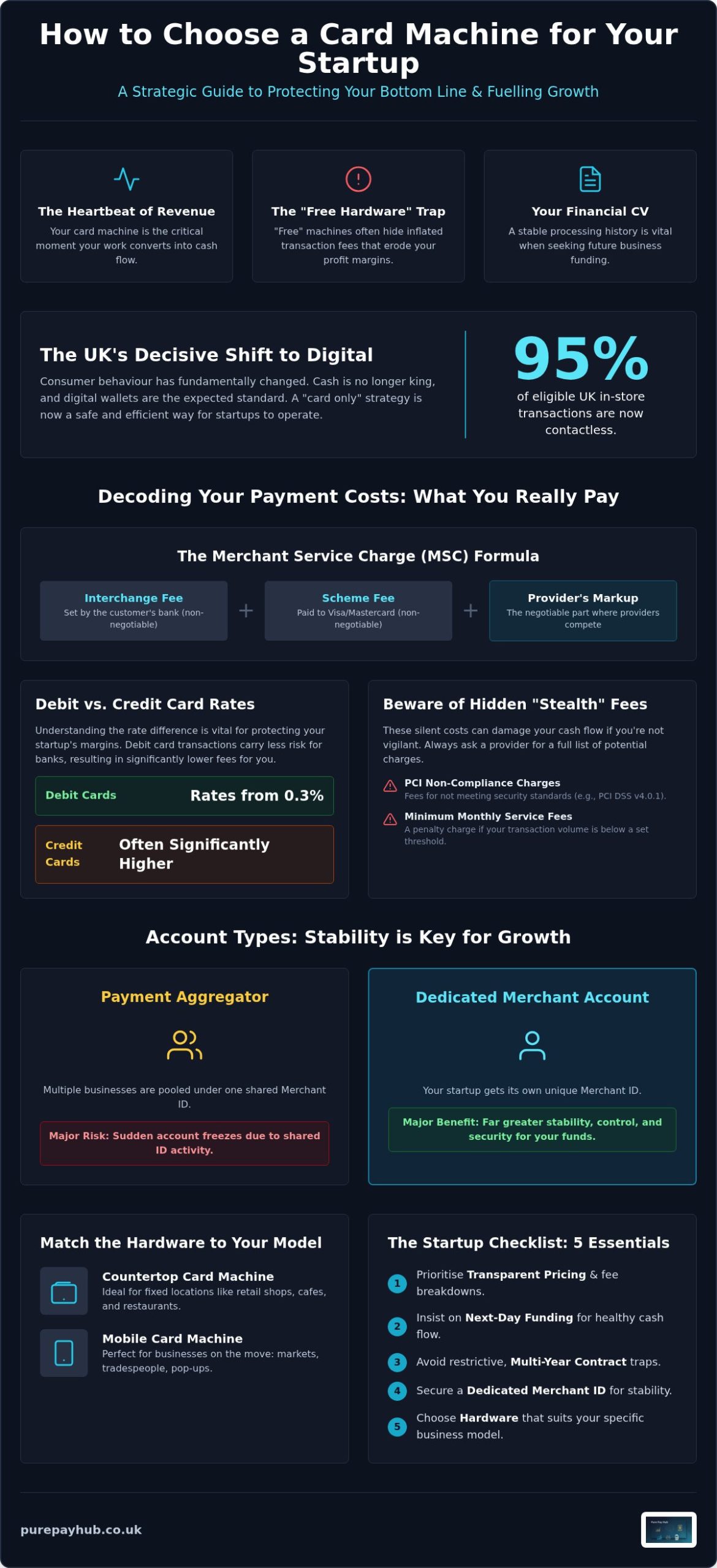
    The interchange fee is the non-negotiable baseline of every transaction. It’s the fee paid to the customer’s bank. In the UK, domestic consumer debit cards are capped at 0.2% and credit cards at 0.3%. These rates are fixed by card schemes like Visa and Mastercard. However, these caps don’t apply to commercial or international cards. Following Brexit, cross-border fees for EEA cards rose significantly, with debit cards hitting 1.15% and credit cards reaching 1.5%. You can find more detail in this complete guide to credit card processing fees to see how these stack against your current statement.

    The “Invisible” Costs: PCI Compliance and Admin

    PCI DSS compliance is a mandatory security standard for everyone accepting card payments. Many providers charge a nominal monthly fee for this, but the real danger lies in “non-compliance” penalties. Some processors use these fines as a profit centre, charging up to £45 per month if your annual self-assessment isn’t updated. It’s a frustrating and unnecessary drain on your resources that many business owners overlook until the statement arrives.

    Hardware rental is another area where costs can creep up. A portable card machine should include all software updates and technical support within the base price. You shouldn’t be charged extra for “gateway fees” or “statement fees” that provide no additional value. We promote “Pure” processing. This means we eliminate the murky “Hub” or “Platform” fees that other companies tack onto your statement. If you want a partner that acts as a transparent merchant ally, it starts with knowing exactly where every penny of your processing fee goes. By removing these hidden layers, you ensure your business keeps more of its hard-earned revenue.

    Lowest Card Machine Rates for Small Business UK: The 2026 Merchant Guide

    Comparing Pricing Models: Flat Rate vs. Interchange Plus

    Choosing between a flat-rate and an Interchange Plus (IC+) model is often the difference between a thriving margin and a struggling one. Flat-rate providers charge a single percentage, typically around 1.75%, regardless of the card type used. This simplicity comes at a high price. High-volume businesses on these plans are effectively subsidising the costs of smaller, riskier merchants. When you pay a flat fee, you are paying a premium for convenience that rarely reflects the actual cost of your specific transactions.

    The Payment Systems Regulator market review highlights how complex fee structures can limit competition and transparency. Over a 12-month period, a typical SME processing £10,000 monthly on a 1.75% flat rate will spend £2,100 in transaction fees. Switching to an IC+ model could reduce this significantly, as it separates the non-negotiable interchange fee from the provider’s markup. This transparency is the only way to secure the lowest card machine rates for small business UK as you scale.

    When is a Flat Rate Actually Better?

    Flat rates are designed for micro-merchants. If your business processes under £2,000 per month, the predictability of a fixed fee is often worth the higher percentage. It suits seasonal sole traders or hobbyist businesses that need a simple “pay-as-you-go” structure without monthly commitments. However, this model quickly becomes a growth trap. As your turnover increases, that 1.75% starts to eat into your scaling margins, costing you hundreds of pounds more than a tailored merchant account would.

    The Power of Interchange Plus (IC+) for Growing SMEs

    Interchange Plus is the gold standard for professional merchant services. It offers total “Pure” transparency by showing you the exact cost of the transaction plus a small, fair margin. For instance, whilst a flat rate might charge you 1.75% for a domestic debit card payment, an IC+ model reveals the 0.2% capped interchange fee and adds a transparent markup. This can lead to an effective rate as low as 0.3% for debit transactions. PurePay Hub specialises in tailoring these rates to business volume. By moving away from the “one-size-fits-all” approach, you ensure your payment setup acts as a central Hub for growth rather than a drain on your resources.

    How to Secure the Lowest Card Machine Rates for Your Business

    Securing a better deal requires more than just a quick search; it demands a forensic look at your current statement. Many providers hide their true margins in a thicket of technical terms. To find the lowest card machine rates for small business UK, you must look beyond the headline percentage and evaluate the total cost of ownership. This involves auditing your existing fees, understanding your leverage, and avoiding long-term terminal rental traps that can cost your business thousands over a three-year contract.

    Your annual Gross Transaction Value (GTV) is your biggest bargaining chip. If your turnover has grown by 20% or more since you last signed a contract, you are likely overpaying. Providers are eager for stable, growing businesses. You should use your actual processing data to demand a bespoke rate rather than accepting a generic off-the-shelf package. Always check for a Minimum Monthly Service Charge (MIRA). If your transaction volume drops during a quiet month, a high MIRA ensures the provider still gets paid, even if you don’t. We believe you should only pay for the value you receive.

    Auditing Your Current Merchant Statement

    The most important number on your statement isn’t the headline rate; it’s your Effective Rate. You calculate this by dividing your total monthly fees by your total turnover. It’s common to see a “headline” rate of 1.5% jump to an effective rate of 2.5% once you add in authorisation fees, which can range from 1p to 5p per tap. Check your statement for “Minimum Monthly Fees” and “PCI Non-Compliance” charges. These small, recurring amounts are designed to stay under the radar whilst padding the processor’s profits. Identifying these markups is the first step toward reclaiming your margin.

    Switching Providers Without the Stress

    The fear of downtime often keeps merchants trapped in bad contracts. However, the “Right to Switch” and modern onboarding processes have made the transition smoother than ever. Most exit fees can be offset by the savings you’ll make in the first three months with a fairer partner. The key is ensuring your new Merchant IDs (MIDs) are ready before you disconnect your old hardware. PurePay Hub offers quick onboarding to facilitate seamless transitions, acting as a supportive ally throughout the move. If you are ready to stop the drain on your profits, you can get a transparent fee audit today and see the difference transaction-based purity makes.

    PurePay Hub: Transparent, Transaction-Based Payments for UK Growth

    PurePay Hub isn’t just another payment processor. We act as your merchant’s ally by stripping away the complexity that traditional banks rely on to inflate their profits. By focusing on transaction-based purity, we offer starting rates of 0.3% for debit cards and 0.5% for credit cards. These figures represent some of the lowest card machine rates for small business UK currently available. We understand that a low rate is only half the battle. Your business also needs liquidity to thrive.

    Whilst traditional banks might keep you waiting up to five working days for your own money, we provide next-day access to funds as standard. This ensures you can restock inventory or pay staff without the stress of delayed settlements. This integrated approach turns your payment terminal from a simple tool into a central Hub for financial stability. We provide the transparency you need to plan for the future with confidence and clarity.

    Fairness and Clarity as Standard

    We take a no-nonsense approach to fee structures. Unlike shared aggregators that often provide limited support and opaque pricing, we give you a dedicated merchant account tailored to your specific turnover. This direct relationship allows for greater flexibility and lower costs as you scale. If your business requires a boost for expansion, we also offer Business Cash Advances based on your card sales. This growth tool provides a fair alternative to traditional bank loans, with repayments that fluctuate naturally with your daily takings. You only pay back more when you are busy, and less when things are quiet.

    Choosing Your Hardware: From Countertop to Mobile

    Every UK business has unique requirements for its physical point of sale. We offer a range of solutions to fit your specific sector:

    • Countertop Card Machines: Ideal for retail shops or pharmacies with a fixed till point and a stable internet connection.
    • Portable Card Machines: Perfect for restaurants or cafes that need to take payments at the table via Wi-Fi or Bluetooth.
    • Mobile Card Machines: A must-have for tradespeople or market stalls that require GPRS or 4G connectivity on the move.

    Integrating these terminals with your EPOS system further reduces admin time and eliminates costly manual accounting errors. It’s about more than just a machine; it’s about a partnership that supports your long-term growth. Get a transparent quote from PurePay Hub today and start keeping more of every transaction your business processes.

    Take Control of Your Transaction Costs

    Finding the lowest card machine rates for small business UK isn’t about luck; it’s about data and transparency. You’ve seen how auditing your monthly statements can uncover hidden authorisation fees and why the common flat-rate model often acts as a growth tax on your success. By switching to a transaction-based model, you reclaim the margin that traditional banks have quietly siphoned away for years. It is time to treat your payment processing as a strategic asset rather than a fixed expense that drains your monthly revenue.

    PurePay Hub provides the clarity you need to scale with confidence. We offer debit rates starting from 0.3% and ensure your cash flow remains healthy with next-day funding available as standard. You won’t find any hidden markups or murky fee structures here. We act as your merchant ally, providing the honest partnership your business deserves to thrive in a competitive market. Secure your lowest card machine rate with PurePay Hub today and keep more of your hard-earned revenue. Your business deserves a fair deal.

    Frequently Asked Questions

    What is the average card machine rate for a small business in the UK?

    The average flat rate for a UK small business is 1.75% per transaction. However, this figure is often much higher than the actual cost of processing, as domestic debit interchange is capped at 0.2%. If you process over £2,000 monthly, you should move away from averages and seek the lowest card machine rates for small business UK through an Interchange Plus model.

    Is it cheaper to buy or rent a card machine for my business?

    Choosing between buying or renting depends on your monthly turnover and need for technical support. Buying a terminal upfront for around £19 plus VAT removes monthly rental costs, which suits micro-merchants or seasonal traders. For established SMEs, renting a professional portable card machine ensures you receive essential software updates and 24/7 technical support without a large initial capital outlay.

    How do I avoid high exit fees when switching card machine providers?

    You can avoid high exit fees by prioritising providers that offer rolling monthly contracts or shorter 12-month terms. Always scrutinise the “Term” section of your agreement before signing. If you are already trapped, some new providers might offer to cover a portion of your exit costs to help you switch to a fairer, more transparent processing model.

    What is the difference between a transaction fee and a merchant service charge?

    A transaction fee is typically a fixed cost in pence for each tap or dip of a card. The Merchant Service Charge (MSC) is the percentage fee applied to the total value of the sale. To find the lowest card machine rates for small business UK, you must look at the combined total of both these figures on your monthly statement.

    Can I get a card machine with no monthly fees as a sole trader?

    Sole traders can access card machines with no monthly fees through payment aggregators. These providers don’t charge for the Hub or platform access, but they compensate for this with much higher transaction percentages, often 1.75% or more. It’s a trade-off between fixed monthly costs and the variable cost of every sale you make.

    What happens if my business doesn’t meet the minimum monthly transaction volume?

    If your business fails to meet a specific transaction threshold, you may be charged a Minimum Monthly Service Charge (MIRA). This fee ensures the provider covers their overheads even during your quietest months. It’s usually a fixed amount, such as £10 or £15, which is only billed if your total transaction fees for that month fall below that level.

    How long does it take for card payments to reach my UK bank account?

    Card payments typically reach UK bank accounts within one to three working days. Whilst traditional banks and older processors often lean toward the longer end of this scale, modern fintech partners prioritise your cash flow. PurePay Hub offers next-day access to funds to ensure your business remains liquid and ready for daily operational expenses.

    Are there extra charges for accepting Apple Pay or Google Pay?

    There are no additional fees specifically for accepting Apple Pay or Google Pay on your terminal. These digital wallet payments are processed as standard contactless transactions using the underlying card’s domestic or international rate. They are a secure, high-speed way to take payments that 85% of UK consumers now prefer over cash.

  • How to Reduce Customer Queue Times in Retail: A Guide for UK Merchants

    How to Reduce Customer Queue Times in Retail: A Guide for UK Merchants

    Did you know that 86% of shoppers identify waiting in line as their single biggest frustration when shopping in-store? According to QueueAway data from March 2026, approximately 32% of your customers will walk out and abandon their purchase if they see a long queue. You’ve likely felt that familiar sting of watching a potential sale leave because your checkout process couldn’t keep up. Learning how to reduce customer queue times in retail is now essential for any UK merchant wanting to protect their bottom line.

    We believe your payment processing should be pure, fast, and completely transparent. This guide provides practical strategies to remove the technical friction that causes transaction lag at your point of sale. You’ll discover how to leverage modern portable card machines and integrated EPOS systems to increase your turnover. We’ll also explore how to use trading data to manage peak hours effectively, ensuring your staff stay calm and your customers leave with a smile. It’s time to turn your checkout from a bottleneck into a competitive advantage.

    Key Takeaways

    • Understand the financial cost of queue abandonment and learn exactly how to reduce customer queue times in retail by removing technical friction at the point of sale.
    • Discover how to conduct a professional checkout audit to identify whether your bottlenecks are caused by staff scanning lag or slow card machine processing.
    • Learn the practical steps to transition from manual data entry to an integrated EPOS system for faster, error-free transactions during peak hours.
    • Evaluate the efficiency of different physical queuing layouts versus digital solutions to ensure your store remains organised and productive.
    • Identify how speed-optimised portable hardware and transparent, transaction-based pricing can help you scale your business without the burden of hidden fees.

    The Real Cost of Long Queues in UK Retail

    Every second your customers spend standing still is a second they spend reconsidering their purchase. In UK retail, the financial impact of a slow checkout is stark. Recent data from QueueAway (March 2026) shows that 32% of shoppers will abandon their basket if they perceive the wait to be too long. This isn’t just a lost sale today; it’s a direct hit to your bottom line that compounds over time. Understanding the principles of Queueing theory helps merchants identify where these bottlenecks form and why they matter.

    It’s vital to distinguish between dwell time and transaction time. Dwell time represents the valuable minutes customers spend browsing your aisles, which you want to maximise. Transaction time is the purely functional period spent at the till, which you must minimise. When transaction time bleeds into the shopping experience, it creates friction. Learning how to reduce customer queue times in retail is about protecting that positive browsing experience from being overshadowed by a frustrating exit.

    Queue psychology is the study of how the human brain perceives wait times based on environmental factors and social fairness. By 2026, consumer patience has reached a record low. With 95% of transactions being contactless and the FCA removing the £100 single-transaction limit in March 2026, shoppers expect instant results. They don’t compare your queue to the shop next door; they compare it to the speed of a digital “one-click” purchase.

    Understanding Queue Abandonment

    For many shoppers, especially Millennials and Gen Z, the tipping point occurs between three and five minutes. Once a customer crosses this threshold, the perceived value of the item often drops below the perceived “cost” of the wait. This abandonment destroys customer lifetime value. A shopper who leaves empty-handed today is 73% less likely to return. Visible queues also act as a deterrent for new footfall, stopping potential sales before they even enter your shop.

    The Psychology of Waiting

    Perception is often more important than reality. Actual wait time is measured with a stopwatch, but perceived wait time is what the customer feels. Unoccupied time feels significantly longer than occupied time. You can reduce frustration by keeping customers engaged or providing clear signage. When shoppers see an organised system, their anxiety levels drop. Mastering how to reduce customer queue times in retail requires balancing technical speed with these psychological cues.

    Identifying Friction Points in Your Checkout Flow

    To understand how to reduce customer queue times in retail, you must first measure the problem with precision. Start by conducting a professional “checkout audit” during your busiest trading window. Use a stopwatch to track the time from when a customer reaches the counter to the moment the receipt prints. You’ll likely discover that seconds are leaked during the “scanning lag” or when staff struggle with manual data entry. Staff training plays a vital role here. If your team isn’t confident with the EPOS interface, errors will occur. These mistakes don’t just cost money; they stop the flow of your entire shop.

    A critical factor often missed by UK merchants is the difference between occupied and unoccupied time. As explored in the psychology of waiting in lines, customers who are mentally engaged feel the wait is significantly shorter. If a shopper is simply staring at a frozen screen, every second feels like ten. This is why outdated hardware is a silent killer of transaction speed. Upgrading to a high-speed Portable Card Machine can solve many of these technical delays by allowing you to take payments anywhere on the shop floor.

    Technical Bottlenecks: Card Machine Lag

    Your card machine’s “handshake” with the merchant bank should be near-instant. If you’re still relying on patchy Wi-Fi or legacy connections, you’re building a queue by default. In 2024, almost 95% of in-store transactions were contactless, according to Barclays research. This means your customers expect a “tap and go” experience. Any delay in processing signals a lack of efficiency and increases the risk of queue abandonment. High-speed, PCI-compliant processing is now a baseline requirement for maintaining turnover.

    Layout and Merchandising Friction

    Poor shop layout often causes accidental bottlenecks. While impulse buy displays increase margins, they shouldn’t block the physical path to the exit. Analyse your counter height and bag-packing space. If a customer cannot bag their items comfortably, the next person in line cannot start their transaction. It’s a domino effect that slows everyone down. Organising your queue area to keep aisles clear ensures that browsing customers aren’t put off by the crowd at the till. A well-designed “payment zone” respects the customer’s personal space and speeds up the final step of their journey.

    How to Reduce Customer Queue Times in Retail: A Guide for UK Merchants

    Digital vs Physical: Strategies to Minimise Wait Times

    Choosing between a single-line serpentine queue and a multi-checkout system depends on your shop’s footprint and typical basket size. Research into the effect of express checkouts suggests that separating small basket transactions can significantly improve flow and perceived fairness. For a small UK retailer, this doesn’t always require a dedicated physical lane. It might simply mean having a staff member ready with a Mobile Card Machine to process shoppers with one or two items. Understanding how to reduce customer queue times in retail involves balancing this physical layout with digital agility.

    Self-service kiosks are an option for high-volume environments, but they often lack the personal touch that defines local British businesses. A more effective middle ground is the use of integrated EPOS Systems. These systems synchronise your stock and sales data instantly, removing the need for staff to double-check prices or manual inventory levels during a transaction. When your digital and physical systems talk to each other, the “transaction lag” we identified earlier virtually disappears. We see this as the “Pure” approach to retail; it’s clean, fast, and removes the clutter from your counter.

    Staffing Models for Peak Periods

    Success during peak trading hours relies on a flexible “float” staff method. This involves moving team members from merchandising or stockroom duties to the tills the moment a queue exceeds three people. You can take this further by implementing “queue busting.” Instead of waiting for customers to reach the counter, a staff member can use a Portable Card Machine to take payments from people whilst they are still in line. This is particularly effective for handling complex transactions like returns or exchanges away from the main till, keeping the primary flow moving for simple purchases.

    Technology Integration

    Integrated payments are the cornerstone of a modern checkout. When your card terminal is linked directly to your EPOS, you eliminate the risk of manual entry errors. This doesn’t just save money; it saves time. The rise of NFC technology has made the “tap and go” process the standard for UK shoppers. By using the data from your POS, you can predict exactly when your peak hours will occur each week. This allows you to organise your staff rotas with precision, ensuring you’re never understaffed when the rush begins. At PurePay Hub, we act as your merchant’s ally by providing the tools that turn these data insights into faster transaction speeds.

    A Step-by-Step Guide to Streamlining Your In-Store Experience

    Moving from theory to practice requires a structured approach. If you want to master how to reduce customer queue times in retail, you must treat your checkout as a data-driven process. Follow these five steps to identify and eliminate the friction points holding your business back.

    • Step 1: Conduct a Peak-Hour Audit. Grab a stopwatch during your busiest window, typically between 12:00 and 14:00 on a Saturday. Measure the time from the first item scanned to the final receipt print. If this exceeds 60 seconds for a standard basket, you have a bottleneck.
    • Step 2: Upgrade to an Integrated EPOS System. Manual data entry is the enemy of speed. An integrated system ensures your till and card terminal talk to each other instantly. This removes the need for staff to double-key amounts, which prevents errors and saves roughly 10 to 15 seconds per transaction.
    • Step 3: Deploy Portable Card Machines. Don’t let your counter be the only place people can pay. Use a Portable Card Machine to bust queues by serving customers whilst they are still standing in line. This is especially effective during seasonal rushes.
    • Step 4: Optimise Your Connectivity. For countertop units, an Ethernet connection is always superior to Wi-Fi. It provides a dedicated, stable line that ensures your terminal’s “handshake” with the bank is near-instant.
    • Step 5: Refine Staff Incentive Programmes. Motivate your team based on checkout throughput and accuracy. High-performing staff should be recognised for maintaining a steady flow without sacrificing the quality of the customer interaction.

    Optimising the Payment Moment

    The technical “handshake” between your card reader and the merchant bank is often where seconds are lost. A slow connection can add five seconds to every transaction. Over 100 customers, that’s nearly ten minutes of pure delay. Ensure your hardware is set for the fastest possible response. We also recommend choosing a provider that offers next-day funding. This maintains your operational momentum, allowing you to reinvest in your shop’s efficiency without waiting days for your hard-earned capital to arrive.

    Monitoring and Feedback

    Your checkout flow should evolve alongside your business. Regularly review your transaction logs to spot patterns in slow service times. Is it always a Tuesday morning? Perhaps that’s when a specific staff member needs more training. Use customer feedback to identify “invisible” frustrations, such as a lack of bagging space or confusing signage. Continuous improvement ensures that your transaction speed remains a core strength of your brand. It’s about creating a pure, frictionless journey from the aisle to the exit.

    How PurePay Hub Optimises Your Transaction Speed

    We’ve discussed the technical and psychological barriers to a fast checkout. Now, you need the right tools to implement those changes. PurePay Hub provides speed-focused hardware designed specifically for the pace of UK high streets. Our Countertop and Portable card machines are engineered to eliminate the “handshake” lag that causes queues to stall. When you understand how to reduce customer queue times in retail, you realise that hardware is your first line of defence. Choosing a partner that prioritises purity in processing ensures every tap, dip, or swipe happens in a heartbeat.

    Our approach is built on transparency and fairness. We offer a transaction-based fee model with rates as low as 0.3% for debit cards and 0.5% for credit cards. There are no long-term contracts or hidden monthly service fees for basic accounts. This means you can grow your volume during peak seasons without being penalised by murky markups. We act as a central, stabilising force for your business finances. This is the “Hub” concept; it’s one reliable place for all your retail payment needs.

    Getting started shouldn’t be a hurdle. Our no-nonsense onboarding process is designed to get you taking payments faster than traditional banks. We understand that every day spent waiting for a terminal is a day of lost revenue. By simplifying the technicalities, we help you focus on how to reduce customer queue times in retail through better service and faster hardware.

    Integrated EPOS for Seamless Retail

    Our EPOS systems are built to talk directly to our card machines. This integration saves vital seconds per customer by removing the need for manual data entry. It also provides real-time reporting. You can see exactly when your shop gets busy, allowing you to organise staff rotas for peak times with total precision. Because our rates are transparent, your business growth is never hindered by unexpected costs. You keep more of what you earn whilst providing a better experience for your shoppers.

    Reliable Support for UK Merchants

    We position ourselves as your ally. If you encounter a technical glitch during a busy Saturday rush, you need a partner who answers the phone. We provide supportive, expert troubleshooting to keep your lines moving. Operational momentum is further supported by our next-day access to funds. You won’t be left waiting for your capital to clear. It’s time to experience a fairer way to process payments. Visit the PurePay Hub homepage for a transparent quote and see how we can transform your checkout speed today.

    Taking Control of Your Shop Floor Flow

    Reducing wait times is about more than just moving faster; it’s about eliminating the technical friction that causes 32% of shoppers to walk away. Throughout this guide, we’ve explored how a simple audit can reveal lost seconds and why integrated technology is the ultimate solution for modern UK merchants. By implementing these practical strategies, you’ll finally master how to reduce customer queue times in retail whilst building a more resilient, data-driven business that respects your customers’ time.

    We’re here to act as your ally with transparent debit rates from 0.3% and integrated UK EPOS solutions that keep your transactions pure and simple. You shouldn’t have to wait days for your money to clear, which is why next-day funding comes as standard for our partners. Switch to PurePay Hub for faster, fairer card payments and start protecting your hard-earned revenue today. Your customers value their time. It’s time to show them you value it just as much. Let’s make your checkout the fastest part of their journey.

    Frequently Asked Questions

    How long is the average acceptable wait time in UK retail?

    Most UK shoppers consider two to three minutes the maximum acceptable wait time before frustration sets in. Research from QueueAway in March 2026 indicates that millennials and Gen Z are the least patient, with many abandoning their purchase after just 180 seconds. In a convenience or high street environment, your goal should be a transaction speed that keeps the line moving every 60 seconds. Exceeding this threshold significantly increases the risk of basket abandonment and lost revenue.

    Can a faster card machine really reduce my queue times?

    A high speed card machine can shave up to ten seconds off every transaction by reducing the “handshake” time between the terminal and the bank. Over 100 customers, this saves nearly 17 minutes of total queue time. It’s a vital part of how to reduce customer queue times in retail because it eliminates technical friction that staff cannot control manually. Modern hardware ensures that the final payment step is the quickest part of the customer journey.

    What is queue busting and how do I implement it?

    Queue busting is the practice of processing payments for customers whilst they are still standing in line. You implement this by deploying Portable Card Machines during peak trading hours. A staff member can walk down the queue and handle simple transactions or returns away from the main counter. This prevents a single complex sale from blocking the entire flow of your shop and makes the wait feel shorter for those remaining in line.

    Are self-checkout systems worth the investment for small shops?

    Self checkout systems are often too expensive and impersonal for small UK retailers. While they can handle high volumes, they require significant floor space and constant supervision to prevent theft or technical errors. Most SMEs find that an integrated EPOS system combined with a portable card terminal offers better value. This setup provides the speed of self service whilst maintaining the personal partnership between the merchant and the customer.

    How does an integrated EPOS system speed up the checkout process?

    Integrated EPOS systems speed up the checkout by eliminating the need for manual data entry. When your till and card terminal are linked, the transaction amount is sent automatically with a single click. This saves approximately 15 seconds per customer and prevents costly human errors. It’s a clean, pure way to manage your sales data without slowing down your customers during the most critical part of their visit.

    What are the best ways to distract customers in a long queue?

    Occupying a customer’s mind reduces their perceived wait time significantly. You can achieve this by placing small, interesting merchandise near the till or using digital signage to display useful shop information. According to established queueing theory, unoccupied time feels much longer than occupied time. Providing a distraction turns a boring wait into an engaging part of the shopping experience, which helps maintain brand loyalty even during busy periods.

    How do I calculate my store’s queue abandonment rate?

    You calculate your queue abandonment rate by comparing your total footfall against completed transactions during a specific peak window. If 100 people enter your shop during a busy hour but only 68 make a purchase, you have a potential abandonment rate of 32%. Use your EPOS data to track these patterns over time. Identifying when these drops occur is the first step in learning how to reduce customer queue times in retail effectively.

    Is contactless payment always faster than Chip and PIN?

    Contactless payment is typically 10 to 15 seconds faster than traditional Chip and PIN. It removes the need for the customer to enter a code or wait for the machine to read the physical chip. As of March 2026, the FCA has removed the £100 single transaction limit for contactless payments. This allows for even faster processing of larger baskets, making it the most efficient method for UK merchants to keep their lines moving.

  • Choosing the Best Countertop Card Machine with Receipt Printer in 2026

    Choosing the Best Countertop Card Machine with Receipt Printer in 2026

    Is your countertop card machine with receipt printer actually a silent drain on your monthly profits? While a fast printer keeps your queues moving, the hidden “admin” fees and opaque markups often attached to these devices can quietly erode your hard-earned margins. You deserve a payment setup that works as hard as you do, providing both hardware reliability and total financial clarity.

    We understand the frustration of seeing complex fee structures eat into your bottom line whilst you wait days for your funds to clear. It’s time to stop settling for “standard” rates that don’t reflect your actual business volume. This guide will show you how to secure a reliable, high-speed terminal that balances modern features with the lowest transaction rates in the UK. You’ll learn how to move away from expensive flat-rate models and embrace a transparent, transaction-based approach that supports your growth.

    We’ll preview the top-rated machines for 2026 that meet the mandatory PCI DSS v4.0 security standards and offer next-day access to your cash. By the end of this article, you’ll know exactly how to choose hardware that makes your checkout fast, fair, and purely professional.

    Key Takeaways

    • Learn why a fixed countertop card machine with receipt printer builds more customer trust and retail stability than portable alternatives.
    • Discover how to slash processing costs by switching from expensive flat rates to transparent, transaction-based pricing models.
    • Identify the essential connectivity and security features, including PCI DSS v4.0 compliance, needed for a reliable 2026 checkout.
    • Master your till point layout to eliminate cable clutter and speed up transaction times for your customers.
    • Find out how to access your money faster with next-day funding that bypasses traditional banking delays.

    Beyond the Tap: Why Your Business Needs a Countertop Card Machine with a Receipt Printer

    A physical receipt is more than just a scrap of paper; it’s a symbol of a completed, professional agreement. Even as we move further into 2026, the psychological impact of a tangible proof of purchase remains significant. Statistics show that 45% of UK consumers still prefer a physical receipt for high-value purchases exceeding £100. This small gesture builds immediate trust and provides peace of mind for both the shopper and the merchant. It signals that your business is established, transparent, and prepared to stand behind every sale.

    For UK VAT-registered businesses, meticulous record-keeping is a legal necessity rather than a choice. Providing a detailed, printed receipt helps your customers manage their own VAT returns whilst ensuring you maintain a clear, physical audit trail for HMRC. This documentation also serves as a vital frontline defence against chargeback anxiety. Having an immediate, printed proof of purchase significantly reduces the likelihood of disputed transactions or “friendly fraud” that can often plague modern retail environments. Choosing a robust payment terminal ensures your business remains the gold standard in professionalism and security.

    Whilst mobile devices have their place, they often lack the gravitas of a fixed unit. A countertop card machine with receipt printer tells your customers that your checkout is a stable, secure point of sale. It eliminates the “where do I pay?” confusion that can occur in busy retail spaces, creating a dedicated centre for your financial operations.

    The Role of Physical Receipts in 2026

    Modern thermal printing has transformed the checkout experience into something fast and efficient. These machines are incredibly quiet and don’t require expensive ink cartridges, which keeps your daily overheads low. Beyond the transaction details, your receipts are a powerful branding tool. You can easily customise them with your brand logo, social media handles, or a personalised “thank you” message to encourage repeat visits. This turns a simple transaction into a lasting brand touchpoint that the customer takes home with them.

    Reliability Over Portability: The Countertop Advantage

    High-volume retail requires a constant, uninterrupted power supply that only a wired unit can provide. Relying on a battery-powered device during a frantic Saturday rush is a risk you don’t need to take. A countertop card machine with receipt printer connects directly to your mains, meaning you’ll never miss a sale due to a dead battery.

    Stability is the second pillar of the countertop advantage. Whilst mobile units often struggle with patchy Wi-Fi or 4G signals, a fixed terminal can be hardwired via Ethernet. This ensures 100% uptime and significantly faster processing speeds. Ergonomics also play a vital role; fixed units are generally easier for elderly or less tech-savvy customers to use, as the stable base and clear display provide a much more accessible experience than smaller, handheld alternatives.

    Key Features of a Reliable Countertop Payment Terminal

    Selecting a countertop card machine with receipt printer requires looking beyond the sleek casing to the technology underneath. Reliability in 2026 is defined by three specific pillars: connectivity, security, and integration. Your business cannot afford downtime during a peak period. This is why the best terminals offer a “triple-threat” of connectivity options. They use high-speed Ethernet as a primary line, Wi-Fi as a secondary, and 4G as a fail-safe backup. If your local broadband drops, your machine switches to mobile data in seconds. You keep trading whilst your competitors are left apologising to frustrated customers.

    Security is equally non-negotiable for a modern merchant. As of May 2026, PCI DSS v4.0 is the mandatory standard for all UK organisations handling card data. Modern terminals use end-to-end encryption to ensure cardholder data never touches your internal network in a readable format. This simplifies your compliance journey and protects your hard-earned reputation. When considering POS system costs, remember that hardware which integrates seamlessly with your EPOS saves you money on manual entry errors and admin time. Our “Pure” design philosophy focuses on clean, intuitive interfaces. This means your staff can master the terminal in minutes, reducing training overheads and checkout friction.

    High-Speed Thermal Printing Specs

    In a busy retail environment, every second counts. Look for a printer that delivers at least 30 lines per second. This ensures your customer isn’t standing awkwardly at the till waiting for a long receipt to finish. Efficiency also means an easy-load mechanism. You should be able to drop in a new roll and click it shut in under five seconds. Most professional terminals use standard 57mm thermal rolls. These are widely available and affordable, ensuring you aren’t locked into proprietary, expensive consumables that eat into your margins.

    Payment Versatility and NFC

    Your terminal must be a universal receiver. It needs to handle Apple Pay, Google Pay, and Samsung Pay with the same speed as a physical card. With contactless payments projected to surpass £10 trillion globally by 2027, your hardware must be ready for high-value tap-and-go transactions. Whilst the UK contactless limit remains a primary checkout tool, your hardware should be future-proofed for potential increases in transaction caps. Never overlook the physical keypad. A high-quality, tactile keypad is essential for chip and PIN reliability, especially for older customers or during transactions that exceed contactless limits.

    If you’re looking for a setup that combines these features without the hidden fees, explore our integrated payment solutions designed specifically for the UK market.

    Choosing the Best Countertop Card Machine with Receipt Printer in 2026

    The Real Cost of Payments: Flat Rates vs Transaction-Based Processing

    Choosing a countertop card machine with receipt printer is only half the battle. The hardware facilitates the sale, but your processing model determines how much of that sale you actually keep. Many UK merchants are lured by the simplicity of “flat-rate” pricing, often set at 1.75% or higher. Whilst this looks clean on a marketing brochure, it frequently acts as a hidden tax on your growth. For a small business processing £10,000 a month, a 1.75% flat rate costs £175 in fees. In contrast, a transaction-based model with a 0.3% debit rate plus a modest monthly fee could reduce that cost to under £50. This is a saving of £1,500 every year that stays in your business instead of going to a distant processor.

    We believe in the “Pure” fee model, where transparency is the priority. This means separating the Merchant Service Charge (MSC) into its honest components. For most UK businesses, this translates to debit card rates as low as 0.3% and credit cards at 0.5%. Understanding these numbers is vital because it moves you away from “Qualifying” vs “Non-Qualifying” tiered pricing headaches. Interchange fees are the base costs set by card schemes like Visa and Mastercard that processors must pay to the card-issuing bank. By using an interchange-plus model, you pay the real cost plus a small, transparent markup, rather than a padded flat rate that assumes every customer is using an expensive corporate rewards card.

    Why “No Monthly Fee” Can Be a Trap

    The promise of £0 per month is a powerful marketing tool used by mobile-first providers. However, the break-even point for switching to a professional countertop contract is often much lower than you think. Once your turnover exceeds £2,000 per month, the high transaction fees of “free” accounts begin to cost more than a fixed monthly subscription with lower rates. You must also watch out for “admin,” “statement,” or “compliance” fees buried in the small print. Maintaining high PCI Security Standards is essential, but these costs should be clearly stated, not used as a back-door way to inflate your monthly bill.

    Transparency in Transaction Billing

    PurePay Hub advocates for transaction-based clarity because it aligns our success with yours. We don’t believe in murky pricing structures that change based on how a card is swiped or tapped. Our Hub concept ensures that whether you are using your countertop card machine with receipt printer or an online gateway, your rates remain fair and predictable. This level of clarity allows you to forecast your margins with precision, turning your payment processing from a confusing overhead into a strategic advantage for your business.

    How to Organise Your Till Point for Maximum Efficiency

    A messy counter creates friction. Whilst the technical specs of your countertop card machine with receipt printer are vital, the physical layout of your till point dictates the actual speed of your service. Professionalism starts with a clean, intentional workspace. You must ensure your power and Ethernet lines are tucked away using cable tidies or under-counter mounts. Loose wires aren’t just an eyesore; they’re a significant health and safety risk. A 2024 retail safety study found that trip hazards at the point of sale account for 15% of in-store accidents. Keeping your cables disciplined ensures your terminal remains stable and your staff stay safe.

    Positioning is the next pillar of efficiency. We recommend a customer-facing setup using a high-quality swivel stand. This allows your staff to initiate the sale and then rotate the terminal so the customer can enter their PIN or tap their device in comfort. This physical “handover” creates a clear boundary for the transaction and speeds up the process. It also protects the privacy of the customer. Daily maintenance is the final piece of the puzzle. Use a simple microfibre cloth to keep the keypad clean and occasionally use a cleaning card to remove dust from the thermal print head. This prevents “faded” receipts and ensures your branding remains sharp and legible every single time.

    The Ergonomics of the Checkout

    Accessibility is a legal requirement under the Equality Act 2010. You must ensure your terminal is reachable for all customers, including those using wheelchairs. If you don’t use a swivel stand, ensure your device has a coiled cable with at least 1.5 metres of reach. Lighting also plays a silent role in your success. Avoid placing your terminal directly under harsh spotlights. Glare on the screen can cause customers to hesitate or enter their PIN incorrectly, which adds unnecessary seconds to your queue times.

    Workflow Optimisation

    Modern terminals allow you to toggle between “Automatic Printing” and “Print on Demand”. For small, low-value sales, offering a choice can save you up to 30% on paper roll costs over a year. However, for high-value retail, automatic printing is the gold standard for trust. You should also use your terminal to simplify your admin. Modern units can generate end-of-day reconciliation reports in seconds, matching your physical takings to your digital records with “Pure” accuracy. This eliminates the headache of manual counting and helps you spot discrepancies immediately.

    Ready to upgrade your till point with hardware that works as hard as you do? Explore our range of professional countertop terminals designed for maximum retail efficiency.

    The PurePay Hub Advantage: Transparent Rates and Next-Day Funding

    In the fast-paced UK retail market, cash flow isn’t just a metric; it’s your lifeblood. Many traditional providers still force you to wait three to five working days for your funds to clear. This delay is a relic of the past that hampers your ability to restock inventory or pay staff. PurePay Hub eliminates this friction by offering next-day access to your funds as standard. We believe your money should be in your account, not sitting in a bank’s ledger. Our onboarding process is equally efficient. We can get your new countertop card machine with receipt printer live and ready for transactions in as little as 48 hours.

    Our Hub concept is designed to be the central, stabilising force for your business finances. It doesn’t matter if you operate in retail, hospitality, or online. We centralise all your payment data into one clear, manageable platform. If you ever run into a technical hitch, our UK-based support team is available to help. You won’t be navigating a complex automated menu; you’ll speak to real humans who understand the local market. This direct partnership approach ensures that when your Wi-Fi drops or a printer jams, you’re back in business quickly. We don’t hide behind distant call centres or impersonal ticket systems. Instead, we act as your local expert, providing the clarity you need to grow.

    Purity in Processing

    We’ve built our reputation on a commitment to zero hidden markups. Traditional processors often hide their profits behind complex interchange fees and “admin” costs. We do things differently. By favouring small business growth over corporate profit margins, we provide statements that you can actually read. You don’t need a degree in finance to understand where your money is going. Our transparent reporting gives you a clear view of every transaction, ensuring your processing is always Pure and untainted by unexpected charges. This simplicity allows you to focus on your customers rather than your spreadsheets.

    Beyond the Machine: Business Cash Advances

    Your countertop card machine with receipt printer can do more than just process sales; it can unlock your next stage of growth. Through our Business Cash Advance offering, your daily turnover can provide access to unsecured capital for expansion. Repayments are flexible and based entirely on a small percentage of your future card sales. This means when you have a quiet day, your repayments automatically adjust to match your income. It’s a fair, supportive way to fund renovations or new equipment without the stress of fixed monthly bank loans.

    Get a transparent quote for your countertop card machine today

    Secure a Fairer Future for Your Business Checkout

    Choosing the right countertop card machine with receipt printer is more than just a hardware upgrade. It’s a strategic move to protect your margins and build lasting customer trust. You’ve seen how moving away from restrictive flat-rate models can stop the quiet drain on your profits. A professional, fixed terminal provides the stability and speed your high-volume retail environment demands while ensuring you stay compliant with the latest security standards.

    PurePay Hub is here to act as your ally. We offer debit card rates from 0.3% and provide next-day funding as standard. You won’t find any hidden markups or exit fee traps in our contracts. We prioritise your growth by delivering transaction-based clarity and UK-based support that actually listens. It’s time to stop settling for opaque fees and start enjoying the benefits of a truly transparent partnership.

    Switch to a PurePay Hub Countertop Machine and Start Saving

    Your business deserves a payment setup that is as reliable and honest as the service you provide every day. Take control of your processing costs and give your checkout the professional edge it deserves.

    Frequently Asked Questions

    Do I need a separate merchant account for a countertop card machine?

    Yes, you require a merchant account to process payments, but we simplify this by providing an integrated solution. Your countertop card machine with receipt printer arrives pre-configured with your account details. This avoids the hassle of dealing with multiple banks and ensures your hardware and processing fees are managed in one transparent hub. It’s a faster way to get your business ready for sales without the usual administrative delays.

    Can I use a countertop card machine without a phone line?

    Yes, modern terminals have moved beyond the limitations of traditional phone lines. Most professional units now connect via high-speed Ethernet or Wi-Fi for significantly faster processing. If your primary connection fails, our machines include 4G SIM cards as a fail-safe backup. This ensures you never miss a sale due to a local broadband outage or a snapped phone cable. You stay connected and ready to trade at all times.

    What is the cheapest card machine rate for a UK small business?

    Interchange-plus pricing is consistently the most cost-effective model for businesses processing over £2,000 per month. Whilst flat rates of 1.75% look simple, they are often much more expensive than a transaction-based model. We offer debit card rates from 0.3% and credit card rates from 0.5%. This transparency allows you to keep a larger share of every sale you process. It’s a fairer approach that supports your long-term growth.

    How much does thermal receipt paper cost for these machines?

    Standard 57mm thermal paper rolls are very affordable and widely available amongst UK suppliers. You can typically purchase a box of 20 rolls for approximately £15 to £20. Since these machines use thermal technology, you don’t have to worry about the cost of ink or ribbons. This keeps your ongoing maintenance costs predictable and low for your busy retail environment. It’s a silent saving that adds up over the year.

    What happens if my internet goes down while taking a payment?

    Our terminals feature automatic failover to 4G mobile data to keep your business running smoothly. If your Wi-Fi or Ethernet connection drops, the terminal switches to a mobile network in seconds. This prevents the frustration of declined transactions during a busy rush. It’s a vital safety net that provides total peace of mind for high-volume retail and hospitality environments. You won’t have to turn away customers because of a technical glitch.

    Is a receipt printer built into all countertop machines?

    No, not all card machines include a printer, but a dedicated countertop card machine with receipt printer features an integrated thermal unit. These “all-in-one” devices are specifically designed for fixed till points where speed and professionalism are priorities. Choosing an integrated unit saves precious counter space and eliminates the need for separate, bulky external printers and additional power cables. It keeps your checkout area looking clean and organised.

    How long does it take for card payments to reach my bank account?

    While many UK providers still take three to five working days, we provide next-day funding as standard. This means the takings from your Monday sales will typically be in your business bank account by Tuesday. Improving your cash flow allows you to settle supplier invoices faster and manage your daily operations with much greater confidence. You shouldn’t have to wait for the money you’ve already earned.

    Are there any hidden PCI compliance fees with PurePay Hub?

    No, we don’t believe in “hidden” markups or surprise admin charges. All compliance requirements are discussed openly during your onboarding process to ensure your business meets the mandatory PCI DSS v4.0 standards. We provide clear, simplified reporting so you can see exactly what you are paying for each month. Our goal is to eliminate the skepticism surrounding payment processing by being your most honest and transparent business partner.

  • Best Mobile Card Reader for Market Stalls UK: 2026 Buying Guide

    Best Mobile Card Reader for Market Stalls UK: 2026 Buying Guide

    With cash now accounting for a mere 11% of all UK transactions, a market stall that cannot accept a tap or a phone is essentially invisible to nine out of ten shoppers. You’ve likely felt the sting of a signal dropout in a crowded town centre or the panic of a battery dying right as a queue starts to form. It’s frustrating when the “simple” solution you chose starts eating your profit through opaque fees that scale up just as your business finally grows.

    We believe your payment processing should be a source of stability, not stress. This guide shows you how to choose a mobile card reader for market stalls UK that prioritises 4G reliability and next-day fund access. You’ll discover how to navigate the latest 2026 transaction rates, from Tide’s 0.69% monthly plans to the 1.69% standard at SumUp, ensuring your margins stay protected. We’ll break down the essential features for outdoor trading and help you find a pure, transparent partnership that keeps your business moving forward.

    Key Takeaways

    • Learn why a mobile card reader for market stalls UK is now vital for capturing the 89% of shoppers who prefer cashless payments.
    • Identify why standalone 4G connectivity is essential so you don’t lose sales to signal dropouts in busy town centres.
    • Uncover how moving away from expensive flat-rate fees toward transparent, transaction-based pricing can significantly protect your profit margins.
    • Discover how to use flexible funding options like Business Cash Advances to manage stock and seasonal peaks with confidence.

    Why Market Stalls Must Prioritise Mobile Payment Technology in 2026

    Success at a British market stall used to depend on your location and the weather. Today, it depends on your ability to say “yes” when a customer asks to tap their phone. A mobile card reader for market stalls UK is a handheld, battery-powered device that connects via 4G or Bluetooth to process secure transactions anywhere. It’s no longer a luxury for high-end craft boutiques; it’s a vital tool for every trader from the local farmers’ market to massive Christmas festivals.

    The “Impulse Buy” factor has transformed the way people shop outdoors. In 2026, shoppers rarely visit a cash machine before browsing. If a visitor spots a unique item but only has a few coins in their pocket, a “cash only” sign acts as a physical barrier to the sale. Accepting cards removes this friction. It often increases the average transaction value because customers aren’t limited by the physical cash they’re carrying. They buy what they want, not just what they can afford with their loose change. This behaviour often leads to a 25% increase in sales for traders who ditch the cash-only model.

    Security is another critical driver for this shift. Carrying a heavy cash box through a busy town centre at 5:00 PM makes you a target. Digital payments move that money directly into your account, reducing the risk of theft or simple human error when counting change in the rain. It’s about protecting your hard-earned profit and your personal safety. You can spend more time engaging with your customers and less time worrying about the physical security of your takings.

    The Shift from Cash to Contactless

    UK consumer behaviour has reached a tipping point where 95% of eligible in-store card transactions are now contactless. This speed is essential for high-footfall events. Using contactless payment technology allows you to clear a queue in seconds, ensuring you don’t lose frustrated customers to the stall next door. Integration with Apple Pay and Google Pay is now a non-negotiable requirement for 2026, as many younger shoppers leave their physical wallets at home and rely entirely on their smartwatches or phones.

    Meeting Merchant Expectations in 2026

    Modern traders demand more than just a piece of hardware. You need a partnership that respects your cash flow. Next-day funding has become the industry standard because it allows you to restock your inventory immediately after a busy Saturday. We’ve also seen a massive move away from using personal bank accounts for business. Professional merchants now require dedicated merchant IDs and transparent, transaction-based fee structures that don’t hide costs in complex tiers. You deserve clarity in every transaction to ensure your business remains profitable and sustainable.

    Essential Features for Outdoor Trading: Battery, 4G, and Offline Mode

    Outdoor trading is unpredictable. A mobile card reader for market stalls UK must survive more than just a light drizzle; it needs to withstand the technical strain of a busy trading day. Most entry-level readers rely on a Bluetooth connection to your smartphone. This works in a quiet shop, but in a crowded town centre with thousands of active devices, Bluetooth interference can cause your connection to drop exactly when you’re about to close a sale. It’s an embarrassing moment that often results in the customer walking away.

    Standalone 4G connectivity is the only professional choice for serious traders. These devices come with their own SIM card and don’t drain your phone’s battery. They connect directly to the network, ensuring a faster, more reliable transaction. Whilst some traders look for government support for small businesses to help with initial setup costs, choosing the right hardware from the start prevents lost revenue later. You need a device that works as hard as you do, regardless of how many people are clogging the local signal.

    Battery life is another non-negotiable factor. A 10-hour shift at a Christmas market requires a device that doesn’t quit at 2:00 PM. Look for “all-day” battery ratings that specifically account for active transaction time, not just standby mode. Visibility also matters. You need a high-contrast screen that remains readable in direct July sunlight or under the dim lights of a winter evening stall. While digital receipts via SMS or email are becoming the norm, some elderly customers still prefer a physical slip. Consider whether an integrated printer is worth the extra weight, or if a sleek, digital-first device fits your brand better.

    Connectivity Strategies for Busy Markets

    Public Wi-Fi is rarely viable for outdoor stalls. It’s often unsecured and fluctuates as people move around. A 4G roaming SIM is far superior because it automatically switches to the strongest available network. If one provider has a blackout, your reader stays online by jumping to another. Using your phone as a hotspot is a decent emergency backup, but it’s a clunky solution that risks overheating your phone and leaving you with two dead devices instead of one.

    Understanding Offline Mode Risks

    Offline mode allows you to store transaction data when there’s absolutely no signal. It’s a tempting safety net, but it carries significant risk. Because the card isn’t authorised in real-time, you won’t know if it’s declined until you reconnect to the internet. This opens you up to card-not-present fraud and lost stock. Use it as a last resort only. For most traders, a reliable standalone mobile card machine with 4G is a much safer investment than relying on offline processing.

    Best Mobile Card Reader for Market Stalls UK: 2026 Buying Guide

    Comparing Costs: Why Flat-Rate Readers Might Be Costing You More

    Simplicity often carries a hidden price tag. Many traders choose a mobile card reader for market stalls UK based on a “no monthly fee” promise, accepting a flat rate like 1.75% as the industry standard. While this feels safe when you’re just starting, it quickly becomes a heavy anchor as your turnover grows. Aggregators use these flat rates to subsidise the higher cost of premium credit cards by overcharging you for every standard debit card transaction.

    The alternative is an interchange-plus model, which separates the actual costs from the provider’s margin. Interchange fees are the wholesale cost of card processing. By using a transparent model, your rates for UK debit cards can drop as low as 0.3%. When you’re processing hundreds of transactions at a busy weekend market, that 1.45% difference stays in your bank account instead of disappearing into your provider’s pocket. It’s about ensuring your hard-earned profit isn’t eroded by a one-size-fits-all pricing structure.

    You must also look beyond the headline transaction fee. Many “simple” providers hide costs in the fine print. You might encounter PCI compliance fees or, even worse, “non-compliance” penalties that reach £20 or £30 per month if you don’t complete complex paperwork. We believe in a no-nonsense approach where these costs are either eliminated or handled for you. Total Cost of Ownership (TCO) isn’t just about the hardware; it’s the sum of every penny that leaves your business over a full trading year.

    Transaction Fee Breakdown: PurePay vs Aggregators

    Consider a successful market day with a £1,000 turnover. At a flat rate of 1.75%, you’ll pay £17.50 in fees. With a transparent 0.5% rate, that cost drops to just £5.00. Over a single month of weekend trading, this saves you £100.00, which is more than enough to cover the cost of a premium 4G device or additional stock. Debit cards are inherently cheaper to process than credit cards, and your fee structure should reflect that reality.

    The Truth About “Free” Card Readers

    Cheap or “free” hardware is a classic lure. These devices often lack the 4G reliability we discussed earlier, and they’re tied to those high flat-rate fees that cost you more in the long run. Hardware rental is often a smarter choice for established traders. It usually includes inclusive maintenance, automatic software updates, and 4G data costs. PurePay Hub organises fees with total clarity, ensuring you always know exactly what you’re paying and why, without the sting of hidden markups.

    Managing Seasonal Cash Flow with Business Cash Advances

    Market trading in the UK is rarely a steady climb. It’s a series of peaks and troughs. You might see record-breaking sales during the December Christmas markets, followed by a quiet, rainy January where footfall drops significantly. This volatility makes traditional bank loans a poor fit for most traders. Banks often demand fixed monthly repayments regardless of your actual income. If you’ve had a bad week, that fixed debt becomes a source of immense stress.

    A Business Cash Advance works differently. It’s a flexible funding solution designed specifically for businesses that take card payments. Instead of a fixed monthly bill, you repay the advance through a small, agreed percentage of your future card sales. If you have a slow day, you pay back less. If you’re closed for a week, you pay back nothing at all. This model aligns your costs with your actual performance, ensuring you never face a repayment you can’t afford.

    Your sales history on your mobile card reader for market stalls UK is your most valuable asset here. Because the lender can see your real-time trading data, they don’t need the endless paperwork or collateral required by high-street banks. It’s a faster, more transparent way to access capital that respects the unique rhythm of your business. You can find more information on government support for small businesses and alternative financing through official research briefings.

    Funding Your Next Big Event

    Securing a prime pitch at a major festival or stocking up for the summer season requires upfront capital. Often, the best bulk discounts from suppliers are only available if you can pay immediately. An unsecured Business Cash Advance provides the liquidity you need to seize these opportunities. Once approved, you can often access funds within 24 hours, keeping your supply chain moving and ensuring you never miss a profitable window.

    The “Pure” Approach to Repayment

    We believe in a partnership that grows with you. Our fixed percentage repayment model is built on transparency. There are no “late fees” or “hidden interest” because the repayment is tied directly to your card sales. This “Pure” approach ensures that your cash flow remains healthy even during the inevitable quiet months. You can scale your market business with confidence, knowing that your funding partner only succeeds when you do. Check out our flexible Business Cash Advance options to see how we can support your growth.

    PurePay Hub: The Merchant’s Ally for UK Market Stalls

    We understand that your business doesn’t sit still. A professional mobile card reader for market stalls UK must be as mobile as you are. Our standalone machines eliminate the need for a separate phone connection; they use built-in 4G to ensure you never miss a sale due to a signal blackout. With batteries designed to last through the longest ten-hour shifts, you can trade from dawn until dusk with total confidence. You get a device that’s built for the realities of the British weather and the demands of a busy market day.

    We prioritises your profit margins by offering bespoke transaction rates. While aggregators often trap you in a 1.75% flat-rate model, we offer rates starting from just 0.3% for debit cards. This is a significant saving that goes directly back into your business. We also provide next-day funding as standard. You shouldn’t have to wait days or weeks for your money to arrive; we ensure your cash flow remains steady so you can restock and grow without delay. Our goal is to be a stabilizing force for your finances.

    Our team acts as your dedicated UK-based support system. We handle the complexities of PCI compliance management for you, removing the risk of expensive non-compliance penalties. You get a partner that values clarity over confusion. We provide the technical precision you need with the personal service you deserve, acting as a true ally in an often-impersonal industry.

    Transparent Payment Processing

    We offer a no-nonsense fee structure with no hidden markups. Our “Pure” promise is simple: we provide honest partnership and fair rates that reflect the actual cost of your transactions. For traders who need more than just a payment terminal, we offer integrated EPOS options. These systems allow you to manage your stock levels in real-time, helping you identify your best-selling items and plan for future markets with data-driven confidence.

    How to Get Started

    Our onboarding process is designed to be quick and efficient for new market traders. To apply, you simply need a business bank account and proof of identity. We move fast because we know that every day without a card reader is a day of lost sales. Once you’re set up, you’ll join a community of merchants who value transparency and growth. Contact PurePay Hub for a transparent quote today and see how we can simplify your payments whilst protecting your margins.

    Future-Proof Your Trading Today

    Success at a British market in 2026 requires more than just a great product. You need a payment partner that understands the specific technical and financial challenges of outdoor commerce. Selecting a mobile card reader for market stalls UK with standalone 4G connectivity ensures you never lose a customer to an embarrassing signal blackout. Moving away from expensive 1.75% flat rates toward a transparent, transaction-based model protects your margins and keeps more profit in your business account.

    We believe in honest partnerships built on clarity and fairness. You shouldn’t have to wait days for your money or settle for opaque fee structures that hide the true cost of processing. By prioritising next-day access to funds, you can manage your seasonal cash flow with confidence and focus on scaling your stall. It’s time to ditch the “standard” high fees and choose a service that respects your hard work.

    Switch to PurePay Hub for lower rates and next-day funding and benefit from debit rates starting from 0.3%, 4G-enabled mobile terminals, and next-day access to your funds. Your business deserves a partner that works as hard as you do.

    Frequently Asked Questions

    What is the best mobile card reader for a market stall with poor signal?

    A standalone device with a built-in 4G roaming SIM is the most reliable choice for locations with poor signal. Unlike Bluetooth readers that rely on your phone’s connection, these machines jump between UK networks to find the strongest available signal. This prevents the dropouts common in crowded town centres. It’s a professional solution that ensures your mobile card reader for market stalls UK stays online even when local Wi-Fi fails.

    Do I need a business bank account to use a card reader for my stall?

    You will typically need a dedicated business bank account to process card payments. Most UK providers require this to ensure a clear audit trail between your personal finances and your merchant takings. Having a separate account also simplifies your tax returns and allows for faster settlement of funds. It’s a key step in professionalising your market stall operations as you scale.

    How much are the transaction fees for a mobile card reader in the UK?

    Fees vary significantly depending on your provider and the type of card being used. Aggregators like Zettle and Square usually charge a flat rate of 1.75%. However, if you choose a transparent interchange-plus model, debit card rates can drop to approximately 0.3%. Always check for hidden costs like PCI compliance fees which can add £20 per month to your expenses if not managed correctly.

    Can I take card payments at a market without Wi-Fi?

    You can absolutely take card payments without a Wi-Fi connection by using a 4G-enabled device or a Bluetooth reader paired with your smartphone’s data. Modern mobile card machines are built specifically for outdoor trading environments where public Wi-Fi is either unsecured or non-existent. This flexibility allows you to trade at remote festivals or rural farmers’ markets without worrying about internet access.

    What happens if a card is declined whilst I am using offline mode?

    If a card is declined whilst you’re using offline mode, you’ll likely lose the money and the stock you’ve already handed over. The transaction data is stored on the device and only attempts authorisation once you reconnect to a network. Because you aren’t notified of a failure in real-time, we recommend using offline mode only as a last resort during emergency signal outages.

    How quickly will I receive the money from my market stall card sales?

    Most modern providers now offer next-day access to your funds as standard. While some older systems still take three to five working days to settle, 2026 standards prioritise your cash flow. This speed is essential for market traders who need to buy fresh stock or pay for pitch fees immediately after a busy weekend. Always confirm the settlement schedule before signing a contract.

    Are there mobile card readers with no monthly fees for seasonal traders?

    Pay-as-you-go readers from companies like SumUp or Square are popular with seasonal traders because they have no fixed monthly costs. You only pay a fee when you actually make a sale. This is ideal if you only trade during the summer months or at Christmas markets. However, remember that these “free” models often have higher transaction rates than bespoke monthly plans for high-volume sellers.

    Is it better to buy a card reader outright or rent one for my business?

    Buying a reader outright is often cheaper for new businesses, but renting a device usually includes inclusive maintenance and automatic software updates. If your rented machine breaks during a busy market, your provider will typically send a replacement the next day. This peace of mind is often worth the small monthly cost, as it prevents you from being unable to take payments during peak trading hours.

  • How to Take Payments: The Ultimate SME Checklist for 2026

    How to Take Payments: The Ultimate SME Checklist for 2026

    Did you know that Visa is scheduled to increase its fees on 24 January 2026? Whilst the industry average for credit card processing sits at 2.35%, many UK merchants are actually paying far more because of “non-compliance” penalties and murky markups. You’ve likely felt the sting of long settlement periods delaying your cash flow or stared at a statement filled with jargon like “interchange plus” and wondered where your profit went. It’s frustrating when the simple act to take payments feels like a constant battle against hidden costs.

    You deserve a partner that prioritises clarity over corporate jargon. We’ve built this guide to help you master the essentials of UK payment processing and strip away the confusion of complex fee structures. You’ll discover how to secure faster access to your hard-earned funds and ensure your setup is fully compliant with the mandatory PCI DSS v4.0.1 standards. We’ll walk you through choosing the right methods for 2026 and setting up a merchant account that scales as your business grows.

    Key Takeaways

    • Understand the three essential pillars of processing to ensure your money moves securely from the customer’s bank to your business account.
    • Identify the most efficient ways to take payments across retail, hospitality, and online environments to suit your specific sales volume.
    • Decode the difference between transaction-based fees and hardware rentals to remove hidden markups from your monthly statements.
    • Follow a proven five-step checklist to audit your business needs and choose a merchant setup that truly scales.
    • Optimise your cash flow with next-day funding and learn how flexible finance can support your long-term growth plans.

    What Does it Actually Mean to Take Payments in 2026?

    Taking payments is no longer just about swapping cash for goods. In 2026, payment processing acts as the vital digital bridge between your customer’s bank account and your business balance. It’s a complex journey that happens in seconds. For a modern SME, the ability to take payments efficiently is a utility, much like electricity or water. You need it to be reliable, invisible, and fairly priced. With Visa scheduled to increase its fees on 24 January 2026, understanding how this bridge works is essential for protecting your margins.

    To understand the process, you must look at the three pillars that support every transaction:

    • The Merchant Account: This is a specific bank account that allows your business to accept card payments. It acts as a temporary holding area before funds are cleared and moved to your business bank account.
    • The Payment Processor: This is the engine. It manages the flow of data between the banks to ensure the transaction is valid, authorised, and secure.
    • Hardware and Software: This is your interface. It includes everything from sleek countertop terminals in a shop to the e-commerce gateway on your website.

    At PurePay Hub, we advocate for “pure” processing. This means we strip away the hidden fluff and complex markups that traditional providers often bury in the small print. We focus on secure, transaction-based clarity so you can focus on growth. When your processing is pure, you aren’t surprised by unexpected costs at the end of the month.

    The Shift in UK Consumer Behaviour

    Consumer habits have transformed rapidly. By January 2026, global digital wallet users reached 5 billion. In the UK, the mandatory £100 contactless limit was removed on 19 March 2026, whilst banks now set their own thresholds. Relying on “cash only” is a risk few businesses can afford. Accepting diverse methods, from physical cards to digital tap-to-pay on smartphones, directly increases your average transaction value (ATV). This shift is also paving the way for digital asset integration, where fintech providers like Pallapay are helping businesses adapt to new ways of exchanging value. Customers naturally spend more when they aren’t limited by the physical notes in their wallet.

    Key Terminology Every Merchant Should Know

    The industry is full of jargon, but the basics are simple. Your Acquiring Bank is the institution that maintains your merchant account and “acquires” the funds for you. The Issuing Bank is the customer’s bank that “issues” their card. Settlement is the final step where funds are moved into your bank balance. In 2026, security is governed by PCI DSS v4.0.1. This is the mandatory gold standard that ensures every tap is protected against the $66.4 billion eCommerce fraud threat projected for this year.

    Choosing Your Method: How to Take Payments Anywhere

    Your business might start at a physical till, but it shouldn’t end there. In 2026, 92% of merchants accept digital wallets, and your customers expect that same level of flexibility whether they are in your shop or on your website. To stay competitive, you need a setup that handles every scenario. Whether you are selling at a local market or invoicing a client across the country, the goal is to take payments without friction or technical delays.

    We view your payment setup as a central Hub. Instead of juggling different providers for your shop, your website, and your phone orders, a unified system brings everything together. This creates a stabilising force for your finances and provides one clear view of your cash flow. This clarity is vital when eCommerce fraud is projected to cost merchants $66.4 billion this year. By centralising your streams, you reduce your risk and simplify your reporting.

    In-Person: Countertop vs. Mobile Units

    Countertop machines are the reliable workhorses of the retail world. They sit at your fixed till point and usually connect via Ethernet for maximum stability. If your customers always come to you, this is your foundation. Portable units offer more freedom, using Bluetooth or Wi-Fi to reach tables in a restaurant or move around a showroom floor. For tradespeople or mobile caterers, a SIM-based mobile machine is essential. It connects to the 4G or 5G network so you can process transactions anywhere with a signal. An mPOS, or mobile Point of Sale, is the ultimate tool for on-the-go flexibility.

    Remote Payments: Virtual Terminals and Links

    Not every sale happens face-to-face. A virtual terminal allows you to take payments over the phone securely. You simply log into a secure webpage and type in the customer’s details whilst they are on the line. It’s a professional way to handle “card-not-present” transactions without needing physical hardware on site.

    Payment links are another favourite choice for service-based SMEs and wholesalers. You generate a secure URL and send it via email or SMS. The customer clicks, pays at their convenience, and the settlement process begins. It’s transparent, honest, and incredibly fast. If you’re looking for a transparent partnership to manage these different streams, choosing a unified provider is the first step toward financial clarity. This approach ensures your business stays agile as the UK market continues to move away from traditional cash transactions.

    How to Take Payments: The Ultimate SME Checklist for 2026

    Decoding the Costs: Transaction Fees vs. Monthly Rentals

    Understanding the true cost to take payments is often the biggest hurdle for UK business owners. Most providers present a “blended” rate that looks simple but actually hides significant markups. The Merchant Service Charge (MSC) is the core fee you pay on every transaction. Typically, debit card rates are significantly lower than credit card rates because the risk to the bank is lower. With the average processing cost for Visa and Mastercard sitting at approximately 2.35%, any rate significantly higher than this suggests a heavy processor markup.

    Hardware rental is another area where transparency is often lacking. A fair monthly price for a modern countertop unit should be clear and fixed. However, the real danger lies in the “hidden” extras. Many legacy providers charge a Minimum Monthly Service Charge (MMSC) if you don’t hit a certain sales volume. They also levy heavy fines for PCI non-compliance. Since PCI DSS v4.0.1 became mandatory on 31 March 2025, these fines have become a common way for processors to squeeze extra profit from unsuspecting merchants. We believe in a different approach. We advocate for transaction-based clarity where you only pay for what you use.

    Understanding Interchange Plus Pricing

    Interchange Plus is the “pure” alternative to confusing flat rates. This model reveals exactly what the card schemes charge (the interchange) and exactly what the processor takes as their fee. It’s the most honest way to view your statements. For high-volume merchants, debit card charges can start as low as 0.3%, whilst credit cards remain higher. This model allows you to see the direct benefit of the proposed 0.1 percentage point reduction in interchange fees scheduled to last for the next five years.

    Avoiding the ‘Exit Fee’ Trap

    The UK market is notorious for long-term contracts. These agreements often stretch from 12 to 48 months and include aggressive exit fees. Always check the small print for rolling renewals that lock you in for another year without your knowledge. You should also look for cancellation notice periods, which can sometimes be as long as six months. PurePay Hub simplifies the onboarding process to avoid these legacy headaches. We focus on building a partnership based on performance rather than restrictive legal traps. This ensures your business remains agile and ready to grow.

    The Merchant’s Checklist: 5 Steps to Take Payments

    Setting up your business to take payments shouldn’t be a months-long ordeal. Whilst legacy banks often move at a glacial pace, a modern fintech approach allows you to get up and running with speed and precision. This checklist serves as your roadmap to a secure, transparent setup that avoids the common pitfalls of hidden fees and technical friction.

    Step 1: Audit your sales volume. Before signing any contract, look at your average transaction size and your monthly turnover. If your average sale is small, per-transaction pence fees matter more than percentages. If you’re a high-ticket wholesaler, the percentage rate is your priority. Step 2: Choose your primary environment. A busy cafe needs a portable Wi-Fi unit for table service, whilst a boutique retail shop might prefer a fixed countertop terminal. If you’re selling across multiple channels, ensure your hardware and online gateway are synced through a single Hub to keep your reporting clean.

    Preparing Your Documentation

    To speed up your application, you must organise your “Know Your Customer” (KYC) documents in advance. You’ll typically need a valid photo ID, proof of business address, and three months of recent bank statements. Having a dedicated business bank account is essential for clean accounting and faster settlement. When your documents are ready, modern onboarding can often be completed within 24-48 hours, getting you ready to take payments almost immediately.

    Integrating with EPOS Systems

    Step 4: Select hardware that integrates. Integrated payments are vastly superior to standalone units for any growing business. In an integrated setup, the till communicates directly with the card machine. This eliminates the need to type the amount in twice, which drastically reduces human error and prevents costly mistakes during busy shifts. It’s particularly vital for the fast-paced nature of UK hospitality. You can explore our specialised integrated EPOS systems for hospitality UK to see how this works in practice.

    Step 5: Run a penny test. Once your hardware arrives, process a transaction for £0.01. This “penny test” ensures that the connection to the acquiring bank is active and that your settlement path is clear. It’s the final check to guarantee that when you start your first full day of trading, your funds will arrive in your account without delay. If you’re ready to start your journey, apply for your merchant account today and join a partnership built on purity and clarity.

    Beyond the Transaction: Cash Flow and Growth

    Your business doesn’t stop once the customer leaves the premises. The real work of growth begins when those funds hit your account. When you take payments, you’re generating more than just revenue; you’re creating a data map of your business’s health. In 2026, the speed of your settlement and the flexibility of your capital determine how quickly you can respond to new opportunities. We position PurePay Hub as your central command centre, ensuring that the bridge between a sale and your bank balance is as short as possible.

    Your transaction history is a powerful tool for tracking customer behaviour and seasonal trends. By analysing when people choose to take payments most frequently, you can optimise your staffing levels and stock orders. Our Hub provides this clarity through simplified reporting that strips away the noise. This allows you to make informed decisions based on pure data rather than guesswork. When your payment processor acts as a growth partner, your business is built to scale sustainably.

    Next-Day Access to Funds

    Standard settlement periods often leave merchants waiting between 3 and 5 working days for their money. This delay creates a bottleneck that prevents you from restocking inventory or paying staff on time. For UK SMEs in 2026, next-day access to funds has moved from a luxury to a non-negotiable requirement. It provides the liquidity needed to keep your operations fluid and responsive. You can learn more about this in our Next-Day Funding for Retailers guide.

    Business Cash Advances Explained

    Traditional bank loans often come with rigid monthly repayments that don’t account for your actual trading volume. A Business Cash Advance is a more transparent and honest alternative. You receive a lump sum upfront and repay it as a fixed percentage of your daily card sales. This “pay-as-you-trade” model is inherently safer for seasonal businesses. If you have a quiet Tuesday, you pay back less. If you have a record-breaking Saturday, you pay back more. It’s a partnership that aligns with your success. Discover how PurePay Hub can support your cash flow with a Business Cash Advance today.

    Secure Your Financial Future Today

    The UK payment landscape is evolving rapidly. With Visa increasing fees on 24 January 2026, you cannot afford to stay with a provider that hides behind complex jargon. You now have a clear checklist to audit your sales, choose the right hardware, and secure your cash flow with next-day funding. The ability to take payments should be a pure utility that supports your growth rather than a drain on your resources.

    By moving away from “blended” rates and embracing the transparency of an Interchange Plus model, you protect your margins from hidden monthly markups. You also ensure your business stays ahead of mandatory security standards like PCI DSS v4.0.1. We act as your reliable ally in this shifting market, providing the stability your business needs to thrive.

    Switch to PurePay Hub for transparent, transaction-based payments today. You will benefit from debit card rates starting from 0.3% and next-day funding as standard. It’s time to simplify your setup and focus on your customers. Your business deserves a partner that values honesty as much as you do.

    Frequently Asked Questions

    How long does it take to set up a merchant account to take payments?

    Modern onboarding allows you to set up a merchant account within 24 to 48 hours. If you have your “Know Your Customer” documentation ready, such as photo ID and bank statements, the process is streamlined and efficient. This ensures you can take payments and start trading without the long delays typically associated with traditional high-street banks.

    Can I take payments on my phone without a card machine?

    You can take payments on your smartphone using a virtual terminal or secure payment links. A virtual terminal turns your phone’s browser into a secure interface for over-the-phone orders. Alternatively, you can send a unique URL via SMS or email, allowing the customer to pay instantly from their own device without needing a physical terminal on site.

    What are the average transaction fees for small businesses in the UK?

    Small businesses in the UK typically pay between 1.5% and 3.5% per credit card transaction. As of May 2026, the average processing cost for Visa and Mastercard is approximately 2.35%. These rates vary depending on whether you use a “blended” flat rate or a more transparent “interchange plus” model that reveals the true cost of processing.

    Is it possible to take payments online and in-store with the same provider?

    Managing both online and in-store sales with a single provider is the most efficient way to run your business. Using a unified “Hub” simplifies your reporting and gives you a single view of your cash flow. For those operating as digital platforms or marketplaces, click here to learn more about Gemba’s specialised banking infrastructure. It also ensures your transaction-based fees remain consistent and clear across all your sales channels, from your website to your physical till.

    What happens if my card machine loses Wi-Fi connection during a sale?

    Most modern terminals switch automatically to a 4G or 5G SIM connection if your Wi-Fi drops. This ensures you don’t lose a sale during busy shifts. If you don’t have a SIM-enabled device, some units offer an “offline mode” that stores the transaction data securely and processes it once your internet connection is restored.

    How do I avoid paying monthly PCI non-compliance fees?

    You avoid non-compliance fees by providing 12 months of continuous operational evidence for PCI DSS v4.0.1. This became mandatory for all UK businesses on 31 March 2025. We help you through the annual self-assessment process to ensure your security standards are met, protecting you from the unnecessary penalties that many traditional processors charge.

    Can I take payments from international customers with a UK merchant account?

    You can accept cards from international customers, but these transactions often carry different interchange fees. Whilst your UK merchant account handles global payments, be aware that currency conversion and “non-EEA” card rates can impact your final settlement. We advocate for transparency here so you always know the exact cost of your global sales.

    What is the difference between a merchant account and a business bank account?

    A merchant account is a temporary holding area where funds are cleared and authorised after a transaction. A business bank account is the final destination where your hard-earned profits are settled. You need both to function; the merchant account acts as the bridge that moves money from your customer’s bank to your own balance.

  • Virtual Terminal: The Complete Guide to Taking Remote Payments in 2026

    Virtual Terminal: The Complete Guide to Taking Remote Payments in 2026

    With card-not-present fraud now accounting for 70% of all UK card fraud losses, taking a payment over the phone often feels like a high-stakes gamble. You’ve likely experienced the frustration of opaque fee structures that climb as high as 2.95% plus 30p per transaction. It’s exhausting to manage complex security requirements whilst waiting days for your hard-earned money to reach your bank account. You deserve a payment partner that prioritises clarity over corporate jargon.

    This guide demonstrates how a virtual terminal can transform your computer into a secure, PCI-compliant payment centre with total fee transparency. We’ll show you how to achieve next-day funding and lower your overheads by leveraging the January 2026 PSR interchange fee caps. From mastering the March 2025 PCI DSS v4.0 standards to choosing a transaction-based model that fits your volume, you’ll learn how to build a more profitable payment hub for your business.

    Key Takeaways

    • Understand how a virtual terminal converts your existing laptop or tablet into a secure payment centre for immediate phone sales.
    • Learn the essential steps to stay compliant with PCI DSS v4.0 standards whilst protecting sensitive cardholder data.
    • Discover how to streamline your cash flow with next-day funding and a 24-hour onboarding process that requires no physical hardware.
    • Identify when to use real-time terminal processing versus flexible payment links to better suit your customer’s buying journey.
    • See why shifting to a “Pure” transaction-based pricing model offers better value and transparency than traditional flat-rate structures.

    What is a Virtual Terminal and Why Does Your Business Need One?

    A virtual terminal is a secure, cloud-based portal that transforms your existing hardware into a professional payment centre. You don’t need a bulky card machine to take a payment. Instead, you log into a browser-based dashboard and enter your customer’s details manually whilst they remain on the line. This technology is specifically designed for “Card-Not-Present” (CNP) transactions. By September 2025, online and remote spending accounted for 50.5% of total card spending in the UK. Having the right tools to capture this market isn’t just a luxury; it’s a necessity for survival.

    Understanding What is a Virtual Terminal helps clarify how it functions as the backbone of remote commerce. Unlike traditional shopfront setups, this software handles the complex encryption on your behalf. This ensures your business meets the March 2025 PCI DSS v4.0 standards without requiring a massive investment in cybersecurity infrastructure. For remote-first businesses, wholesalers, and tradespeople, it eliminates the need for physical hardware. This directly reduces your monthly rental costs and removes the headache of maintaining fragile card machines.

    The Core Difference Between Physical and Virtual Terminals

    Physical terminals rely on the card being present for a chip and pin or contactless tap. Whilst contactless payments reached 76% of all debit card transactions by December 2025, they don’t help when your client is fifty miles away. A virtual terminal bridges this gap. It allows for manual entry of card details during a telephone call. For B2B firms and professional services, this is often the preferred choice. It projects a more professional image than asking a client to visit a physical location just to settle an invoice. You maintain full control of the transaction flow whilst providing a seamless experience for your customer.

    Common Use Cases for UK Service Businesses

    Many tradespeople and consultants use this technology to secure their time and protect their cash flow. Common applications include:

    • Securing deposits: Take a booking fee immediately to prevent no-shows and cover initial material costs.
    • Settling invoices: Process balance payments over the telephone as soon as a job is completed.
    • Managing retainers: Handle recurring monthly payments for long-term clients without them needing to take manual action each time.

    Using a centralised hub for these tasks keeps your records transparent and honest. It moves your business away from the opaque practices of traditional banks and toward a fairer, transaction-based model that supports your growth. By choosing a setup that prioritises clarity, you can focus on your craft rather than chasing payments. For instance, property providers can discover Unipad to see how they present clear room options and manage student bookings efficiently.

    How a Virtual Terminal Works: A Step-by-Step Walkthrough

    Accessing your virtual terminal starts with a secure login to your merchant hub using any standard web browser on your computer or tablet. You don’t need special software or complex downloads to get started. Once you are in, the interface is designed for speed and clarity. You enter the transaction amount and a brief description for your records. This description is vital because it appears on the customer’s receipt and helps you identify the sale later in your dashboard.

    The process follows four clear steps:

    • Secure Login: Access your dashboard via any web browser on your tablet or computer.
    • Transaction Entry: Input the amount and a description for the customer’s receipt.
    • Card Details: Enter the card number, expiry date, and CVV code whilst the customer is on the phone.
    • Submission: Submit the payment for real-time authorisation through the secure payment gateway.

    This entire sequence takes seconds. It provides an immediate result whilst your customer is still on the line. For many UK businesses, this speed is a significant upgrade over manual bank transfers or waiting for cheques to clear.

    The Anatomy of a Remote Transaction

    Behind every successful click, a complex series of security checks ensures the payment is legitimate. With card fraud losses seeing an 11% year-on-year increase in the UK, these checks are your first line of defence. This process is often detailed in any comprehensive guide to virtual terminals. First, the system performs a verification check. It confirms the card is valid and has sufficient funds for the purchase. Authorisation follows immediately. This is a split-second communication between the terminal and the customer’s bank. Finally, the confirmation step generates an instant digital receipt. You can email or text this directly to your client, providing immediate peace of mind for both parties.

    Managing Your Virtual Ledger

    Every sale you process appears instantly in your merchant dashboard. This real-time tracking is essential for modern business management. It allows you to organise your sales data for end-of-month accounting and VAT returns without sifting through piles of paper. Maintaining a healthy cash flow is the top priority for any growing SME. We understand that waiting for funds can stifle your operations. That’s why next-day funding is a core feature of our service. It ensures your money is in your bank account quickly, allowing you to reinvest in your business without delay. If you want to streamline your billing, you can explore our transparent hub options to see how we simplify remote payments.

    Virtual Terminal: The Complete Guide to Taking Remote Payments in 2026

    Choosing between these two methods depends on how you interact with your clients. A virtual terminal gives you direct control. You enter the card details whilst the customer is on the line, ensuring the transaction is finalised immediately. Conversely, a payment link shifts the responsibility to the customer. They receive a secure URL via email or SMS and complete the payment in their own time. Both methods are essential parts of a modern payment hub, but they serve different psychological needs and operational workflows.

    The “trust factor” varies significantly between demographics. Some customers feel more secure giving their details to a live person they’ve just spoken with. Others prefer the privacy of a digital link where they don’t have to read their CVV code aloud. From a cost perspective, both methods typically fall under the same “Card-Not-Present” (CNP) fee category. In 2026, typical UK transaction rates for these services range from 1.99% to 2.95%, often with an additional 25p to 30p per-transaction charge. Your choice should focus on which method delivers the smoothest experience for your specific clientele.

    When to Use a Virtual Terminal

    This method is ideal for high-pressure sales environments where closing the deal on the call is vital. If you let a customer hang up to wait for an email, you risk losing that momentum. A virtual terminal is the ultimate tool for immediate telephone commerce, ensuring the transaction is finalised before the call ends. It’s also the preferred choice for older demographics who might be less comfortable navigating digital links or mobile banking apps. For service providers taking deposits over the phone, it provides instant confirmation that the time slot is secured.

    When Payment Links Take the Lead

    Payment links are perfect for “out of hours” billing. You don’t need to be present to take the payment; you simply send the link and wait for the notification. This method also reduces the risk of human error in data entry. Since the customer inputs their own card number and expiry date, the liability for typos shifts away from your staff. Links are particularly effective when integrated into digital invoices. A “click-to-pay” button on a PDF invoice creates a seamless journey for B2B clients who may need to pass the link to their own finance department for settlement.

    Whether you prefer the direct approach of a terminal or the flexibility of a link, our “Pure” fee model ensures you never pay more than necessary. We prioritise honesty in our pricing, allowing your business to grow without the burden of hidden markups or complex tiered structures.

    Security, Compliance, and Fair Pricing for UK Merchants

    Security is the foundation of every transaction you process. With card-not-present fraud making up 70% of all UK card fraud losses, protecting your revenue is a non-negotiable priority. A professional virtual terminal acts as a secure buffer between sensitive customer data and your internal systems. It ensures you never need to write down card details on scraps of paper or store them in unsecured spreadsheets. Following the March 2025 transition to PCI DSS v4.0, the requirements for handling data became even stricter. Using a dedicated hub ensures you stay on the right side of these regulations without needing an in-house IT department.

    Fairness in pricing is just as vital as security. Many traditional providers trap SMEs in flat-rate models that hide the true cost of processing. We believe in a “Pure” transaction-based model. This approach is inherently fairer for growing businesses because it reflects the actual cost of each payment. When combined with next-day funding, this transparency helps you manage stock levels and payroll more effectively. You shouldn’t have to wait a week to access the money you earned yesterday. We ensure your funds are in your account within 24 hours, keeping your cash flow healthy and predictable.

    Navigating PCI Compliance Without the Stress

    Compliance often feels like a burden, but it’s actually your best defence against monthly non-compliance fines. Your virtual terminal provider handles the heavy lifting by encrypting data the moment it’s entered. To keep your team safe, establish a strict “no-paper” policy. Never record CVV codes or full card numbers outside of the secure portal. Fraud prevention tools like the Address Verification Service (AVS) add an extra layer of protection. They cross-reference the customer’s billing address with their bank records, stopping unauthorised transactions before they happen.

    Decoding Transaction Rates: Debit vs. Credit

    Not all cards cost the same to process. As of January 2026, the PSR has capped interchange fees for EEA transactions at 0.2% for debit and 0.3% for credit cards. Your monthly statements should reflect these differences through “Interchange Plus” pricing. This model separates the bank’s fee from the processor’s markup, allowing you to see exactly where every penny goes. If your current provider charges a single high rate for every card type, you are likely paying hidden markups. Identifying these costs is the first step toward a more profitable partnership. Switch to a fairer partner and get a transparent quote for your business today.

    Getting Started with a PurePay Hub Virtual Terminal

    Moving your business to a more transparent model shouldn’t be a hurdle. Our onboarding process is engineered for speed and simplicity. Most UK merchants are ready to take their first payment through the virtual terminal within 24 hours of starting their application. You don’t need to wait for a courier to deliver expensive hardware or pay monthly rental fees for a card reader you might only use occasionally. Instead, you use the secure devices you already own, such as your office computer, laptop, or tablet. This approach turns your existing workspace into a professional payment centre without any additional overheads.

    We ensure a seamless transition by integrating our hub with your existing reporting tools. This means your end-of-month reconciliation remains simple and accurate. If you hit a snag, you won’t be stuck in a global call centre queue. Our expert UK-based support team acts as your merchant ally. We help you optimise your payment flow and identify ways to reduce your processing costs based on your specific transaction volume. This partnership ensures you aren’t just getting a service; you’re gaining a specialist team dedicated to your business growth.

    The PurePay Hub Advantage

    We distinguish ourselves through a commitment to honesty. The “Pure” model means you get transaction-based fees without the hidden markups that often plague traditional banking agreements. By leveraging the January 2026 PSR fee caps, we ensure your business retains more of every sale. Accessing next-day funding keeps your business moving at pace. It allows you to settle supplier invoices or manage payroll without the typical three-to-five-day delay associated with older processors. We treat every merchant as a favourite ally, providing a stabilizing force for your business finances through our centralised hub.

    Your Next Steps to Secure Remote Payments

    Transitioning to a fairer system is straightforward. To get started, you’ll need to provide basic business information, including your UK bank account details and proof of identity. This allows us to verify your account quickly and maintain the high security standards required by the March 2025 PCI DSS v4.0 regulations. You can request a quote today to compare your current rates with our transparent model. Most businesses find that our “Pure” approach provides significant clarity over their monthly overheads. We don’t use complex tiered structures, so you’ll always know exactly what you are paying for every transaction.

    Contact us today to simplify your telephone payments and join a partnership built on growth, integrity, and absolute fee transparency.

    Secure Your Business Growth with Transparent Payments

    A virtual terminal is more than just a tool for taking phone orders; it’s a strategic asset that streamlines your entire cash flow. By removing the need for physical hardware and embracing the January 2026 PSR fee caps, you can significantly reduce your operating costs whilst maintaining total security. You’ve seen how simple it is to transition to a PCI-compliant environment that protects your revenue from the 11% year-on-year increase in card-not-present fraud.

    Choosing a partner that offers debit rates from 0.3% and next-day access to funds allows you to reinvest in your business without delay. This transaction-based approach eliminates the stress of hidden markups and opaque banking practices. It’s time to treat your business to the clarity and partnership it deserves. Switch to a fairer virtual terminal and start saving today to experience a professional service that prioritises your success. We are ready to help you build a more profitable future for your business.

    Frequently Asked Questions

    What exactly is a virtual terminal?

    A virtual terminal is a secure webpage that allows you to process card payments on any device with an internet connection. It functions as a digital version of a physical card machine, designed specifically for card-not-present transactions where you manually enter customer details. This setup is perfect for businesses that take orders over the phone or via post, as it requires no hardware beyond your existing computer or tablet.

    Do I need a special bank account to use a virtual terminal?

    You need a merchant account to process payments, but this typically connects directly to your existing UK business bank account. The merchant account acts as a holding area where transactions are verified before being settled into your main account. We help you set up this link during our 24-hour onboarding process, ensuring your funds flow smoothly into your current business banking setup without any additional complexity.

    How much does a virtual terminal cost per month in the UK?

    Monthly fees for these services in 2026 range from £0 for pay-as-you-go models to over £20 for subscription-based plans. Some providers charge a flat monthly fee to unlock lower per-transaction rates, whilst others offer no fixed costs in exchange for a higher percentage on each sale. It’s vital to choose a model that matches your volume to avoid overpaying for features you don’t use.

    Is it safe to take card details over the phone?

    Taking details over the phone is safe if you use a platform that complies with the March 2025 PCI DSS v4.0 standards. You must never write card details down or record them on unsecured devices. By entering the information directly into a secure virtual terminal, the data is encrypted immediately. This protects both your business and your customer from the 11% year-on-year rise in card-not-present fraud.

    Can I use a virtual terminal on my mobile phone or tablet?

    You can use a virtual terminal on any modern mobile phone or tablet that has a standard web browser. There is no need for a dedicated app or specialised hardware to take payments on the go. This flexibility is ideal for tradespeople or service providers who need to settle invoices or take deposits whilst working away from their main office or centre.

    How long does it take for the money to reach my bank account?

    Most modern providers offer next-day funding, ensuring your hard-earned money is available within 24 hours of the transaction. Whilst some traditional banks may still take three to five working days to settle funds, our transaction-based model prioritises your cash flow. Rapid access to capital is essential for managing stock and payroll in a fast-moving UK market.

    What is the difference between a virtual terminal and a payment gateway?

    A virtual terminal is the user interface where you manually enter card data, whereas a payment gateway is the invisible technology that authorises the transaction. Think of the terminal as the digital checkout counter and the gateway as the secure tunnel connecting that counter to the bank. Both work together to ensure every remote payment is processed, verified, and settled with total transparency.

    Are there any long-term contracts for virtual terminal services?

    Contract lengths vary by provider, but many modern fintech companies now offer rolling monthly agreements with no long-term commitment. Traditional banks often require 12 to 18-month contracts, which can be restrictive for growing SMEs. We favour a flexible approach that earns your loyalty through fair pricing and honest service rather than binding legal terms.

  • NFC Technology: A Merchant’s Guide to Contactless Payments in 2026

    NFC Technology: A Merchant’s Guide to Contactless Payments in 2026

    According to UK Finance, contactless payments accounted for 93.4% of all card transactions in 2023. By 2026, a merchant without a reliable nfc strategy will struggle to keep pace with the expectations of the British high street. You likely feel the pressure of peak-hour queues and the constant need to reassure customers that their digital data is safe. You don’t want technology to be a barrier; you want it to be a bridge to better service.

    We believe in a pure and transparent approach to payment processing that puts the merchant first. This guide will show you how Near-Field Communication works to streamline your operations whilst improving customer satisfaction. You will learn the clear differences between NFC and RFID, discover how to integrate mobile wallets like Apple Pay seamlessly, and find out how to secure your business against modern fraud. We are moving beyond the jargon to give you the clarity you need for a faster, more dependable checkout hub.

    Key Takeaways

    • Understand why contactless payments have become the non-negotiable standard for British consumers and how this shift impacts your daily operations.
    • Master the mechanics of nfc technology, from the deliberate 4cm security range to the advanced tokenisation that keeps your transactions safe from fraud.
    • Identify the ideal hardware for your specific business flow, whether you require a fixed countertop terminal or a portable device for mobile service.
    • Discover how to eliminate hidden markups and access transparent processing rates, with debit card charges starting from just 0.3% for contactless payments.
    • Learn how to streamline your checkout process to reduce queues and significantly enhance customer satisfaction through modern payment solutions.

    What is NFC and Why is it Essential for UK Merchants?

    Near-field communication (NFC) is a short-range wireless technology that allows two devices to communicate when held within 4 centimetres of each other. NFC is a proximity-based data transfer protocol operating at 13.56 MHz. For a British business owner, it’s the invisible engine behind every “tap and go” transaction at your till. Unlike older systems, it offers a secure, encrypted handshake that protects both your revenue and your customer’s data. This technology turns a standard payment terminal into a high-speed gateway for modern commerce.

    Understanding the difference between NFC and RFID is vital for your point of sale. While RFID can track items from several metres away, NFC is strictly limited to close range. This physical proximity is a security feature; it ensures that a customer cannot accidentally pay for someone else’s shopping whilst standing in a queue. It provides the “tap and go” experience that 91% of UK consumers now expect at the checkout. At PurePay Hub, we see this technology as the foundation of a transparent and efficient transaction model.

    The Evolution of Contactless Payments in the UK

    The UK payment landscape changed forever in 2007 with the introduction of the first contactless cards. Adoption was steady until the COVID-19 pandemic in 2020. During that period, hygiene concerns accelerated a massive shift away from cash. In October 2021, the UK government increased the contactless limit from £45 to £100. This change allowed merchants to process the vast majority of all card transactions via contactless, significantly increasing average transaction speed. Contactless is no longer a convenience; it’s the default behaviour for 87% of UK shoppers.

    NFC Beyond the Credit Card

    Your customers are increasingly leaving their physical wallets at home. The rise of mobile wallets like Apple Pay, Google Pay, and Samsung Pay has turned smartphones into secure payment hubs. These digital wallets use tokenisation to hide actual card details, making them even more secure than traditional plastic. Beyond phones, wearable technology is gaining ground. Smartwatches and even payment rings now utilise this technology to facilitate instant transactions. By 2026, these alternative form factors are expected to account for over 45% of all in-store payments in the UK. We provide the clarity and tools you need to accept every tap with confidence.

    How NFC Technology Works: The Science of the Tap

    NFC technology isn’t magic. It’s precision engineering designed for the modern UK high street. At its core, the process involves an “Initiator” and a “Target.” Your card terminal acts as the initiator, constantly emitting a small radio frequency field. When a customer brings their phone or card within 4cm, that device becomes the target. This 4cm limit is a deliberate security feature. It ensures that transactions only happen when intended, preventing accidental payments from passersby or “skimming” from a distance. It’s a short-range constraint that provides a long-range sense of security for your customers.

    There are three distinct modes of nfc operation that power today’s digital economy. Card Emulation is the most common for merchants, allowing a smartphone to act exactly like a physical credit card. Reader/Writer mode lets your terminal pull data from smart tags or posters. Peer-to-Peer allows two devices to swap information directly. This system operates at the speed of light, making it significantly faster than the old magnetic stripe method. Traditional stripes rely on physical friction and analogue data reading, which is slow and prone to wear. NFC uses digital packets sent via radio waves, reducing transaction times by up to 40% compared to older contact-based methods. For a busy London cafe or a retail shop in Birmingham, these seconds saved per customer directly translate to shorter queues and higher turnover.

    Inductive Coupling Explained

    NFC relies on inductive coupling to transfer power and data simultaneously. Your terminal’s internal antenna creates an electromagnetic field. When a contactless card enters this field, the card’s own antenna picks up the energy. This powers the chip without needing a battery. Physical contact isn’t actually necessary. The term “tap” is simply a user-friendly way to describe bringing two antennas into close proximity. It’s a pure, wireless handshake that happens in milliseconds, ensuring the data remains encrypted and the connection remains stable throughout the brief interaction.

    Data Exchange Protocols

    Security relies on strict global standards to maintain integrity. Most payment systems use ISO/IEC 14443. This protocol ensures that a terminal in Manchester can talk to a card issued in New York without friction. Implementing NFC correctly means choosing hardware that adheres to these standards whilst remaining updateable. As software evolves, your hardware must stay compatible with new encryption methods. At PurePay Hub, we believe your payment nfc setup should be a stable foundation for your business growth. If you want to simplify your checkout and remove technical headaches, you can explore our transparent terminal options to find a partner that values your time.

    NFC Technology: A Merchant’s Guide to Contactless Payments in 2026

    Security and Trust: Is NFC Safe for Your Business?

    Many UK business owners worry about nfc signals being “skimmed” by digital pickpockets. This fear often stems from early contactless adoption, but the technology has moved on. Modern payment standards make it incredibly difficult for fraudsters to intercept usable data. While 2024 industry data suggests that physical card theft is still a threat, digital nfc interception is practically non-existent in real-world retail environments. To understand the full landscape of NFC security threats and solutions, we need to look at how data is shielded during every tap. Security isn’t just an add-on; it’s the foundation of a Pure payment environment.

    The Power of Tokenisation

    Tokenisation is your strongest shield against data breaches. When a customer taps their device, the system doesn’t transmit the actual 16-digit card number. Instead, it sends a “token,” which is a random string of numbers that only the bank can decode. If a hacker intercepted this token, it would be useless for any other transaction or merchant. Tokenisation ensures the merchant never actually “sees” or stores the customer’s real card details. By keeping sensitive data out of your Hub, you lower your liability and protect your business from the fallout of a potential data leak. It’s a transparent way to handle sensitive info without the risk.

    Dynamic CVV and Encryption

    Every tap creates a unique cryptographic signature that validates the transaction. Unlike a physical card where the CVV is static and printed on the back, mobile wallets use a dynamic version. This security code changes for every single tap. “Replay attacks,” where a fraudster tries to use intercepted data for a second time, are virtually impossible because the bank’s system rejects any code that has already been used. This entire process happens within the Secure Element (SE) chip. This hardware is physically isolated from the rest of the smartphone’s operating system, meaning even if a phone is infected with malware, the payment keys remain untouched.

    Mobile NFC payments offer a distinct advantage over physical cards through biometric verification. A lost contactless card can be used by anyone until it’s cancelled. A smartphone requires FaceID, a fingerprint, or a passcode before the nfc chip activates. This simple step eliminates a massive portion of fraudulent activity at the point of sale. For your business, using modern hardware also simplifies your PCI DSS compliance. These devices are built to meet the latest security standards, ensuring your partnership with us is based on honesty and technical integrity. You get to focus on growth while the hardware handles the heavy lifting of data protection.

    Implementing NFC: Choosing the Right Hardware for Your Shop

    You probably already have the foundation for nfc payments sitting on your counter. Take a look at your current terminal. If you see the four curved waves symbol, you’re likely ready to accept contactless payments. However, hardware manufactured before 2020 often lacks the processing power to handle the complex encrypted handshakes required by the latest digital wallets. Upgrading your kit isn’t just a technical necessity; it’s a commitment to your customer’s time.

    Countertop vs. Mobile NFC Terminals

    Fixed countertop units are the reliable workhorses of the UK high street. They thrive in environments with high transaction volumes, like boutiques or local convenience stores. Because these units typically use wired Ethernet connections, they offer a level of stability that wireless units can’t always match. You won’t have to worry about a “searching for signal” message during a busy Saturday afternoon rush.

    Portable and mobile units are essential for hospitality and service-based businesses. Data from UK Finance shows that contactless payments accounted for 93% of all card transactions in 2023. To capture this demand at the table or on the move, you need hardware with robust battery life. Prioritise devices that offer 4G or 5G failover. If your shop’s Wi-Fi stutters, the terminal switches to mobile data instantly, keeping your revenue flowing without a hitch.

    Setting Up Your NFC Payment Zone

    The physical placement of your terminal dictates the rhythm of your shop. Place the unit at a natural elbow height to ensure the “tap” feels intuitive for the customer. A cluttered counter leads to awkward retries and “failed taps.” Use clear visual indicators to show exactly where the nfc sensor is located on the device. This simple step reduces transaction times by several seconds per person, which adds up during peak hours.

    • Keep the tap zone clear of metal objects or other electronic interference.
    • Train staff to recognise when a thick phone case or a “wallet” style cover is blocking the signal.
    • Ensure the terminal screen is visible to the customer for immediate “Approved” feedback.

    Integration is where your hardware truly becomes a Hub for your business. When your terminal speaks directly to your EPOS system, inventory management becomes automatic. You won’t need to manually count stock or reconcile receipts at the end of a long shift. Every tap updates your records in real-time, providing a pure, transparent view of your daily performance. This synergy eliminates human error and protects your profit margins.

    Our team provides the clarity you need to choose the right kit for your business. Join our partnership for honest, transaction-based processing.

    PurePay Hub: Transparent NFC Processing for UK SMEs

    PurePay Hub operates on a simple principle: your hard-earned revenue belongs to you. We’ve built our “Pure” approach to eliminate the murky markups that often drain UK small businesses. When your customers tap to pay, you shouldn’t have to guess what the final cost will be. We offer competitive rates that reflect the actual cost of processing, with debit card charges starting from just 0.3% for nfc payments. This isn’t a teaser rate; it’s our commitment to fairness.

    Cash flow is the lifeblood of any local shop or service provider. Waiting a week for your funds to clear is a relic of the past. We provide next-day funding, ensuring your nfc sales revenue reaches your bank account the very next business day. By centralising your payment data through our Hub, we give you the insights needed to track busy periods and manage stock more effectively. We don’t just process payments; we provide the clarity you need to grow.

    Simplified Fee Structures

    Many providers lure merchants in with a flat-rate model that seems simple but hides significant costs. These opaque structures often mean you’re overpaying for low-risk debit transactions. Our transaction-based model is different. We break down exactly where every penny goes. We organise your monthly statements so they’re easy to read at a glance, removing the stress of deciphering complex financial jargon.

    • No hidden markups: You pay for the service you use, nothing more.
    • Clear reporting: See your daily totals and fee breakdowns without the headache.
    • Fairness for SMEs: We provide the same transparent pricing to a local café that we would to a larger retailer.

    British merchants deserve a partner that respects their bottom line. We prioritise honesty because we know that trust is built through consistent, predictable costs. You’ll never find a surprise fee on a PurePay Hub statement.

    Getting Started with PurePay Hub

    We’ve streamlined our onboarding process to be as fast as a contactless tap. Moving from your initial enquiry to taking your first payment happens in record time. We know you’re busy running a business, so we’ve removed the bureaucratic hurdles that slow down traditional bank applications. Our team handles the heavy lifting so you can focus on your customers.

    Our hardware range fits every business type. Whether you need a robust countertop terminal for a boutique in Manchester or a sleek mobile solution for a food stall in London, we’ve got you covered. Every device we provide is fully nfc-enabled and ready for the 2026 payment landscape. It’s time to move away from providers that hide behind fine print. Join the UK’s most transparent payment hub today and experience processing as it should be.

    Future-Proof Your Business with Modern Payments

    The shift toward a cashless society isn’t just a passing trend; it’s the operational standard for 2026. By mastering nfc technology, you ensure your shop stays competitive whilst providing the seamless security your customers now expect as standard. You’ve seen how the science of the tap reduces queues and how fully PCI compliant hardware protects your hard-earned revenue from modern threats. It’s time to strip away the complex fee structures and hidden markups that too often plague the UK merchant industry.

    PurePay Hub offers a partnership built on honesty and clarity. We provide debit card rates starting from 0.3% and ensure you have next-day access to your funds to keep your cash flow healthy. You deserve a payment partner that values your business growth as much as you do. Our hardware is reliable and straightforward, keeping your shop safe without the typical corporate jargon or confusing contracts. We’re here to help you navigate the future of payments with total confidence and pure transparency.

    Switch to PurePay Hub for transparent, low-rate NFC processing

    Take control of your processing today and watch your business thrive in a digital-first economy.

    Frequently Asked Questions

    What is the current contactless payment limit in the UK for 2026?

    The standard contactless limit for physical cards in the United Kingdom remains £100 throughout 2026. This limit was established by the Financial Conduct Authority in October 2021 to balance merchant convenience with fraud prevention. Whilst physical cards are capped at this amount, mobile wallet transactions via Apple Pay or Google Pay often have no fixed limit because they use secure biometric authentication like FaceID or fingerprint scanning.

    Can I accept Apple Pay and Google Pay with a standard NFC card machine?

    You can accept Apple Pay, Google Pay, and other digital wallets on any standard card machine equipped with nfc technology. These mobile wallets use the same radio frequency standards as physical contactless cards to transmit payment data securely. Your terminal doesn’t require special software updates for each phone brand; it simply needs an active NFC reader to process the encrypted token sent from the customer’s device.

    Do I pay higher transaction fees for NFC or contactless payments?

    You won’t pay higher transaction fees for NFC or contactless payments compared to traditional chip-and-pin transactions. At PurePay Hub, we ensure your costs remain transparent and transaction-based regardless of how the customer chooses to pay. Most UK acquirers treat all card-present transactions under the same fee structure, so you can offer your customers the speed of contactless without worrying about hidden markups or price hikes.

    Is it possible for a customer to be charged twice if they tap their card twice?

    It’s impossible for a customer to be charged twice for a single transaction if they accidentally tap their card or phone twice. NFC terminals are designed to process only one authorised transaction at a time and will automatically close the payment window once the first tap is successful. If a customer taps again, the machine will display an “Already Paid” or “Transaction Complete” message, protecting your business from duplicate entries.

    What should I do if a customer’s NFC payment is declined but their chip-and-pin works?

    If a contactless payment is declined but the chip-and-pin works, it’s usually due to a security check known as Strong Customer Authentication (SCA). UK regulations require banks to prompt for a PIN after a customer reaches a cumulative contactless spend of £300 or after five consecutive taps. Simply ask the customer to insert their card into the reader; this resets their contactless counter and allows the transaction to proceed safely.

    Does my business need a specific type of internet connection for NFC terminals?

    Your NFC terminal requires a stable internet connection but doesn’t need a specific high-speed fibre line to function correctly. A standard Wi-Fi connection with speeds of at least 2 Mbps or a reliable 4G mobile data signal is sufficient for processing payments. The data packets sent during an NFC transaction are extremely small, typically measuring less than 15 kilobytes, so reliability is more important than raw bandwidth.

    How far away does a card need to be for the NFC terminal to pick it up?

    A card or mobile device must be within 4 centimetres of the terminal for the NFC reader to pick up the signal. This short range is a deliberate security feature designed to prevent accidental payments from people walking past your counter. For the best results, we recommend customers tap their card directly against the screen or the contactless symbol, ensuring the transaction completes in under two seconds.

    Can NFC technology be used for things other than payments in my shop?

    NFC technology serves many purposes beyond taking payments, such as managing digital loyalty schemes or sharing shop information. You can use nfc tags to share your guest Wi-Fi password or to trigger digital coupons when a phone is tapped against a shelf display. In 2026, 45 percent of UK retailers are expected to use these tags for smart shelving, where customers tap a label to see detailed product origins.

  • The Ultimate Guide to Choosing a Card Machine for Your UK Business in 2026

    The Ultimate Guide to Choosing a Card Machine for Your UK Business in 2026

    What if the very tool you use to take payments is actually siphoning away your profit through a maze of opaque charges? In 2024, UK merchants paid an estimated £1.2 billion in hidden card processing fees, a figure that continues to rise as legacy providers cling to complex contracts. You’ve likely felt the sting of waiting three working days for funds to clear or discovered a “PCI compliance fee” that was never mentioned during the sales pitch. It’s frustrating to see your hard-earned revenue tied up in outdated systems whilst you’re trying to grow your business.

    This guide cuts through the corporate jargon to help you choose a card machine that prioritises your cash flow. You’ll discover how to secure next-day funding as standard and move to a pure, transaction-based model that eliminates hidden markups. We’ll examine the hardware reliability you need for 2026 and provide a clear roadmap to escape the £500 exit fees often charged by traditional banks.

    Key Takeaways

    • Understand how modern payment terminals have evolved into integrated financial hubs designed to streamline your daily business operations.
    • Select the perfect card machine for your specific needs by comparing the reliability of countertop units against the versatility of portable technology.
    • Learn to identify hidden costs within common pricing models and why transaction-based clarity is essential for protecting your bottom line.
    • Gain the confidence to audit your existing merchant statements and navigate provider switches whilst avoiding punitive exit fees.
    • Explore how a transparent partnership with PurePay Hub can help you reclaim control over your cash flow and scale your business with integrity.

    What is a Card Machine and How Does it Function in 2026?

    A card machine is no longer just a peripheral; it’s the heartbeat of a modern storefront. It functions as a secure terminal that encrypts card data and transmits it to authorisation centres in milliseconds. By 2026, these devices have transitioned from basic hardware into integrated financial hubs for UK SMEs. They provide a transparent link between your physical sales and your digital ledger. If you’re curious about the technical specifications, you can read about what is a payment terminal to understand its historical development and core mechanics. Accepting digital payments is now essential for consumer trust. UK Finance data from 2023 showed that 90% of all UK payments were made via card or contactless methods. By 2026, refusing to use a card machine effectively closes your doors to the majority of the British public.

    The role of NFC (Near Field Communication) technology is central to this shift. It facilitates near-instant contactless and mobile wallet payments through services like Apple Pay and Google Pay. This technology isn’t just about convenience; it’s about security. Every transaction is tokenised, meaning your customer’s actual card details are never stored on your device. This level of “pure” security protects your business from data breaches and builds long-term loyalty with your clientele.

    The Core Components of Modern Payment Processing

    Modern processing relies on three pillars to ensure funds move safely from the customer to your pocket. Your merchant account acts as the essential bridge between the terminal and your business bank. The payment gateway ensures every transaction is encrypted and secure during transmission. Finally, the acquiring bank settles the funds into your account. At PurePay Hub, we prioritise clarity in this chain. We remove the jargon and the hidden fees that traditional banks often bury in the small print, ensuring your transaction-based costs stay honest and simplified.

    Why Businesses are Moving Away from Cash

    The shift away from physical currency is driven by efficiency and safety. Cash carries high insurance premiums and theft risks that digital payments simply don’t have. According to industry reports, cash usage in the UK dropped to just 12% in 2023, and it’s projected to fall below 8% by 2026. Transitioning to a digital-first model offers several clear wins for your business:

    • Faster Checkout: Contactless transactions usually complete in under two seconds, which significantly increases your peak-time turnover.
    • Reduced Risk: Digital payments eliminate the danger of counterfeit notes and internal shrinkage.
    • Automated Bookkeeping: Modern card machine systems sync directly with accounting software like Xero, making your tax returns a breeze.

    By embracing these integrated hubs, you aren’t just taking payments. You’re organising your entire financial life through a single, dependable partner.

    Countertop, Portable, or Mobile: Selecting the Right Terminal

    Your business layout dictates your hardware choice. A card machine isn’t a one-size-fits-all tool; it’s the physical bridge between your service and your revenue. Choosing the wrong terminal leads to dropped connections at the table or cluttered wires at the till. PurePay Hub prioritises hardware that fits your specific workflow, ensuring that every transaction is as clean and efficient as possible.

    Assessing your environment is the first step toward pure performance. If you operate from a fixed point, like a boutique or a reception desk, stability is your priority. If you move amongst customers, range and battery life become the primary metrics for success. Recent data from the 2022 market review into UK payment regulations highlighted that merchants often overlook the impact of hardware contracts on their total cost of ownership. We believe in providing the right tool without the typical industry fluff.

    Countertop Terminals for Fixed Retail

    Countertop units are the reliable powerhouses of the retail world. These devices connect directly via Ethernet, providing the fastest and most stable connection available. They’re perfect for high-volume businesses where the point of sale never moves. Because they’re plugged into a power source, you never have to worry about a dead battery during a midday rush. Most modern countertop units integrate seamlessly with EPOS systems. This connection ensures your inventory levels update the moment a sale is made, removing the need for manual reconciliation at the end of the day.

    Portable vs Mobile: Understanding the Difference

    The terms “portable” and “mobile” are often used interchangeably, but they serve very different needs. Understanding the distinction helps you avoid paying for features you won’t use.

    • Portable: These devices use Wi-Fi or Bluetooth to connect to a base station. They’re designed for short-range movement, such as taking a card machine to a table in a restaurant or a chair in a salon. They offer the flexibility of movement within a roughly 50-metre radius of your router.
    • Mobile: These terminals are essential for tradespeople, delivery drivers, or market stall holders. They use an internal SIM card to connect to GPRS, 4G, or 5G networks. This provides national coverage, allowing you to take payments wherever you have a mobile signal.

    Battery life is the deciding factor for businesses on the move. A high-quality mobile terminal should last for at least 8 to 10 hours of active use, or roughly 200 transactions, before needing a charge. If you’re operating at an outdoor festival or a remote site, this longevity is non-negotiable. It’s about maintaining a professional image; a terminal that dies mid-transaction creates unnecessary friction. You can find a terminal that matches your pace by choosing hardware designed for your specific industry demands.

    The Ultimate Guide to Choosing a Card Machine for Your UK Business in 2026

    The Real Cost of Processing: Understanding Fee Structures

    Choosing a card machine involves more than just picking a device. You need to look at the numbers beneath the surface. Many providers offer “free” equipment or no monthly costs, yet they claw back that value through inflated transaction percentages. A transparent, transaction-based model ensures you only pay for the service you use. At PurePay Hub, we advocate for clarity over complexity. Our “Pure” approach offers transparent rates starting from 0.3% for debit cards, ensuring your hard-earned revenue stays in your business.

    The Trap of Flat-Rate Pricing

    Flat rates often act as a convenience tax for small businesses. A standard 1.75% rate feels manageable when you’re starting out. However, as your business grows, this fixed percentage becomes a significant drain on your profits. Interchange fees are the base costs set by card schemes like Visa and Mastercard. Most debit card transactions carry a very low interchange cost. When you pay a flat 1.75%, the provider pockets the massive difference between that base cost and what they charge you.

    Variable rates are the fairer alternative. They reflect the actual cost of the card used by your customer. By moving away from flat-rate models, you align your costs with reality. This creates a partnership where your success isn’t penalised by static, high-margin fees. For a business processing £10,000 a month, switching from a 1.75% flat rate to a transparent 0.3% debit rate can save over £100 monthly.

    Essential Fees and Value-Added Services

    Understanding your Merchant Service Charge (MSC) is the first step toward financial clarity. This is the total fee you pay to process a payment. Beyond the transaction fee, you must watch for hidden extras that traditional banks often slip into the small print. These include:

    • MMSC: Minimum Monthly Service Charges that apply if your transaction volume is low.
    • Statement Fees: Charges for receiving a breakdown of your activity.
    • PCI DSS Penalties: Fines for not meeting security standards, often costing £20 to £50 per month.

    Hardware rental provides a low entry cost and includes technical support, whilst purchasing your card machine outright offers better long-term value for established shops. We help you navigate these choices without the jargon. Staying PCI compliant is essential for security, and we provide the tools to help you avoid unnecessary fines. We focus on keeping your processing “Pure” so you can focus on your customers.

    How to Switch Providers and Optimise Your Setup

    Switching your card machine provider is a strategic move for your bottom line. It isn’t just about a lower rate; it’s about reclaiming control over your business finances. Many UK merchants stay with expensive providers because the process feels daunting. In reality, a structured approach makes the transition seamless and profitable. Your first step is a clinical audit of your current costs. Look beyond the headline rate. Divide your total monthly fees by your total turnover to find your true effective rate. This often reveals hidden markups that traditional banks fail to mention.

    To ensure a smooth migration, follow these essential steps:

    • Review your contract: Identify if you are in a rolling 30-day notice period or tied into a longer term. Check for any “early exit” fees.
    • Request a Pure comparison: Send your latest statement to a transparent provider like PurePay Hub. We provide a side-by-side breakdown of where you are losing money.
    • Organise your documents: Have your proof of ID, business bank details, and VAT registration ready. This speeds up the underwriting process significantly.
    • Synchronise the swap: Keep your old terminal active until your new hardware is tested and your first transaction is successfully processed.

    Overcoming the Fear of Switching

    The biggest myth in payment processing is that switching causes downtime. You don’t have to stop taking payments. By running two systems in parallel for 24 hours, you eliminate risk. We handle the heavy lifting of the transition, ensuring your new hardware integrates with your favourite EPOS software from day one. Modern setups are designed to be “plug and play,” meaning you can be up and running within minutes of unboxing your new device.

    The Importance of Next-Day Funding

    Slow settlement times can cripple a small business. Waiting 3 to 5 working days for your own money is a relic of old banking. If you process £2,000 on a busy Saturday, you need that capital in your account by Sunday or Monday to restock inventory. Next-day funding provides a massive competitive advantage for cash flow management. It turns yesterday’s sales into today’s buying power. Always verify that your new contract includes a guarantee for funding speed before you sign.

    Stop overpaying for your processing and start growing your business with a partner you can trust. Request your transparent side-by-side comparison today.

    PurePay Hub: A Modern Ally for UK Merchants

    Choosing a card machine shouldn’t feel like signing a contract with a hidden enemy. Many UK small businesses struggle with opaque fee structures and delayed settlements that stifle their growth. PurePay Hub operates differently. We’ve built our service on a foundation of transparency and direct support. Our transaction-based fees are designed to help your business scale without the fear of sudden cost spikes. You get a fair price that reflects your actual usage, not a generic corporate estimate.

    Efficiency is at the heart of our platform. We provide integrated EPOS solutions specifically tailored for sectors ranging from retail and hospitality to healthcare providers like Maximal Physio. These systems do more than just process payments; they unify your inventory and sales data into one streamlined workflow. To keep your operations moving, we provide next-day funding as a standard feature for our merchants. You won’t be left waiting for your hard-earned revenue to clear. This speed ensures your cash flow remains healthy, allowing you to restock or pay staff without delay.

    Beyond Payments: Business Cash Advances

    Growth often requires capital that traditional banks are slow to provide. We offer access to Business Cash Advances that prioritise your potential over your credit history. You can secure unsecured capital without the burden of fixed monthly interest rates. Repayment is structured as a simple percentage of your daily sales. When you’re busy, you pay back more. During quiet spells, your repayments automatically drop. We use your card machine data to prove your creditworthiness, making growth funding accessible and stress-free for every merchant we support.

    Why Purity in Processing Matters

    We’ve eliminated corporate jargon to provide honest, straight-talking support for every merchant. The Hub concept is central to our philosophy. It centralises your payments, detailed reporting, and funding options into one manageable space. You don’t need to jump between different providers or confusing spreadsheets to understand your finances. It’s a single, reliable point of truth for your business. Join PurePay Hub today for a fairer way to take payments and experience a partnership built on clarity.

    Future-Proof Your UK Payments Today

    Navigating the UK payment landscape in 2026 requires more than just hardware; it requires a strategy built on transparency and speed. You’ve seen how the right card machine can transform your daily operations, whether you’re serving customers at a fixed counter or on the move. The key is to look past the shiny devices and focus on the underlying fee structure. Many providers still hide costs in complex tiers, but your business deserves a model that prioritises clarity.

    PurePay Hub offers a refreshing alternative for merchants who are tired of opaque markups. We provide a pure, transaction-based approach that puts you in control of your margins. With debit card rates starting from 0.3% and next-day access to your funds, you can stop waiting for your money and start reinvesting it. It’s time to leave behind the frustration of hidden fees and partner with an ally that values your growth.

    Switch to PurePay Hub for transparent rates and next-day funding and take the first step towards a fairer financial future for your business. Success is built on the right partnerships, and we’re ready to help yours thrive.

    Frequently Asked Questions

    How much does a card machine cost for a small business in the UK?

    Costs vary based on your choice of hardware. You can buy a basic card reader for £19 plus VAT, or invest in a standalone card machine for £150 to £250. Transaction fees are the most important factor, usually ranging from 1.1% to 2.5%. We believe in pure transparency, so you’ll always know exactly what you’re paying without hidden markups or confusing fee tiers.

    Can I get a card machine with no monthly contract or rental fees?

    You can certainly find no-contract options that remove the burden of monthly rental fees. These pay-as-you-go models involve a one-off purchase of the hardware followed by a fixed percentage fee per sale. It’s a fair partnership for seasonal businesses or startups. This simplified approach ensures you only pay when you’re actually making money, keeping your overheads predictable and honest.

    What is the difference between a card reader and a card machine?

    A card reader typically requires a Bluetooth connection to a smartphone or tablet to process payments. In contrast, a standalone card machine functions independently with its own operating system and often a built-in receipt printer. Modern businesses often choose the latter for a more professional checkout experience. This choice provides the stability of a dedicated hub for all your daily financial transactions.

    How long does it take to get funds from card sales into my bank account?

    Funds typically reach your bank account within 1 to 3 business days. While some legacy banks take longer, many modern providers now offer next-day or even instant settlement. This speed is vital for maintaining healthy cash flow. We focus on providing a clear, logical path for your money to travel from the customer’s pocket to your bank account without unnecessary delays.

    What happens if my business Wi-Fi goes down whilst I am taking a payment?

    Your payment won’t fail if your device has a built-in SIM card for 4G connectivity. Most professional terminals automatically switch to mobile data if the Wi-Fi signal drops. This fail-safe ensures you never miss a sale during peak trading hours. It’s a dependable solution that keeps your business running smoothly, even when your local internet provider lets you down whilst you’re busy.

    Is it difficult to switch card machine providers if I am already in a contract?

    Switching is straightforward, though you must check your current contract for any exit fees or notice periods. Many providers now offer buyout incentives, sometimes covering up to £3,000 in cancellation costs to help you move. We act as your ally during this transition, ensuring the move is handled with integrity. It’s about finding a fairer deal that supports your long-term business growth.

    What security standards do card machines need to meet in the UK?

    Every device must comply with PCI DSS regulations. These strict rules ensure that 100% of transaction data is encrypted and handled safely. Using certified hardware protects your business from fraud and builds essential trust with your customers. It’s a non-negotiable standard that brings purity and security to every single tap, dip, or swipe at your counter.

    Can I use my card machine to accept Apple Pay and Google Pay?

    You can accept Apple Pay, Google Pay, and other digital wallets on any contactless-enabled terminal. These mobile payments use Near Field Communication technology to complete transactions in under two seconds. It’s a modern requirement for UK merchants, as 50% of all retail transactions now involve contactless methods. Supporting these options shows your customers that you’re a forward-thinking, efficient business.