Tag: Retail Technology

  • What is an EPOS System? The Complete Guide for UK Businesses

    What is an EPOS System? The Complete Guide for UK Businesses

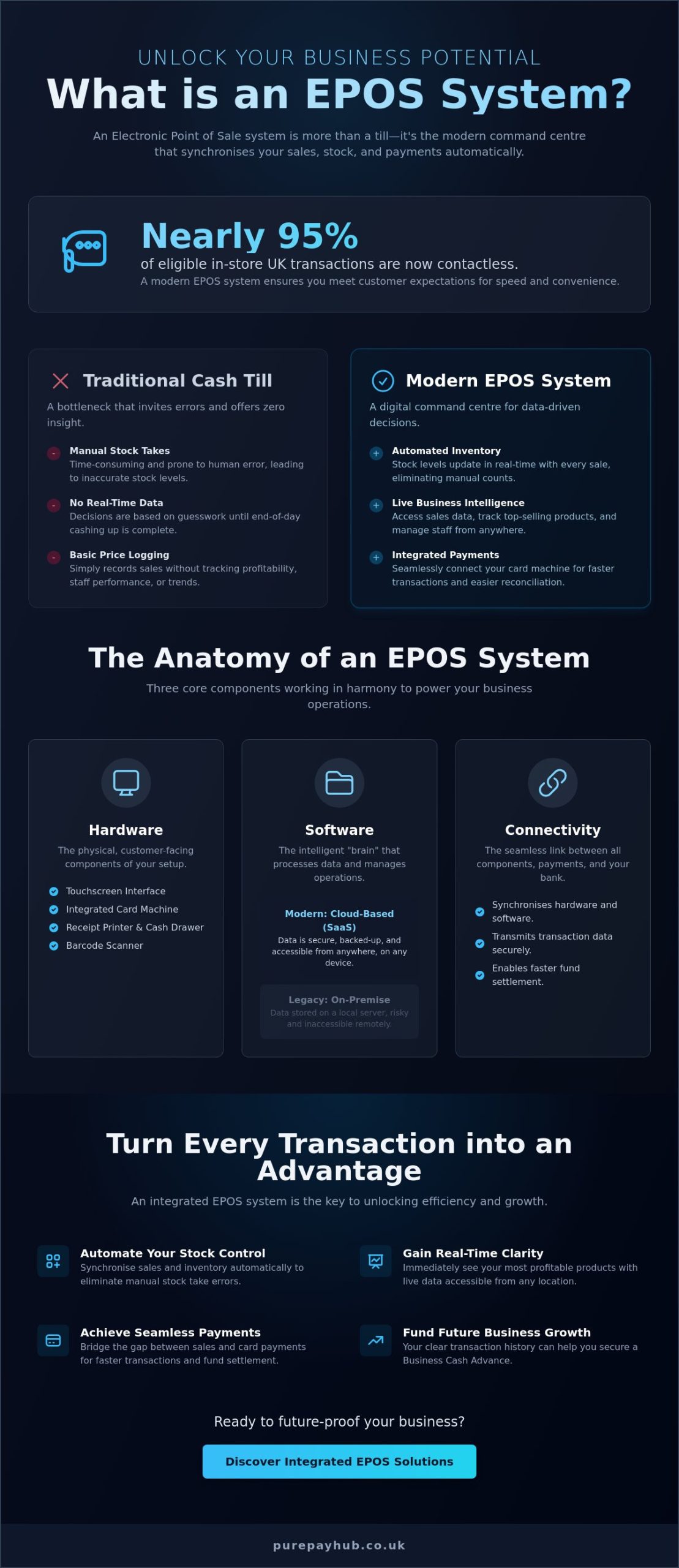
    With nearly 95% of eligible in-store transactions in the UK now being contactless, the traditional cash till has become a bottleneck for growth rather than a tool for success. If you are asking what is epos system technology and how it differs from a standard register, you are looking for a way to modernise your daily operations. You likely understand the frustration of losing hours to manual stock takes or catching human errors only after a busy shift has ended. It’s difficult to scale when you lack clarity on which items actually drive your profit.

    We believe in straightforward solutions that respect your time and your bottom line. This guide promises to show you how an EPOS system works to automate your inventory and provide real-time business data from any location. We will explore the essential components you need, from countertop card machines to seamless software integrations; ensuring your sales and payments work in perfect harmony to protect your cash flow. Discover how to turn every transaction into a strategic advantage for your business.

    Key Takeaways

    • Transform your daily operations by turning a basic till into a digital command centre that eliminates manual stock take errors.
    • Understand exactly what is epos system technology and how its combination of hardware and software synchronises your sales and inventory automatically.
    • Gain immediate clarity on your most profitable products with real-time data access that you can view from any location.
    • Learn how to bridge the gap between sales and card payments to achieve seamless integration and faster fund settlement.
    • Discover how your transaction history can help you secure a Business Cash Advance to fund your future business growth.

    What is an EPOS System? The Modern Business Command Centre

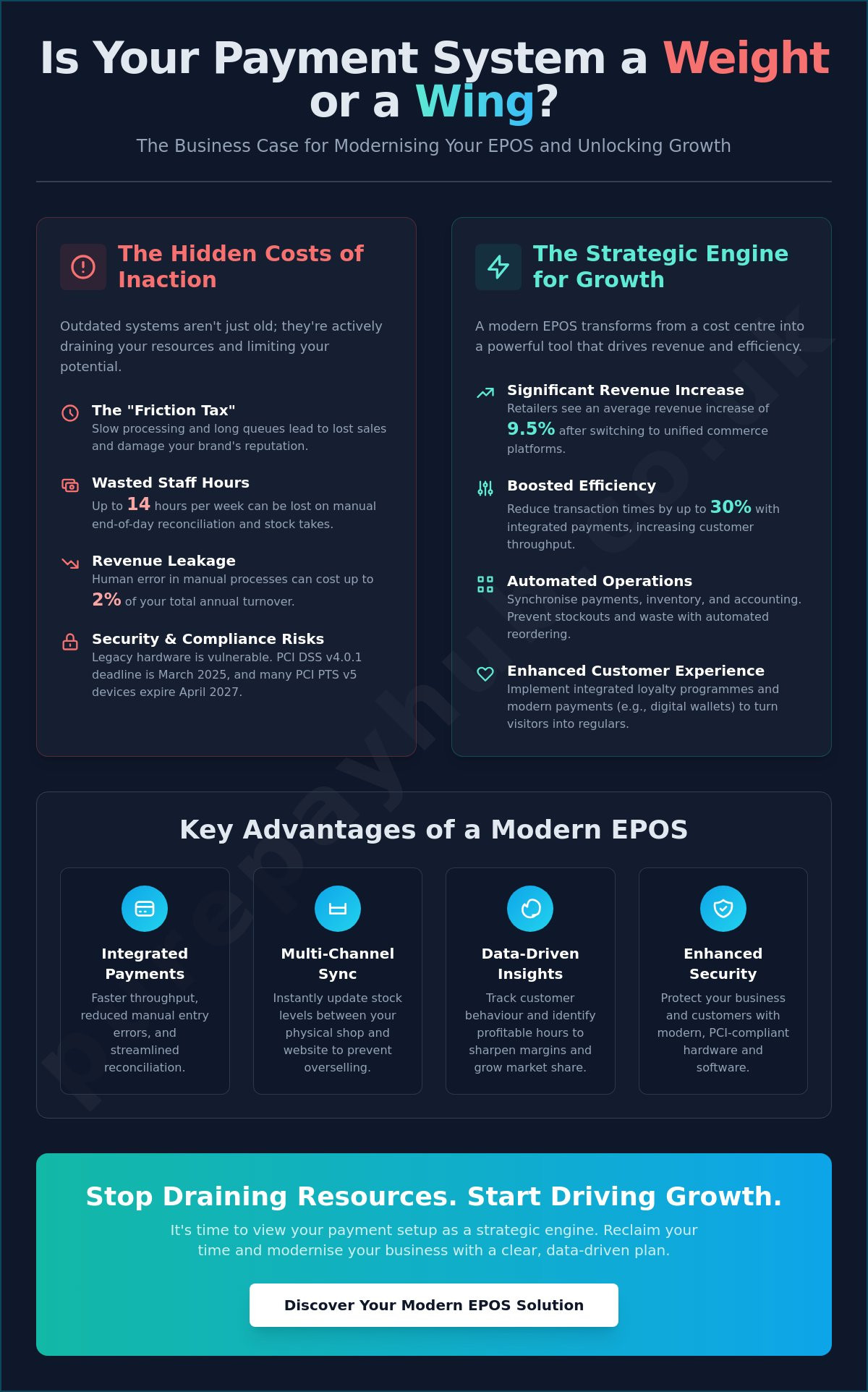
    An Electronic Point of Sale (EPOS) system is much more than a digital version of a cash drawer. It is a centralised digital ecosystem that acts as the brain of your business. Whilst a traditional till simply stores cash and prints a basic receipt, an EPOS system synchronises every sale with your inventory, accounting, and staff records in real time. For any UK merchant asking what is epos system technology, the answer lies in its ability to turn a simple transaction into a wealth of actionable data.

    The journey from mechanical registers to cloud-based intelligence has changed how we manage shops and restaurants. Modern systems don’t just sit on a counter; they live in the cloud. This means your business data is live and accessible from your phone or laptop whilst you travel. You no longer need to be physically present to know your current stock levels or your total takings for the afternoon. This level of transparency allows you to make informed decisions based on facts rather than guesswork.

    Consumer behaviour has shifted rapidly. In 2024, nearly 95% of all eligible in-store card transactions in the UK were contactless. Customers expect speed and flexibility. An EPOS system meets this demand by integrating payment processing directly into the checkout flow; ensuring you never miss a sale due to slow hardware or outdated software. It creates a professional image that builds trust with your local community.

    The Core Difference Between EPOS and a Standard Till

    A standard till relies on manual entry. These systems invite human error during busy periods and offer very little insight into your actual performance. EPOS systems use automated barcode scanning and integrated card terminals to ensure every price is accurate. The most significant benefit is the removal of the end-of-day manual reconciliation headache. Because the system tracks every penny automatically, your reports are ready the moment you close your doors. You move from simple price-logging to comprehensive business management with a single tool.

    Is EPOS the Same as POS?

    You will often hear these terms used interchangeably, but there is a subtle distinction. A Point of Sale (POS) traditionally refers to the physical location where a transaction happens, such as a checkout counter. The “E” in EPOS highlights the electronic connectivity that modern UK businesses require. It represents the software and hardware working together to manage your entire operation. In the merchant services industry, most professionals use these terms to describe the same digital solution, but understanding what is epos system functionality helps you choose the right tool for your specific needs.

    The Anatomy of EPOS: Hardware, Software, and Connectivity

    Understanding what is epos system architecture requires looking at three distinct layers: the hardware you touch, the software that thinks, and the connectivity that moves your money. When these three elements work in harmony, they create a stable foundation for your daily operations. A breakdown in any one of these areas can lead to lost sales or frustrated customers, which is why choosing a unified solution is vital for long-term reliability.

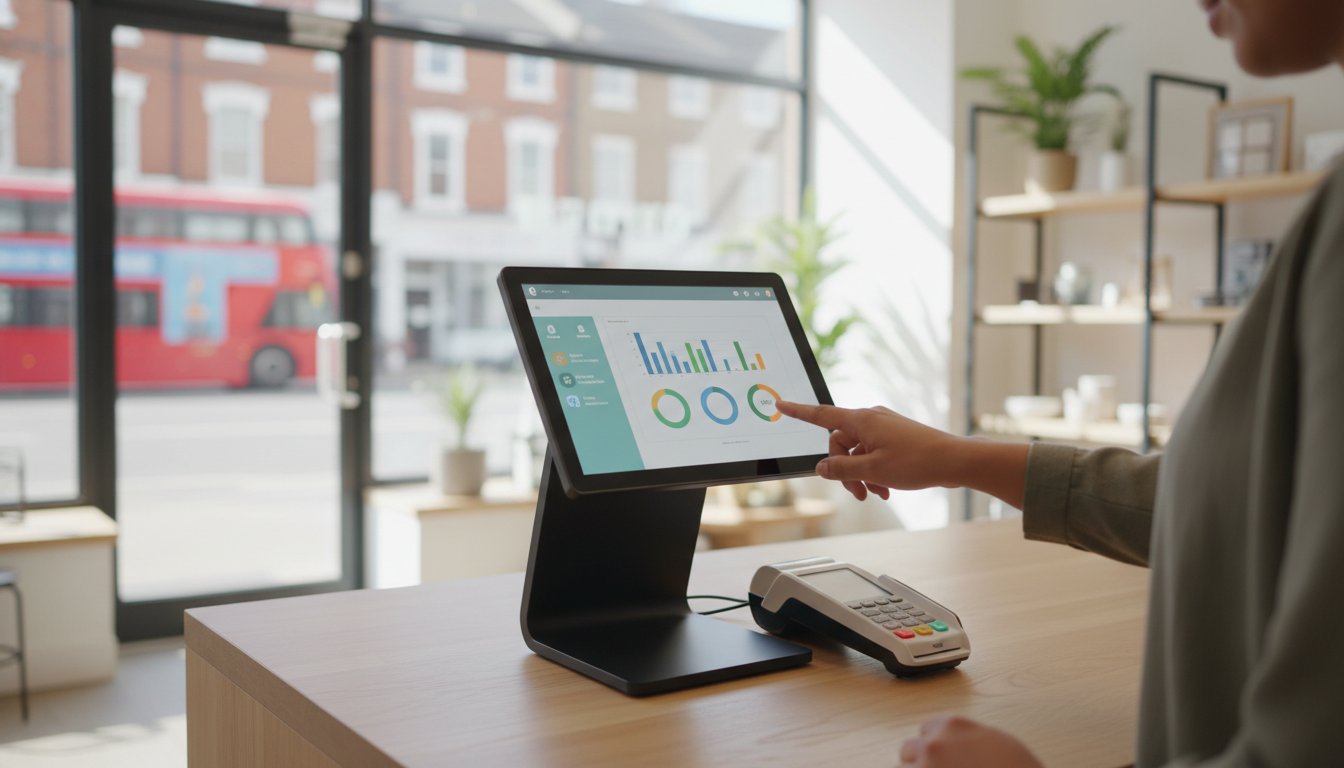
    The hardware layer is the most visible part of your setup. It typically includes a touchscreen interface, a receipt printer, and a cash drawer. However, the true engine of the checkout is your card terminal. Whether you utilise a countertop card machine at a fixed point or a portable card machine for service on the move, these devices must be robust and user-friendly. Security is equally important; your hardware choice must support PCI DSS compliance to protect cardholder data and shield your business from potential penalties. Modern providers often handle these complex security requirements for you, allowing you to focus on your customers.

    The software layer acts as the brain of the operation. In the past, businesses relied on “legacy” systems that stored data on bulky on-site servers. These are now largely obsolete because they are expensive to maintain and risky to operate. If a local server fails, your business grinds to a halt. Modern UK merchants have shifted toward cloud-based “Software as a Service” (SaaS) models. This shift ensures your data is backed up automatically and accessible from any location whilst you are away from the shop floor. For more detail on these digital shifts, you can read a comprehensive guide to EPOS systems which highlights how cloud intelligence has become the industry standard.

    Essential EPOS Hardware for UK Merchants

    Your specific industry will dictate your hardware needs. A retail boutique might favour a sleek, tablet-based system to maintain a modern aesthetic. Conversely, a busy pub will require a mix of countertop units and mobile card machines to take payments at the table. You may also need peripheral equipment such as barcode scanners for rapid stock entry or kitchen printers to send orders directly to your chefs. If you are ready to upgrade your physical setup, exploring a tailored EPOS system can help you identify the exact tools your floor plan requires.

    Software: The Difference Between Cloud and Legacy

    The biggest advantage of cloud software is the delivery of automatic updates. You don’t need to manually install new versions or worry about your system becoming obsolete. Every time a new feature is released or a security patch is required, the system updates itself in the background. This ensures your business always has the latest tools to manage inventory and staff performance without the technical headache of legacy software management. It is a fairer, more transparent way to keep your business technology current.

    What is an EPOS System? The Complete Guide for UK Businesses

    How an EPOS System Works to Organise Your Business

    When you process a sale, a complex series of background tasks occurs instantly. Understanding what is epos system logic helps you see beyond the simple beep of a scanner. The moment an item is scanned, the software doesn’t just calculate a total; it subtracts that specific unit from your inventory, logs the staff member’s ID, and prepares the data for your accounting records. This automated journey from scan to fund settlement ensures your books are always accurate without any manual intervention. It turns a busy shift into a clean, organised data set that reflects the true state of your business.

    Managing a team becomes far simpler when you have a transparent view of the shop floor. An EPOS system allows you to monitor individual staff performance and identify who your top sellers are during any given period. It also helps reduce shrinkage by highlighting discrepancies between stock levels and actual sales. By creating a database of your favourite customers, you can track their purchasing behaviour and offer personalised rewards. This level of insight was once reserved for major corporations, but modern technology has made it accessible to every local merchant, providing the tools needed to compete on a larger scale.

    Streamlining the Checkout Experience

    Queues are the enemy of retail and hospitality. An integrated system removes the friction of manual entry. By combining your till software with your card machines, you eliminate the need to type amounts into a terminal twice. This reduces human error and speeds up service significantly. You can also automate promotions. If you run a buy one get one free offer, the system applies the discount instantly. This level of precision protects your margins whilst keeping customers happy. Digital receipts are another advantage; they save on paper costs whilst allowing you to collect valuable customer emails for future marketing efforts.

    The Power of Data-Driven Reporting

    Data is your most valuable asset. A modern system allows you to identify your best-sellers and dead stock in seconds. You no longer have to guess which products are truly profitable. You can compare performance across multiple locations from a single dashboard, which is essential for business development. This transparency is also crucial for Making Tax Digital (MTD) compliance. You can export clean, organised data directly to your accountant, saving hours of administrative work. By turning every transaction into a strategic data point, you can focus on growing your business rather than just maintaining it. It provides the clarity needed to make confident decisions about your future inventory and staffing levels.

    Choosing the Right EPOS for Your Industry and Budget

    Choosing the right system is a critical decision for your business’s future. When you investigate what is epos system technology for your specific sector, you’ll find that one size rarely fits all. You need a solution that understands your daily challenges; whether that’s managing a busy lunch rush or tracking hundreds of individual stock items. We advocate for a no-nonsense approach to selection. Focus on the features that actually save you time and the fees that respect your margins.

    Evaluating the true cost of ownership is essential. You will likely encounter two main models: hardware rental or upfront purchase, combined with monthly software subscriptions. Whilst a low entry price is tempting, always look for hidden markups in the transaction-based processing fees. Support is another non-negotiable factor. If your system goes down on a busy Saturday night, you need 24/7 UK-based help to get back online. A distant help centre that only operates during office hours isn’t a partnership; it’s a liability.

    Hospitality vs Retail: What Features Do You Need?

    Hospitality businesses rely on floor plans and kitchen display systems to keep service moving. If you run a pub, you need to manage tables and split bills without causing a queue at the bar. Retailers, on the other hand, require complex size and colour matrices and automatic stock alerts. If you operate online, your in-store sales must sync with your e-commerce platform to prevent overselling. Service-based businesses like salons should look for integrated appointment booking and deposit management to reduce the financial impact of no-shows.

    Scrutinising the Fee Structure

    This is where many traditional providers hide their profit. You must understand the difference between debit and credit card rates. Debit cards account for approximately 80% of all card transactions in the UK, and these typically carry lower processing costs. You might see rates of 0.3% for debit versus 0.5% for credit. Don’t get trapped by “blended” rates that charge you the same for a basic debit card as they do for a premium credit card. Avoid long-term contracts with high exit fees. They often signal a provider who isn’t confident in their own service. Transparent, transaction-based fees are far better for your seasonal cash flow. They ensure you only pay when you are actually making money.

    If you want a partner that values honesty over hidden markups, you can get a quote for a transparent EPOS system today.

    Future-Proofing with PurePay Hub: Integrated EPOS and Payments

    Choosing the right technology is the first step, but the real power lies in how that technology integrates with your financial flow. At PurePay Hub, we move beyond the basic question of what is epos system software and focus on how it stabilises your business. We provide a centralised service that links your sales data directly to your payment processing. This integration ensures that your countertop or portable card machines communicate perfectly with your till; allowing for next-day funding that keeps your cash flow healthy and predictable.

    Our approach is built on transparency and fairness. We avoid the murky fee structures often found in traditional banking. Instead, we offer a single, clear monthly statement that shows exactly where your money goes. We act as a supportive business ally; providing a no-nonsense merchant account management service that removes the stress of hidden markups. You get the technical precision of a modern fintech company with the personal touch of a local expert who understands the regional market.

    Seamless Payment Integration

    Double-keying errors are a common frustration for busy merchants. By linking your terminal and till, you eliminate the need to enter amounts twice, which removes the risk of human error during peak trading periods. Your customers can pay using Apple Pay, Google Pay, or any major card instantly. We are committed to providing the lowest card machine rates for UK SMEs. This isn’t just about processing payments; it’s about creating a frictionless experience that encourages repeat business and builds trust with your local community. It simplifies your daily admin whilst protecting your bottom line.

    Unlocking Growth with EPOS Intelligence

    The data captured by your system is a powerful tool for expansion. We use your sales volume records to help you qualify for a Business Cash Advance. This provides you with unsecured capital without the rigid constraints or complex paperwork of a traditional bank loan. You simply repay the advance as a small, fixed percentage of your daily card sales. It is a flexible way to fund new equipment or store renovations that scales naturally with your success. If your sales are slower one day, your repayment is smaller. Contact us to see how we can stabilise your finances and help your business reach its full potential.

    Take Control of Your Business Growth

    Transitioning from a manual till to a digital command centre is about more than just taking payments. It is about gaining the visibility you need to run a more efficient operation. Understanding what is epos system capability allows you to automate your stock takes, reduce human error, and build a stronger relationship with your favourite customers. You no longer have to settle for opaque fees or slow, unresponsive service.

    We are here to act as your supportive business ally. With debit card rates from 0.3% and next-day access to your funds, we ensure your hard-earned money stays where it belongs. Our UK-based expert support is always available to provide clear, honest guidance whenever you need it. You can get a transparent quote for your integrated EPOS and card payments today. Take the next step with confidence and build the modern business you’ve always envisioned.

    Frequently Asked Questions

    Is an EPOS system expensive for a small UK business?

    Costs vary depending on your specific requirements, but there are options to suit most budgets. When asking what is epos system investment likely to be, you’ll find that businesses can choose between upfront hardware purchases or monthly rental models. Modern providers often offer free software plans where you only pay transaction fees; making it an accessible investment for startups and smaller merchants.

    Can I use an EPOS system without an internet connection?

    Yes, many modern systems feature an offline mode that allows you to continue taking payments and scanning items if your connection drops. The system stores the transaction data locally and syncs with the cloud once the internet is restored. This ensures your service remains uninterrupted during a busy shift and prevents any loss of sales data.

    How long does it take to set up a new EPOS system?

    A basic setup can be completed in a few hours, whilst more complex systems with large inventories might take a few days. The process involves configuring your software, importing your product list, and connecting your card terminals. Most providers offer guided installation to ensure your business command centre is operational as quickly as possible without disrupting your trade.

    Do I need a specific merchant account for an EPOS system?

    You generally need a merchant account that is compatible with your chosen software to ensure seamless fund settlement. Whilst some businesses try to use separate providers, an integrated merchant account simplifies your finances by providing a single monthly statement. This creates a more stable and transparent environment for managing your daily takings and tracking your overall business performance.

    What happens if my EPOS hardware breaks during a busy shift?

    Reliable providers offer rapid hardware replacement or remote support to get you back online quickly. Because modern systems are cloud-based, your data is safe even if the physical terminal fails. You can often log in to your software from a tablet or mobile device as a temporary backup to keep the queues moving whilst you wait for a replacement unit.

    Can an EPOS system help with my VAT and tax returns?

    Yes, these systems automate the collection of sales data required for Making Tax Digital (MTD) compliance. You can export clean, accurate reports directly to your accounting software, which significantly reduces the time spent on manual calculations. It provides a transparent audit trail for your VAT and annual tax returns; ensuring you stay on the right side of HMRC regulations.

    Is it difficult to switch from a traditional cash register to EPOS?

    The switch is straightforward and often provides immediate relief from manual administrative tasks. Most modern interfaces are designed to be intuitive and require minimal staff training. Once you understand what is epos system functionality and how it automates your stock levels, you will likely find it much easier to manage than a mechanical till and a paper ledger.

    Does an EPOS system work with my existing card machine?

    It depends on the compatibility of your current hardware and software. Whilst some standalone card machines can work alongside a till, an integrated solution is much more efficient for a growing business. Linking your terminal and till prevents double-keying errors and ensures your sales data and payment records are always perfectly synchronised for easier end-of-day reconciliation.

  • NFC Technology: A Merchant’s Guide to Contactless Payments in 2026

    NFC Technology: A Merchant’s Guide to Contactless Payments in 2026

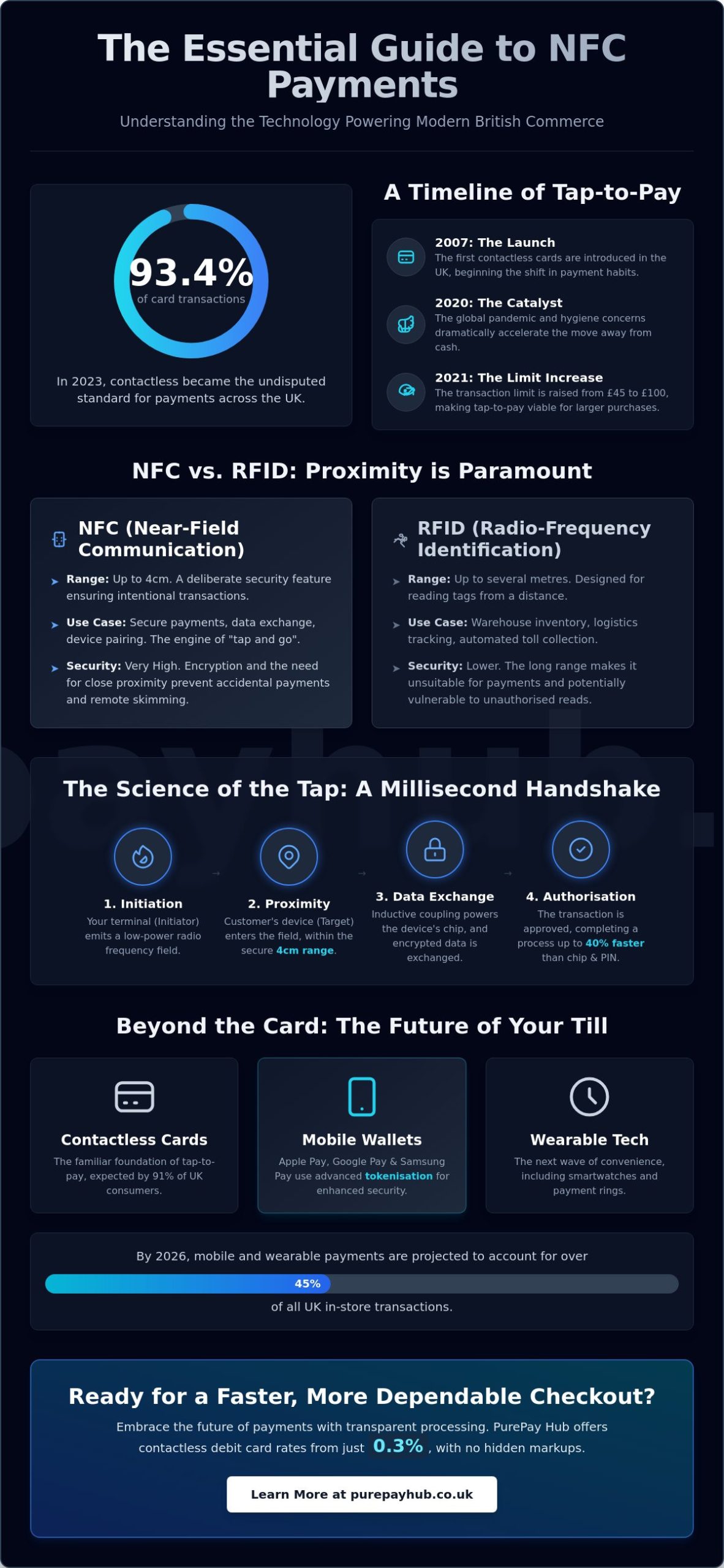
    According to UK Finance, contactless payments accounted for 93.4% of all card transactions in 2023. By 2026, a merchant without a reliable nfc strategy will struggle to keep pace with the expectations of the British high street. You likely feel the pressure of peak-hour queues and the constant need to reassure customers that their digital data is safe. You don’t want technology to be a barrier; you want it to be a bridge to better service.

    We believe in a pure and transparent approach to payment processing that puts the merchant first. This guide will show you how Near-Field Communication works to streamline your operations whilst improving customer satisfaction. You will learn the clear differences between NFC and RFID, discover how to integrate mobile wallets like Apple Pay seamlessly, and find out how to secure your business against modern fraud. We are moving beyond the jargon to give you the clarity you need for a faster, more dependable checkout hub.

    Key Takeaways

    • Understand why contactless payments have become the non-negotiable standard for British consumers and how this shift impacts your daily operations.
    • Master the mechanics of nfc technology, from the deliberate 4cm security range to the advanced tokenisation that keeps your transactions safe from fraud.
    • Identify the ideal hardware for your specific business flow, whether you require a fixed countertop terminal or a portable device for mobile service.
    • Discover how to eliminate hidden markups and access transparent processing rates, with debit card charges starting from just 0.3% for contactless payments.
    • Learn how to streamline your checkout process to reduce queues and significantly enhance customer satisfaction through modern payment solutions.

    What is NFC and Why is it Essential for UK Merchants?

    Near-field communication (NFC) is a short-range wireless technology that allows two devices to communicate when held within 4 centimetres of each other. NFC is a proximity-based data transfer protocol operating at 13.56 MHz. For a British business owner, it’s the invisible engine behind every “tap and go” transaction at your till. Unlike older systems, it offers a secure, encrypted handshake that protects both your revenue and your customer’s data. This technology turns a standard payment terminal into a high-speed gateway for modern commerce.

    Understanding the difference between NFC and RFID is vital for your point of sale. While RFID can track items from several metres away, NFC is strictly limited to close range. This physical proximity is a security feature; it ensures that a customer cannot accidentally pay for someone else’s shopping whilst standing in a queue. It provides the “tap and go” experience that 91% of UK consumers now expect at the checkout. At PurePay Hub, we see this technology as the foundation of a transparent and efficient transaction model.

    The Evolution of Contactless Payments in the UK

    The UK payment landscape changed forever in 2007 with the introduction of the first contactless cards. Adoption was steady until the COVID-19 pandemic in 2020. During that period, hygiene concerns accelerated a massive shift away from cash. In October 2021, the UK government increased the contactless limit from £45 to £100. This change allowed merchants to process the vast majority of all card transactions via contactless, significantly increasing average transaction speed. Contactless is no longer a convenience; it’s the default behaviour for 87% of UK shoppers.

    NFC Beyond the Credit Card

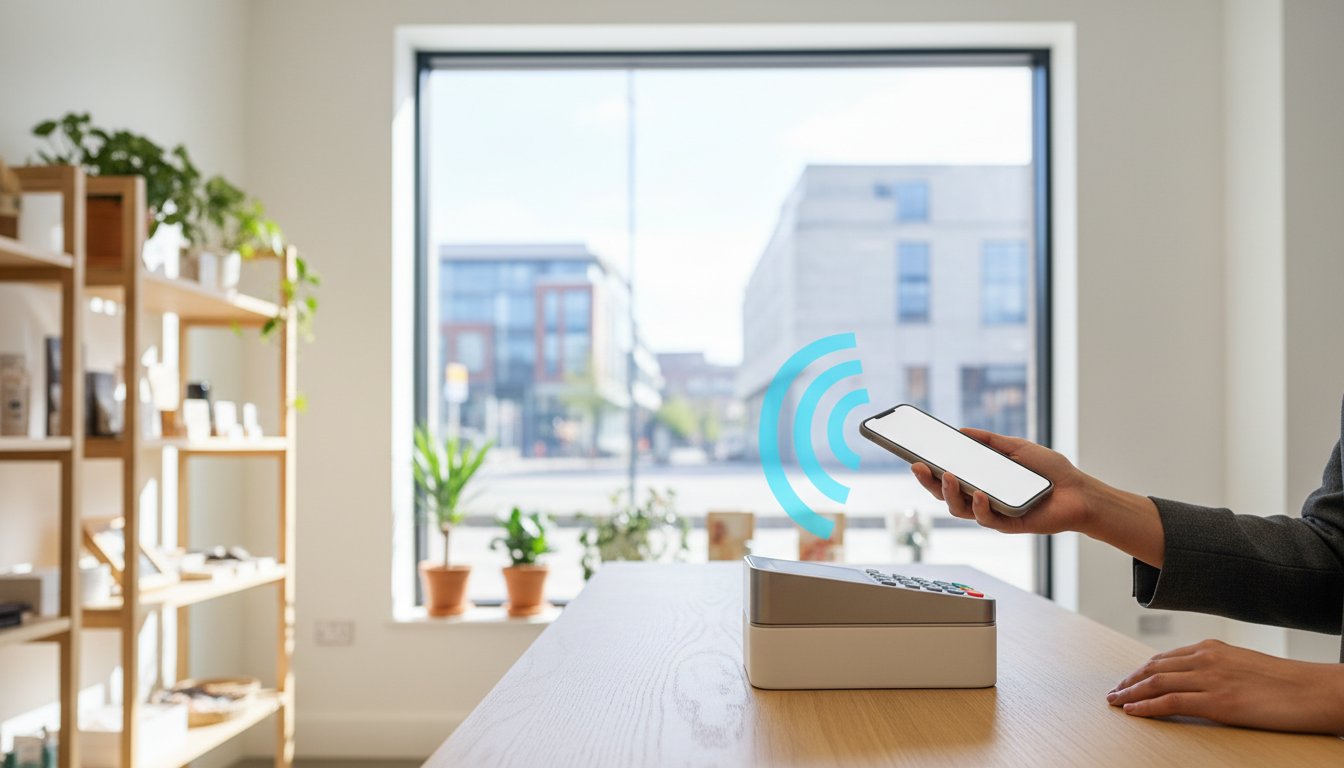
    Your customers are increasingly leaving their physical wallets at home. The rise of mobile wallets like Apple Pay, Google Pay, and Samsung Pay has turned smartphones into secure payment hubs. These digital wallets use tokenisation to hide actual card details, making them even more secure than traditional plastic. Beyond phones, wearable technology is gaining ground. Smartwatches and even payment rings now utilise this technology to facilitate instant transactions. By 2026, these alternative form factors are expected to account for over 45% of all in-store payments in the UK. We provide the clarity and tools you need to accept every tap with confidence.

    How NFC Technology Works: The Science of the Tap

    NFC technology isn’t magic. It’s precision engineering designed for the modern UK high street. At its core, the process involves an “Initiator” and a “Target.” Your card terminal acts as the initiator, constantly emitting a small radio frequency field. When a customer brings their phone or card within 4cm, that device becomes the target. This 4cm limit is a deliberate security feature. It ensures that transactions only happen when intended, preventing accidental payments from passersby or “skimming” from a distance. It’s a short-range constraint that provides a long-range sense of security for your customers.

    There are three distinct modes of nfc operation that power today’s digital economy. Card Emulation is the most common for merchants, allowing a smartphone to act exactly like a physical credit card. Reader/Writer mode lets your terminal pull data from smart tags or posters. Peer-to-Peer allows two devices to swap information directly. This system operates at the speed of light, making it significantly faster than the old magnetic stripe method. Traditional stripes rely on physical friction and analogue data reading, which is slow and prone to wear. NFC uses digital packets sent via radio waves, reducing transaction times by up to 40% compared to older contact-based methods. For a busy London cafe or a retail shop in Birmingham, these seconds saved per customer directly translate to shorter queues and higher turnover.

    Inductive Coupling Explained

    NFC relies on inductive coupling to transfer power and data simultaneously. Your terminal’s internal antenna creates an electromagnetic field. When a contactless card enters this field, the card’s own antenna picks up the energy. This powers the chip without needing a battery. Physical contact isn’t actually necessary. The term “tap” is simply a user-friendly way to describe bringing two antennas into close proximity. It’s a pure, wireless handshake that happens in milliseconds, ensuring the data remains encrypted and the connection remains stable throughout the brief interaction.

    Data Exchange Protocols

    Security relies on strict global standards to maintain integrity. Most payment systems use ISO/IEC 14443. This protocol ensures that a terminal in Manchester can talk to a card issued in New York without friction. Implementing NFC correctly means choosing hardware that adheres to these standards whilst remaining updateable. As software evolves, your hardware must stay compatible with new encryption methods. At PurePay Hub, we believe your payment nfc setup should be a stable foundation for your business growth. If you want to simplify your checkout and remove technical headaches, you can explore our transparent terminal options to find a partner that values your time.

    NFC Technology: A Merchant’s Guide to Contactless Payments in 2026

    Security and Trust: Is NFC Safe for Your Business?

    Many UK business owners worry about nfc signals being “skimmed” by digital pickpockets. This fear often stems from early contactless adoption, but the technology has moved on. Modern payment standards make it incredibly difficult for fraudsters to intercept usable data. While 2024 industry data suggests that physical card theft is still a threat, digital nfc interception is practically non-existent in real-world retail environments. To understand the full landscape of NFC security threats and solutions, we need to look at how data is shielded during every tap. Security isn’t just an add-on; it’s the foundation of a Pure payment environment.

    The Power of Tokenisation

    Tokenisation is your strongest shield against data breaches. When a customer taps their device, the system doesn’t transmit the actual 16-digit card number. Instead, it sends a “token,” which is a random string of numbers that only the bank can decode. If a hacker intercepted this token, it would be useless for any other transaction or merchant. Tokenisation ensures the merchant never actually “sees” or stores the customer’s real card details. By keeping sensitive data out of your Hub, you lower your liability and protect your business from the fallout of a potential data leak. It’s a transparent way to handle sensitive info without the risk.

    Dynamic CVV and Encryption

    Every tap creates a unique cryptographic signature that validates the transaction. Unlike a physical card where the CVV is static and printed on the back, mobile wallets use a dynamic version. This security code changes for every single tap. “Replay attacks,” where a fraudster tries to use intercepted data for a second time, are virtually impossible because the bank’s system rejects any code that has already been used. This entire process happens within the Secure Element (SE) chip. This hardware is physically isolated from the rest of the smartphone’s operating system, meaning even if a phone is infected with malware, the payment keys remain untouched.

    Mobile NFC payments offer a distinct advantage over physical cards through biometric verification. A lost contactless card can be used by anyone until it’s cancelled. A smartphone requires FaceID, a fingerprint, or a passcode before the nfc chip activates. This simple step eliminates a massive portion of fraudulent activity at the point of sale. For your business, using modern hardware also simplifies your PCI DSS compliance. These devices are built to meet the latest security standards, ensuring your partnership with us is based on honesty and technical integrity. You get to focus on growth while the hardware handles the heavy lifting of data protection.

    Implementing NFC: Choosing the Right Hardware for Your Shop

    You probably already have the foundation for nfc payments sitting on your counter. Take a look at your current terminal. If you see the four curved waves symbol, you’re likely ready to accept contactless payments. However, hardware manufactured before 2020 often lacks the processing power to handle the complex encrypted handshakes required by the latest digital wallets. Upgrading your kit isn’t just a technical necessity; it’s a commitment to your customer’s time.

    Countertop vs. Mobile NFC Terminals

    Fixed countertop units are the reliable workhorses of the UK high street. They thrive in environments with high transaction volumes, like boutiques or local convenience stores. Because these units typically use wired Ethernet connections, they offer a level of stability that wireless units can’t always match. You won’t have to worry about a “searching for signal” message during a busy Saturday afternoon rush.

    Portable and mobile units are essential for hospitality and service-based businesses. Data from UK Finance shows that contactless payments accounted for 93% of all card transactions in 2023. To capture this demand at the table or on the move, you need hardware with robust battery life. Prioritise devices that offer 4G or 5G failover. If your shop’s Wi-Fi stutters, the terminal switches to mobile data instantly, keeping your revenue flowing without a hitch.

    Setting Up Your NFC Payment Zone

    The physical placement of your terminal dictates the rhythm of your shop. Place the unit at a natural elbow height to ensure the “tap” feels intuitive for the customer. A cluttered counter leads to awkward retries and “failed taps.” Use clear visual indicators to show exactly where the nfc sensor is located on the device. This simple step reduces transaction times by several seconds per person, which adds up during peak hours.

    • Keep the tap zone clear of metal objects or other electronic interference.
    • Train staff to recognise when a thick phone case or a “wallet” style cover is blocking the signal.
    • Ensure the terminal screen is visible to the customer for immediate “Approved” feedback.

    Integration is where your hardware truly becomes a Hub for your business. When your terminal speaks directly to your EPOS system, inventory management becomes automatic. You won’t need to manually count stock or reconcile receipts at the end of a long shift. Every tap updates your records in real-time, providing a pure, transparent view of your daily performance. This synergy eliminates human error and protects your profit margins.

    Our team provides the clarity you need to choose the right kit for your business. Join our partnership for honest, transaction-based processing.

    PurePay Hub: Transparent NFC Processing for UK SMEs

    PurePay Hub operates on a simple principle: your hard-earned revenue belongs to you. We’ve built our “Pure” approach to eliminate the murky markups that often drain UK small businesses. When your customers tap to pay, you shouldn’t have to guess what the final cost will be. We offer competitive rates that reflect the actual cost of processing, with debit card charges starting from just 0.3% for nfc payments. This isn’t a teaser rate; it’s our commitment to fairness.

    Cash flow is the lifeblood of any local shop or service provider. Waiting a week for your funds to clear is a relic of the past. We provide next-day funding, ensuring your nfc sales revenue reaches your bank account the very next business day. By centralising your payment data through our Hub, we give you the insights needed to track busy periods and manage stock more effectively. We don’t just process payments; we provide the clarity you need to grow.

    Simplified Fee Structures

    Many providers lure merchants in with a flat-rate model that seems simple but hides significant costs. These opaque structures often mean you’re overpaying for low-risk debit transactions. Our transaction-based model is different. We break down exactly where every penny goes. We organise your monthly statements so they’re easy to read at a glance, removing the stress of deciphering complex financial jargon.

    • No hidden markups: You pay for the service you use, nothing more.
    • Clear reporting: See your daily totals and fee breakdowns without the headache.
    • Fairness for SMEs: We provide the same transparent pricing to a local café that we would to a larger retailer.

    British merchants deserve a partner that respects their bottom line. We prioritise honesty because we know that trust is built through consistent, predictable costs. You’ll never find a surprise fee on a PurePay Hub statement.

    Getting Started with PurePay Hub

    We’ve streamlined our onboarding process to be as fast as a contactless tap. Moving from your initial enquiry to taking your first payment happens in record time. We know you’re busy running a business, so we’ve removed the bureaucratic hurdles that slow down traditional bank applications. Our team handles the heavy lifting so you can focus on your customers.

    Our hardware range fits every business type. Whether you need a robust countertop terminal for a boutique in Manchester or a sleek mobile solution for a food stall in London, we’ve got you covered. Every device we provide is fully nfc-enabled and ready for the 2026 payment landscape. It’s time to move away from providers that hide behind fine print. Join the UK’s most transparent payment hub today and experience processing as it should be.

    Future-Proof Your Business with Modern Payments

    The shift toward a cashless society isn’t just a passing trend; it’s the operational standard for 2026. By mastering nfc technology, you ensure your shop stays competitive whilst providing the seamless security your customers now expect as standard. You’ve seen how the science of the tap reduces queues and how fully PCI compliant hardware protects your hard-earned revenue from modern threats. It’s time to strip away the complex fee structures and hidden markups that too often plague the UK merchant industry.

    PurePay Hub offers a partnership built on honesty and clarity. We provide debit card rates starting from 0.3% and ensure you have next-day access to your funds to keep your cash flow healthy. You deserve a payment partner that values your business growth as much as you do. Our hardware is reliable and straightforward, keeping your shop safe without the typical corporate jargon or confusing contracts. We’re here to help you navigate the future of payments with total confidence and pure transparency.

    Switch to PurePay Hub for transparent, low-rate NFC processing

    Take control of your processing today and watch your business thrive in a digital-first economy.

    Frequently Asked Questions

    What is the current contactless payment limit in the UK for 2026?

    The standard contactless limit for physical cards in the United Kingdom remains £100 throughout 2026. This limit was established by the Financial Conduct Authority in October 2021 to balance merchant convenience with fraud prevention. Whilst physical cards are capped at this amount, mobile wallet transactions via Apple Pay or Google Pay often have no fixed limit because they use secure biometric authentication like FaceID or fingerprint scanning.

    Can I accept Apple Pay and Google Pay with a standard NFC card machine?

    You can accept Apple Pay, Google Pay, and other digital wallets on any standard card machine equipped with nfc technology. These mobile wallets use the same radio frequency standards as physical contactless cards to transmit payment data securely. Your terminal doesn’t require special software updates for each phone brand; it simply needs an active NFC reader to process the encrypted token sent from the customer’s device.

    Do I pay higher transaction fees for NFC or contactless payments?

    You won’t pay higher transaction fees for NFC or contactless payments compared to traditional chip-and-pin transactions. At PurePay Hub, we ensure your costs remain transparent and transaction-based regardless of how the customer chooses to pay. Most UK acquirers treat all card-present transactions under the same fee structure, so you can offer your customers the speed of contactless without worrying about hidden markups or price hikes.

    Is it possible for a customer to be charged twice if they tap their card twice?

    It’s impossible for a customer to be charged twice for a single transaction if they accidentally tap their card or phone twice. NFC terminals are designed to process only one authorised transaction at a time and will automatically close the payment window once the first tap is successful. If a customer taps again, the machine will display an “Already Paid” or “Transaction Complete” message, protecting your business from duplicate entries.

    What should I do if a customer’s NFC payment is declined but their chip-and-pin works?

    If a contactless payment is declined but the chip-and-pin works, it’s usually due to a security check known as Strong Customer Authentication (SCA). UK regulations require banks to prompt for a PIN after a customer reaches a cumulative contactless spend of £300 or after five consecutive taps. Simply ask the customer to insert their card into the reader; this resets their contactless counter and allows the transaction to proceed safely.

    Does my business need a specific type of internet connection for NFC terminals?

    Your NFC terminal requires a stable internet connection but doesn’t need a specific high-speed fibre line to function correctly. A standard Wi-Fi connection with speeds of at least 2 Mbps or a reliable 4G mobile data signal is sufficient for processing payments. The data packets sent during an NFC transaction are extremely small, typically measuring less than 15 kilobytes, so reliability is more important than raw bandwidth.

    How far away does a card need to be for the NFC terminal to pick it up?

    A card or mobile device must be within 4 centimetres of the terminal for the NFC reader to pick up the signal. This short range is a deliberate security feature designed to prevent accidental payments from people walking past your counter. For the best results, we recommend customers tap their card directly against the screen or the contactless symbol, ensuring the transaction completes in under two seconds.

    Can NFC technology be used for things other than payments in my shop?

    NFC technology serves many purposes beyond taking payments, such as managing digital loyalty schemes or sharing shop information. You can use nfc tags to share your guest Wi-Fi password or to trigger digital coupons when a phone is tapped against a shelf display. In 2026, 45 percent of UK retailers are expected to use these tags for smart shelving, where customers tap a label to see detailed product origins.