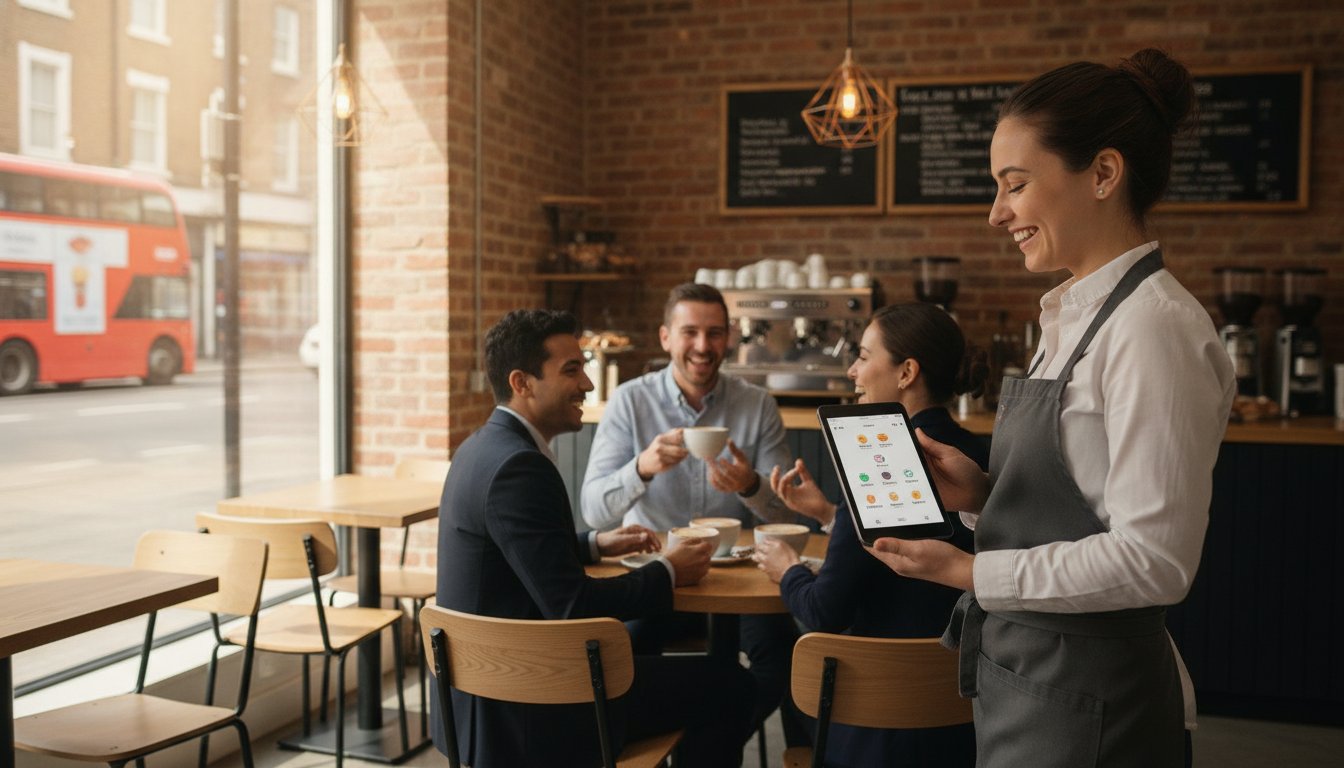
Did you know that businesses using a modern EPOS system save an average of 45 minutes every single day on administrative tasks? For a busy cafe owner, that is time better spent with customers or refining the menu. You likely already know that manual table service is a recipe for errors; a misplaced order or a forgotten drink can quickly turn a profitable lunch shift into a series of apologies. Finding the right EPOS system for a small cafe with table service is about more than just taking payments. It is about creating a seamless link between the table and the kitchen whilst keeping your overheads predictable.
We promise to help you cut through the jargon of merchant service charges and hardware rentals. This guide explains how to select a hospitality system that speeds up table turnover and ensures every order is transmitted accurately. You will discover how the PurePay Hub standard for transparent transaction rates and next-day funding can protect your margins from being eroded by hidden markups. We will explore the must-have features for 2026, including cloud-based analytics and integrated card machines, to give you total clarity over your business finances.
Key Takeaways
- Learn how to eliminate order errors by using visual floor plans and customisable modifiers that connect your tables directly to the kitchen.
- Discover why choosing the right EPOS system for a small cafe with table service requires a focus on open-tab management and handheld flexibility.
- Understand the “hidden markup” trap and how shifting from flat-rate fees to transparent models can significantly protect your cafe’s margins.
- Compare the benefits of all-in-one smart terminals versus fixed tills to find the setup that best avoids counter bottlenecks during peak hours.
- See how integrated payments and next-day funding provide the financial clarity and cash flow stability needed to support your cafe’s growth.
Why Table Service Changes the EPOS Requirements for Small Cafes
A modern Point of Sale (POS) system in 2026 is no longer a static box sitting on a counter. For small venues, it acts as the digital nervous system of the entire floor. Unlike traditional counter service where a customer pays before they sit, table service requires your technology to manage “open” states. This means tracking table numbers, handling multiple rounds of drinks, and keeping a running total that stays accurate until the final bill is requested. If you are searching for the best EPOS system for a small cafe with table service, you need a solution that prioritises this real-time communication.
Choosing an EPOS system for a small cafe with table service allows you to move away from the chaos of handwritten tickets. When a server takes an order at the table, that data must sync instantly with both the kitchen and the central bill. This “handshake” ensures that the chef starts cooking immediately whilst the front-of-house staff can focus on the next customer. If your system doesn’t sync in real-time, you risk slow turnaround times that directly eat into your peak-hour revenue. Every minute a table sits empty because of a slow billing process is money lost.
Fixed tills are becoming a relic for small, agile cafes. If your staff have to walk back to a central station after every interaction, you’re losing valuable minutes and increasing the chance of error. To complement mobile EPOS systems, many busy venues use discreet radio earpieces from Earpiece Hub to ensure the floor and kitchen stay perfectly synced without staff needing to leave their tables. Modern hospitality demands mobility. Handheld terminals allow staff to stay on the floor, improving the customer experience and ensuring that no “extra coffee” or “side of cake” is ever forgotten. This transition from a stationary till to a mobile workflow is the single biggest operational shift for independent cafes this year.
The Shift from Counter to Table: Operational Challenges
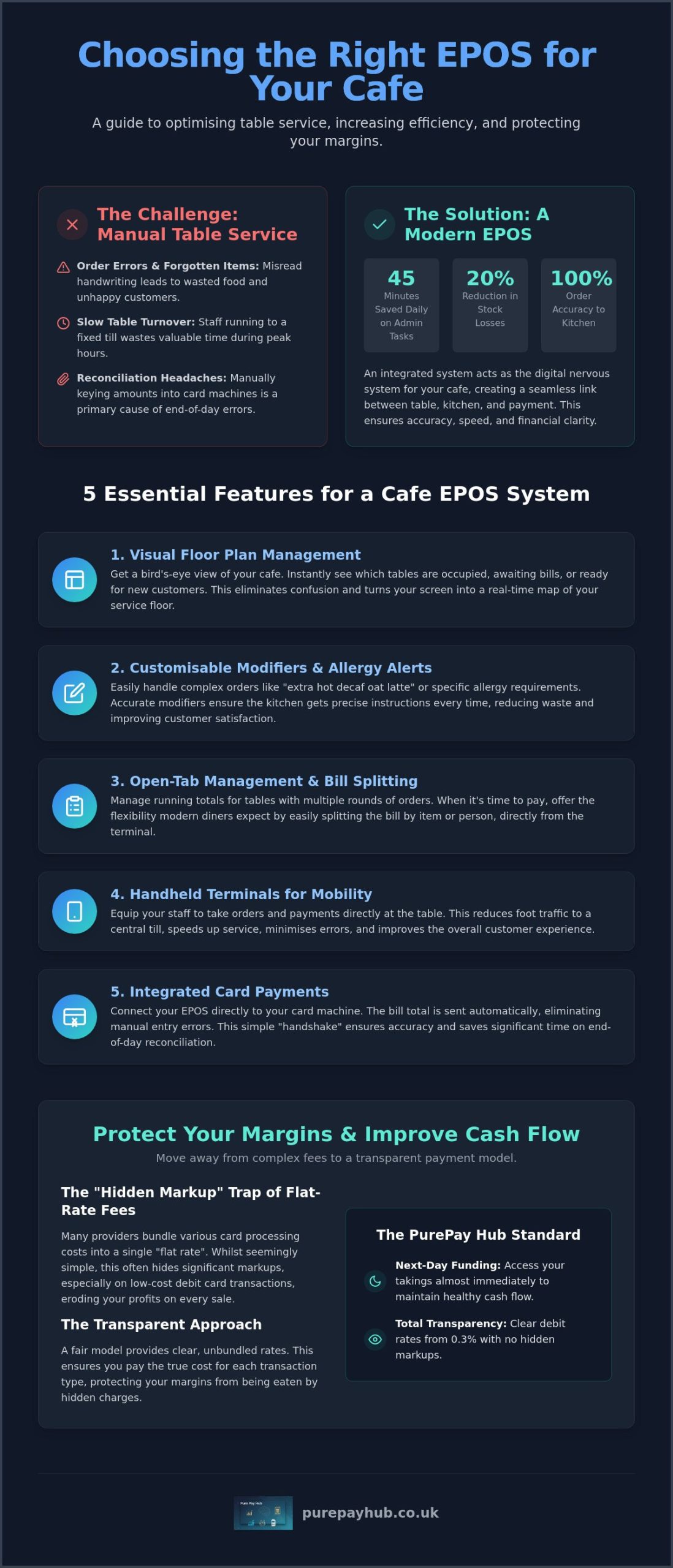
The biggest risk in manual table service is the forgotten item. Verified industry data shows that the use of a modern EPOS system can reduce stock losses by up to 20% by ensuring every item served is actually recorded. In a small venue, table turnover speed is your primary revenue driver. If staff are stuck deciphering messy handwriting or running back and forth to a fixed till, your “order-at-table” workflow breaks down. Efficient systems allow you to close bills faster, freeing up seats for new customers during the busy lunch rush.
The Role of Integrated Card Payments
True integration happens when your EPOS talks directly to your card machine. This eliminates the need for staff to manually type the bill amount into a separate terminal. Manual entry is the primary cause of end-of-day reconciliation headaches and costly errors. At PurePay Hub, we prioritise this seamless connection to ensure your totals always match. This level of accuracy saves businesses an average of 45 minutes per day on administrative tasks.
Cash flow is the lifeblood of any independent cafe. Waiting days for your hard-earned money to clear is a thing of the past. We provide next-day funding so you can access your takings almost immediately. Combined with transparent debit rates starting from 0.3%, this integrated approach keeps your margins protected and your finances clear. We believe in being a fair partner rather than a distant financial institution.
5 Essential Features Your Cafe EPOS Must Have for Table Service
Selecting an EPOS system for a small cafe with table service is about more than just processing transactions. It is about operational precision. A visual floor plan management tool is the foundation of a smooth shift. It allows your staff to see which tables are occupied, which are waiting for bills, and which need clearing at a glance. This bird’s-eye view eliminates the “who’s serving table four?” confusion that often plagues busy venues during the lunch rush. It turns your screen into a real-time map of your success.
Accuracy at the point of order is equally vital for protecting your reputation. Your system must handle complex menu customisation and modifiers with ease. Whether it is a request for an “extra hot decaf oat latte” or a specific allergy requirement, the software should prompt the server to include these details. According to a Forbes analysis of restaurant EPOS features, tableside ordering is critical for maintaining high service standards. These tools ensure the kitchen receives exact requirements every time, reducing the cost of wasted ingredients and remade drinks.
Modern diners expect flexibility when the bill arrives. Bill splitting functionality is now a non-negotiable feature for UK cafes. Whether customers want to pay by item or split the total equally, your software must handle this at the table. This prevents awkward delays and bottlenecks at the counter. Simultaneously, a Kitchen Display System (KDS) or cloud-based printing ensures orders reach the barista or chef instantly. This removes the need for physical tickets that often get lost or stained in a frantic kitchen environment. If you want to streamline these workflows, our integrated hospitality EPOS options provide the stable connection you need between the floor and the till.
Managing the Table Journey
Your EPOS should support the natural flow of a customer’s visit. This includes managing “Open Tabs” for those who wish to linger and add a second round of cakes. It also requires seamless “Table Transfers” for when a party moves from a small window seat to a larger centre table. Effective systems also allow for “Course Firing,” ensuring that the coffee doesn’t arrive ten minutes after the food is finished. This level of control keeps your service professional and your customers satisfied.
Staff Performance and Accountability
Transparency extends to your team management as well. Individual staff logins allow you to identify your best upsellers and track performance accurately. “Void Tracking” is another essential tool; it helps you reduce wastage and unauthorised “freebies” by requiring a reason for every cancelled item. By analysing this data, you can organise your staff rotas based on peak table occupancy, ensuring you are never overstaffed during quiet spells or under pressure when the tables are full.
Calculating the Real Cost: Software, Hardware, and Processing Fees
Many cafe owners fall into a common trap when selecting their technology. They focus on a single price point, such as a “free” software offer, without considering the long-term impact on their margins. To find the best EPOS system for a small cafe with table service, you must evaluate the three pillars of cost: your monthly SaaS subscription, the physical hardware, and the transaction fees. To understand these costs better, you can explore SaaS monthly subscription fees that offer transparent pricing for food businesses. A low monthly fee often hides high processing rates that quietly erode your profits with every flat white you serve.
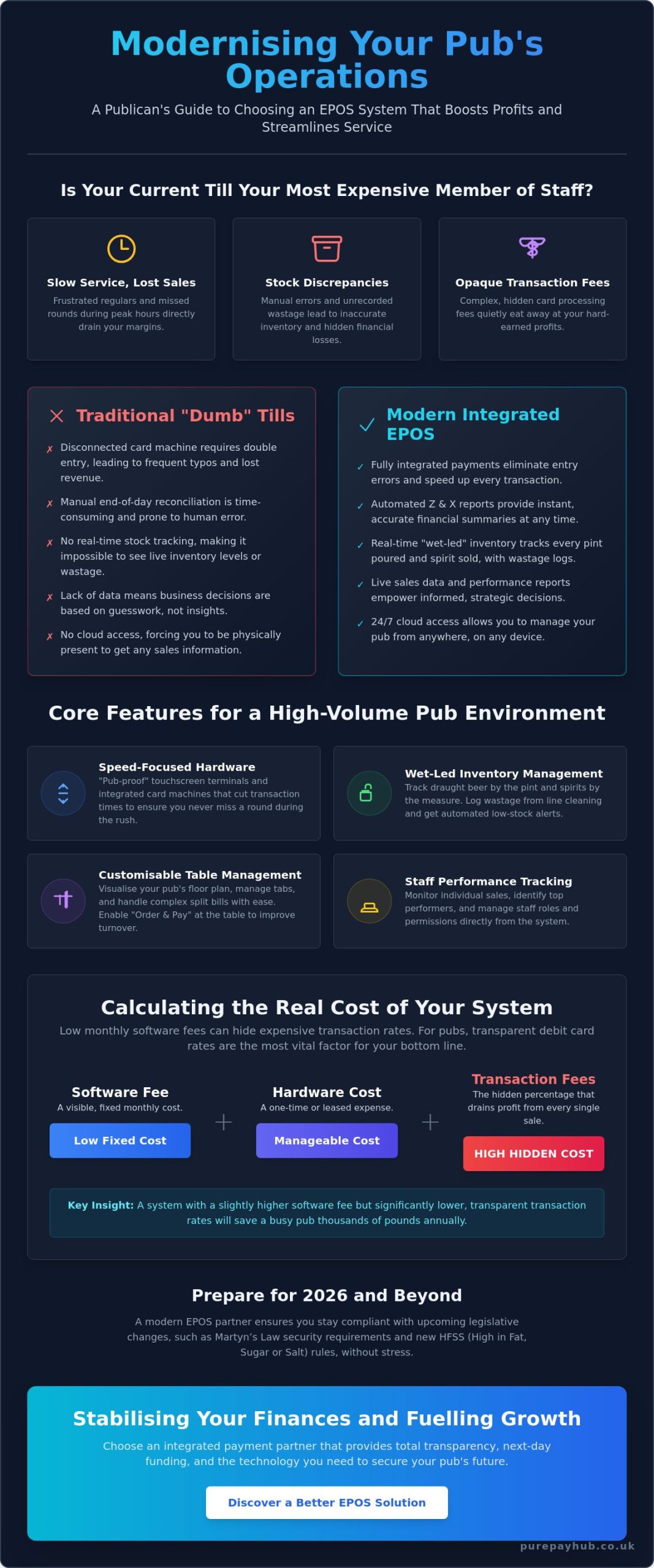
The “Hidden Markup” trap is particularly dangerous for hospitality venues. Flat-rate models, which often charge around 1.75% per transaction, are marketed as simple. However, if your business processes a high volume of debit card payments, this simplicity becomes expensive. When you could be paying debit rates from 0.3%, a flat 1.75% rate means you are handing over an extra 1.45% on almost every sale. For a busy cafe, this difference amounts to hundreds of pounds every month. We believe in a no-nonsense approach where your rates reflect the actual cost of processing, not an arbitrary markup.
Beyond the headline rates, you must account for PCI compliance and fund accessibility. Non-compliance fines can appear unexpectedly on your monthly bill if your provider doesn’t proactively support your security standards. Furthermore, next-day access to funds is a critical but often overlooked value. Waiting three to five working days for your takings to clear creates unnecessary pressure on your cash flow. Accessing your money the following day ensures you can pay suppliers and staff without stress.
Transaction Rates: The 0.3% vs 1.75% Debate
Flat-rate models are often popular with startups because they require little commitment. However, established cafes with steady turnover benefit far more from interchange-plus models. Interchange-Plus is the most transparent pricing model for UK merchants because it separates the actual card scheme costs from the provider’s margin. By switching to this model, cafes can secure debit card rates as low as 0.3%, allowing them to reinvest those savings back into the business rather than losing them to opaque fees.
Hardware Investment: Rental vs. Upfront Purchase
Deciding whether to lease or buy your hardware depends on your capital and growth plans. Buying equipment outright reduces your monthly outgoings and gives you total ownership of your assets. However, leasing can be a smart move in 2026 as it allows you to upgrade to the latest tech more easily. Modern hardware should prioritise battery life and 4G connectivity to ensure your EPOS system for a small cafe with table service works perfectly in outdoor seating areas or during a Wi-Fi outage. When calculating the total cost of ownership over a three-year period, remember to include the cost of built-in printers and replacement batteries to avoid “bill shock” later on.
Choosing Your Setup: Handheld Tablets vs. Fixed Counter Tills
Space is a premium in any small venue. A fixed counter till often acts as a magnet for crowds, creating a bottleneck that disrupts the flow of your floor. When you implement an EPOS system for a small cafe with table service, you have to decide whether your staff should be tethered to a desk or free to roam. In 2026, the all-in-one smart terminal has become the industry standard. These devices allow your team to take an order and process the payment on a single handheld unit. This removes the need for customers to queue at the counter, keeping your entrance clear and your atmosphere relaxed.
Reliability matters more than aesthetics. Many independent cafes operate out of older stone buildings or offer outdoor seating where Wi-Fi signals frequently drop. Your hardware must include a 4G backup to ensure you never lose a sale during a connectivity dip. This technical resilience ensures your EPOS system for a small cafe with table service remains functional even when the local infrastructure fails. Beyond the technology, modern handheld service changes how customers perceive your brand. It moves the focus away from the transaction and back to the hospitality, reinforcing that “favourite local spot” vibe. If you are ready to upgrade your hardware, explore our mobile card machine and EPOS options to find your perfect fit.
The Case for Handheld Terminals
Staff efficiency improves when you adopt “Pay at Table” workflows. This approach reduces the time a table sits empty by approximately five to ten minutes per party. By closing the bill at the table, your team can begin resetting the space immediately. There are also distinct hygiene benefits to this model. You avoid having large groups huddle around a central counter, which keeps your dining area feeling spacious and clean. Additionally, smart software includes “Upsell Prompts” that remind staff to offer a second round of drinks or a dessert, boosting your average transaction value without extra effort.
Integrating with Your Existing Space
Small, steam-heavy environments require durable hardware. When choosing printers for your kitchen or barista station, consider the difference between thermal and impact models. Impact printers are often better for hot kitchens as the paper is more resistant to heat and steam. You also need to ensure your system features a robust “Offline Mode.” This allows you to continue taking orders and recording sales even if the internet goes down whilst the cafe is full. Finally, consider the design. Modern hardware comes in various colours and styles, allowing you to choose equipment that complements your cafe’s unique interior design rather than clashing with it.
PurePay Hub: Seamless Hospitality EPOS and Transparent Payments
PurePay Hub offers a standard of quality that replaces industry skepticism with genuine clarity. We combine industry-leading software with ultra-low transaction rates to ensure your technology supports your growth rather than hindering it. When you select an EPOS system for a small cafe with table service, you shouldn’t have to compromise between advanced functionality and fair pricing. We provide both. Our “No-Nonsense” promise means you will never encounter hidden markups or opaque fee structures. We position ourselves as your supportive business ally.
Speed is essential for independent venues. Our quick onboarding process ensures you are ready to manage your tables in days, not weeks. We understand that cash flow is the lifeblood of your business. This is why we prioritise next-day funding as a standard feature. You shouldn’t have to wait for your own money whilst your bills continue to arrive. We ensure your takings are in your account the following day, providing the financial stability you need to manage suppliers and staff with confidence.
Tailored Rates for Small Businesses
Our pricing model is built to protect your small margins. We offer debit card charges starting at 0.3% and credit card rates from 0.5%. This transparent approach allows you to keep more of every sale compared to expensive flat-rate providers. We also take the weight of merchant account management off your shoulders. Our team handles the complexities of PCI compliance and reporting so you can focus on your coffee and your customers. For cafes looking to expand or invest in a fresh refurb, we also facilitate a business cash advance to help you grow without the stress of traditional banking.
Ready to Transform Your Table Service?
Service excellence starts with the right partner. We invite you to see the difference that honesty and integrity make to your bottom line. You can get a transparent quote based on your actual card turnover without any corporate jargon. Our UK-based support team provides calm advocacy whenever you need assistance. We are here to help you build a more efficient and profitable cafe. It is time to move away from hidden fees and toward a fairer way of doing business.
Organise your free PurePay Hub quote today
Future-Proof Your Cafe Service
Selecting the right EPOS system for a small cafe with table service is a strategic move that balances operational speed with financial clarity. You now understand that moving away from fixed tills to mobile terminals can significantly reduce table turnover time. More importantly, you know that a “free” software offer is often a mask for high transaction rates that drain your profits. Transitioning to a transparent fee model allows you to reclaim your margins whilst providing a seamless experience for your customers.
At PurePay Hub, we are committed to being a fair partner to independent business owners. We offer debit card rates from 0.3% and provide next-day access to your sales funds. Our integrated UK-based technical support is always available to ensure your service never falters. Switch to PurePay Hub for Fairer Rates and Faster Funding today. Your cafe deserves a technology partner that values integrity as much as you do.
Frequently Asked Questions
What is the difference between a POS and an EPOS system for a cafe?
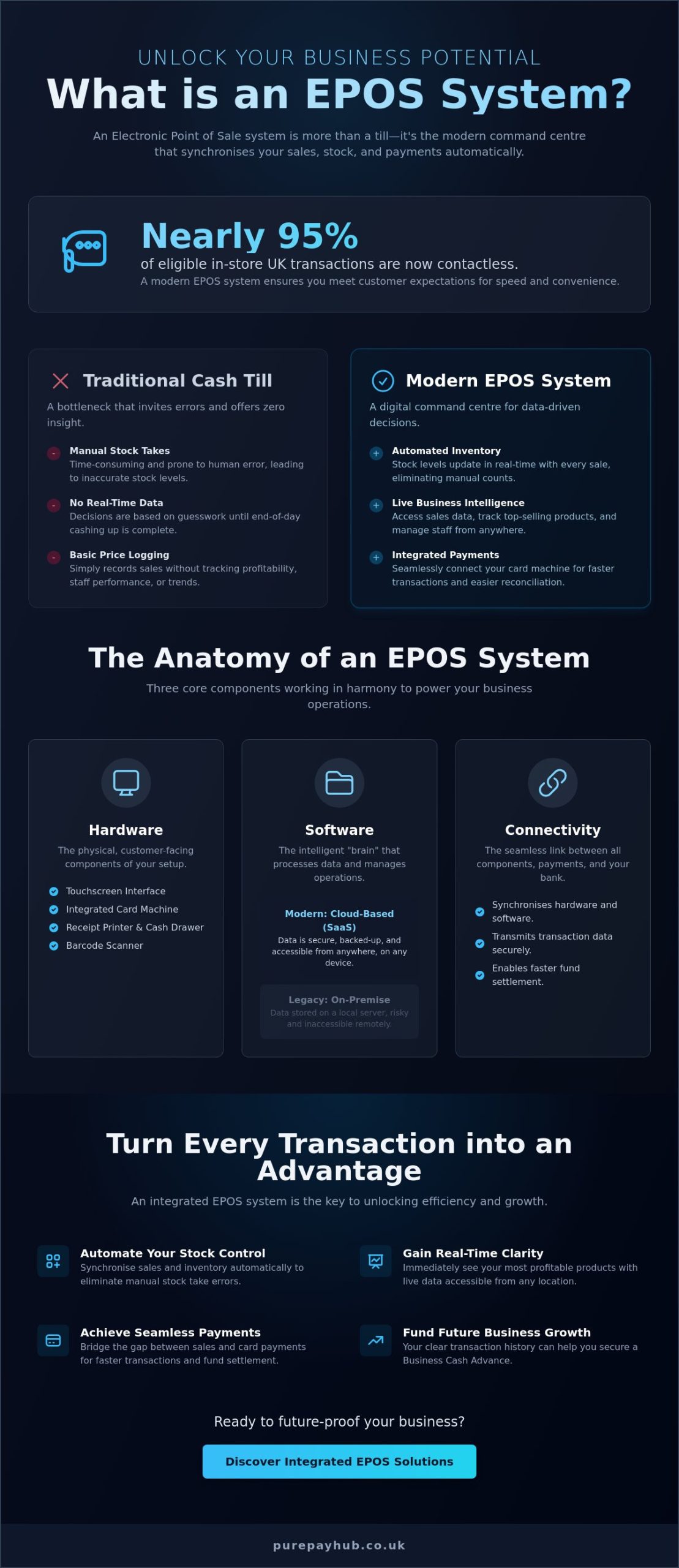
A Point of Sale (POS) refers generally to the location where a transaction takes place, whilst an Electronic Point of Sale (EPOS) uses digital hardware and cloud-based software to manage the process. For your venue, an EPOS system does more than just open a cash drawer. It tracks stock, manages table numbers, and provides real-time sales data to help you make informed business decisions.
Can I use my existing iPad for a cafe EPOS system with table service?
You can often use an existing iPad, but specialized hospitality hardware is usually more reliable in a busy environment. A professional EPOS system for a small cafe with table service often requires tablets that are designed to withstand steam, spills, and constant use. If you choose to use your own device, ensure it supports the latest 2026 security updates to remain fully PCI compliant.
How much does a hospitality EPOS system typically cost in the UK?
Monthly software costs for a cafe system in the UK typically range from £20 to £150. Upfront hardware costs generally fall between £500 and £2,500 depending on the number of terminals and printers you need. It is vital to look beyond the initial price tag; high transaction fees can often cost you more over a year than the hardware itself.
Do I need a separate merchant account for my cafe EPOS?
You do need a merchant account to accept and process card payments through your till. Some providers bundle this into a flat-rate package, whilst others provide a dedicated account with transparent pricing. Having a dedicated merchant account often gives you better clarity over your fees and allows you to access more competitive debit rates as your business grows.
How does an EPOS system help with bill splitting at the table?
Modern software allows staff to split bills by individual items or by a specific number of covers directly at the table. This functionality eliminates the need for customers to queue at the counter to pay separately. It automates the calculation, which reduces manual errors and ensures your staff can clear and reset tables much faster during your busiest hours.
What happens to my table orders if the Wi-Fi goes down?
Professional systems include an “Offline Mode” or 4G backup to ensure your EPOS system for a small cafe with table service stays functional. This feature allows you to continue taking orders and recording sales locally on the device. Once your internet connection is restored, the system automatically syncs all data to the cloud so your records remain accurate and up to date.
Is it better to rent or buy my cafe card machine and till?
Buying your hardware outright usually offers the best long-term value and lowers your fixed monthly outgoings. However, renting can be a sensible choice if you want to preserve your initial capital or upgrade to the latest technology every few years. You should evaluate the total cost of ownership over a three-year period to decide which option best suits your current budget.
How quickly can I access my funds with a PurePay Hub integrated system?
We provide next-day access to your sales funds to keep your cafe’s cash flow stable and predictable. Many traditional providers hold your takings for three to five working days, which can create unnecessary financial pressure. With our integrated approach, your hard-earned money is available almost immediately to help you pay staff and suppliers without the usual wait.