Why are you still paying a 1.75% flat rate for a transaction that costs a fraction of that to process? It’s a frustrating reality for many local merchants who see their hard-earned margins swallowed by opaque fee structures and hidden admin costs. You likely started with a “simple” flat fee to avoid complexity. Instead, you’ve ended up subsidising expensive rewards cards while your own debit transactions remain overpriced. Finding the lowest card machine rates for small business UK shouldn’t feel like solving a puzzle designed to confuse you.
We believe you deserve total clarity and a fair deal. This guide will show you exactly how to slash your transaction costs by moving away from expensive blended models and toward transparent pricing. You’ll discover how to access debit rates closer to 0.3% and secure next-day funding without the burden of hidden PCI compliance fees. We’ll break down the latest 2026 UK fee models and compare the market’s most competitive providers so you can reclaim control of your business finances.
Key Takeaways
- Understand the hidden costs within flat-rate pricing and learn how to identify the transaction, hardware, and admin fees that inflate your monthly bill.
- Discover how to secure the lowest card machine rates for small business UK by moving to an Interchange-Plus model that treats debit and credit cards differently.
- Compare traditional bank offerings against independent providers to find the most cost-effective solution for your specific monthly turnover.
- Use our success checklist to calculate your average transaction value and uncover your true “effective” rate from current statements.
- Learn how to accelerate your cash flow with next-day funding and modern, integrated EPOS systems that eliminate manual reconciliation.
Understanding Card Machine Fees: Why “Simple” Isn’t Always Cheapest
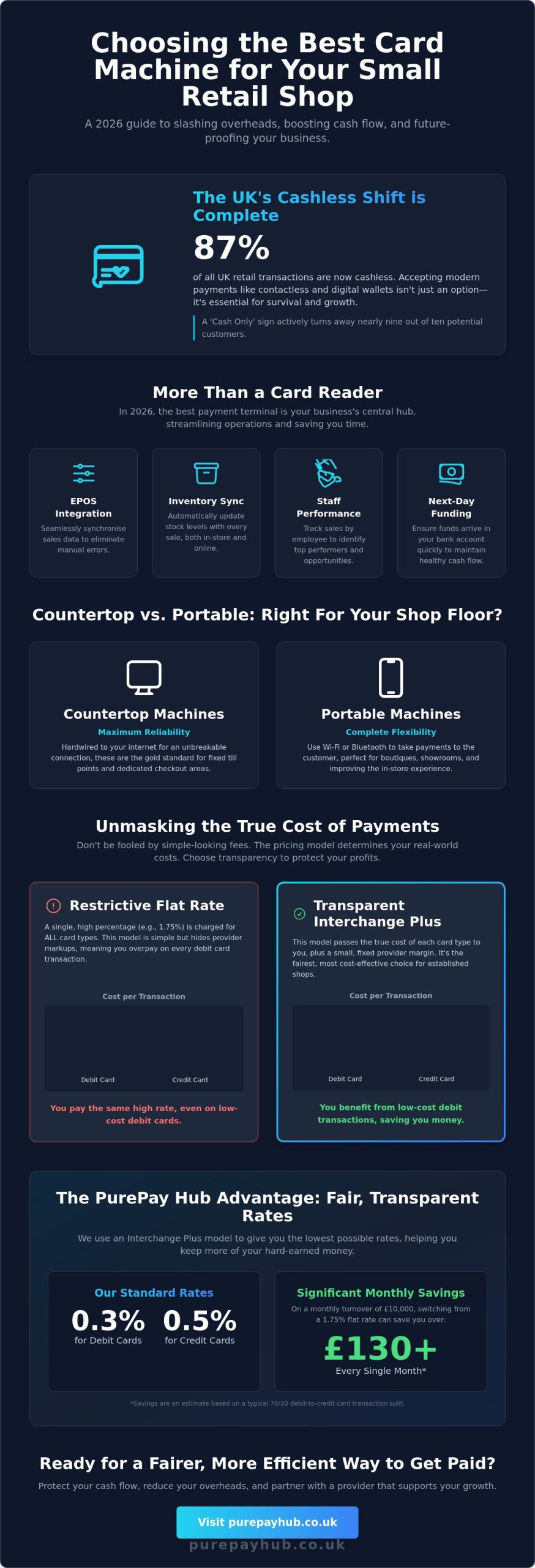
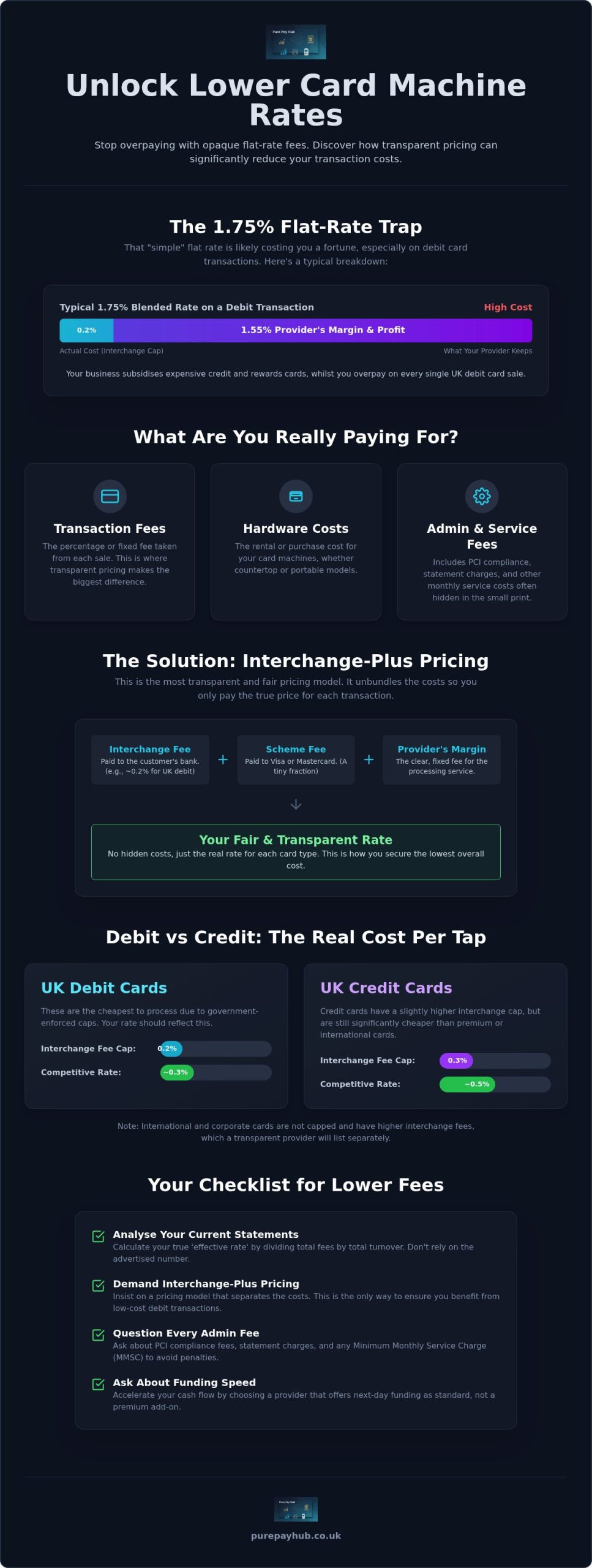
Don’t let the word “simple” fool you. In the payments industry, simplicity is often a premium service you didn’t ask for. To find the lowest card machine rates for small business UK, you first need to look past the headline numbers. Most providers bundle their costs into a single figure, but your actual bill is built from three distinct pillars. This lack of transparency makes it difficult for you to see where your money is actually going.
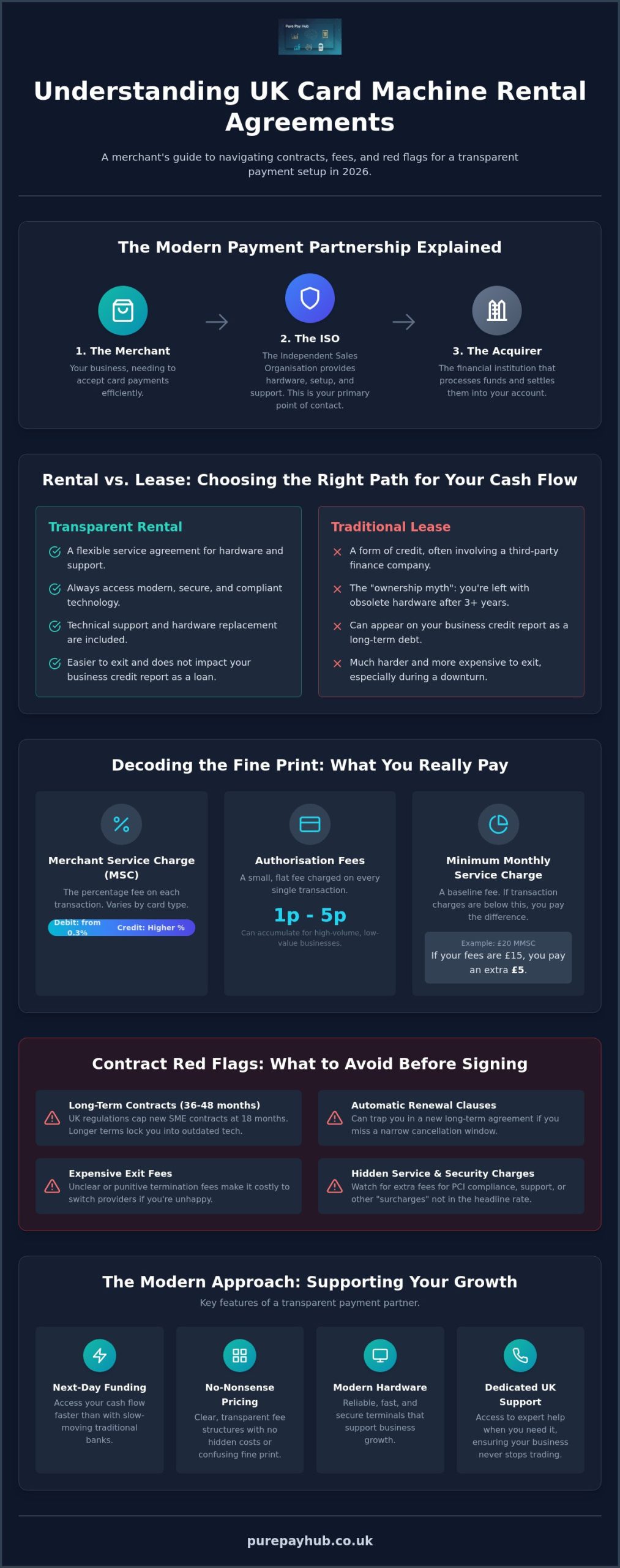
First, there are transaction fees, which are the percentage of each sale you lose. Second, hardware costs cover your equipment, whether you choose a Countertop Card Machine or a Portable Card Machine. Finally, admin fees include everything from statement charges to PCI compliance. When these are lumped together into a flat rate like 1.75%, you lose all visibility. This total cost is known as your Merchant Service Charge (MSC). It’s the real price of doing business, and it’s often far higher than it needs to be.
Understanding the components of your MSC is vital. What are interchange fees? These are the baseline costs set by banks, which are capped at 0.2% for UK consumer debit cards. If your provider charges you a flat 1.75%, they are keeping the 1.55% difference as pure profit on every debit tap. For high-volume, low-margin UK retailers, securing the lowest card machine rates for small business UK is the difference between a healthy profit and barely breaking even.
The Trap of Flat-Rate Pricing
Flat rates penalise businesses that primarily take UK debit cards. Since the cost to the provider is so low, a flat fee essentially forces you to subsidise the expensive credit and rewards cards used by other people’s customers. If your turnover exceeds £2,500 a month, the “no monthly fee” model offered by entry-level providers likely costs you more than a subscription plan with lower transaction rates. It’s a classic marketing hook that becomes a growth tax as your business scales.
Fixed vs. Variable Transaction Costs
Transaction costs come in two formats: fixed and variable. A fixed fee, such as 10p per tap, can devastate a coffee shop with a low average transaction value. Conversely, a high variable percentage eats into the margins of a high-end furniture store. You must also watch for the Minimum Monthly Service Charge (MMSC). This is a floor on what you pay; if your monthly transactions don’t generate enough fees, the provider charges you the difference anyway. Transparency means knowing exactly which model fits your specific trade without hidden penalties.
Interchange Fees and Merchant Rates Explained
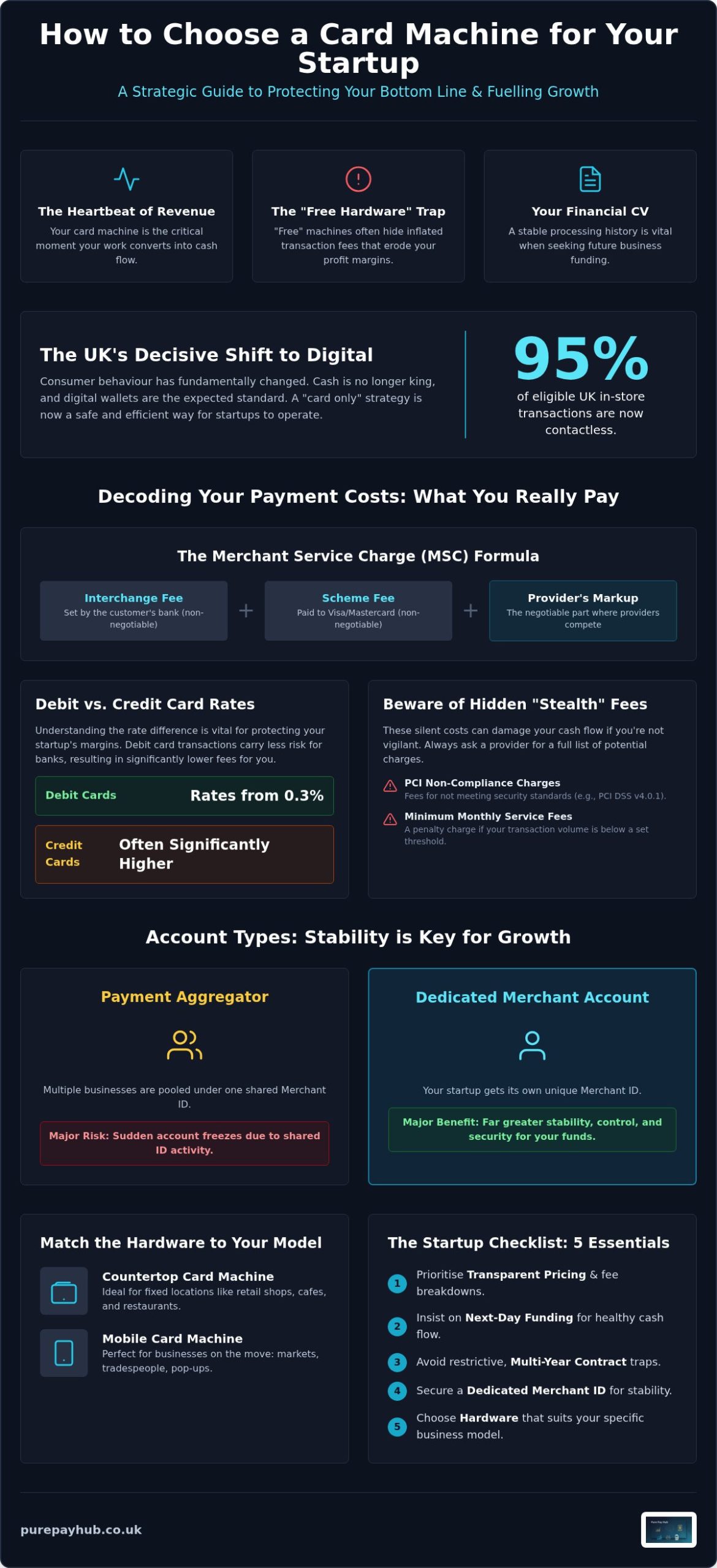
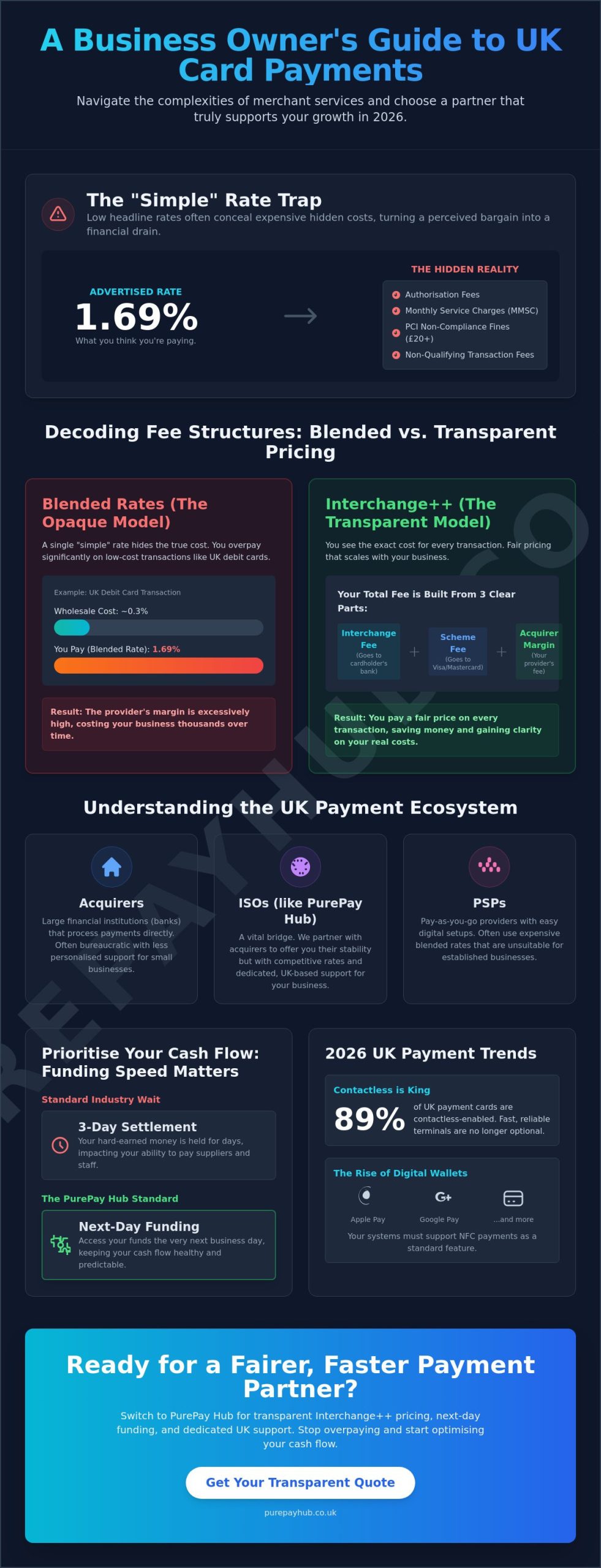
The fairest way to process payments is through the “Interchange-Plus” model. It’s the only way to see exactly what you’re paying for. This model breaks your costs into three clean parts: the interchange fee paid to the customer’s bank, the scheme fee paid to Visa or Mastercard, and the provider’s margin. Most traditional banks hide these components inside a single, high percentage. By separating them, you gain the clarity needed to secure the lowest card machine rates for small business UK. The Payment Systems Regulator recently conducted a Market review into card fees, which highlights how complex these underlying structures can be for the average merchant.
Debit cards are significantly cheaper for you to process because their interchange fees are legally capped at 0.2%. Credit cards have a slightly higher cap of 0.3%. In the current 2026 market, competitive merchant rates typically start around 0.3% for debit and 0.5% for credit. If your provider isn’t passing these savings on to you, they are simply padding their own pockets. You can explore these transparent merchant rates to see how they compare with your current provider’s “all-in” offer.
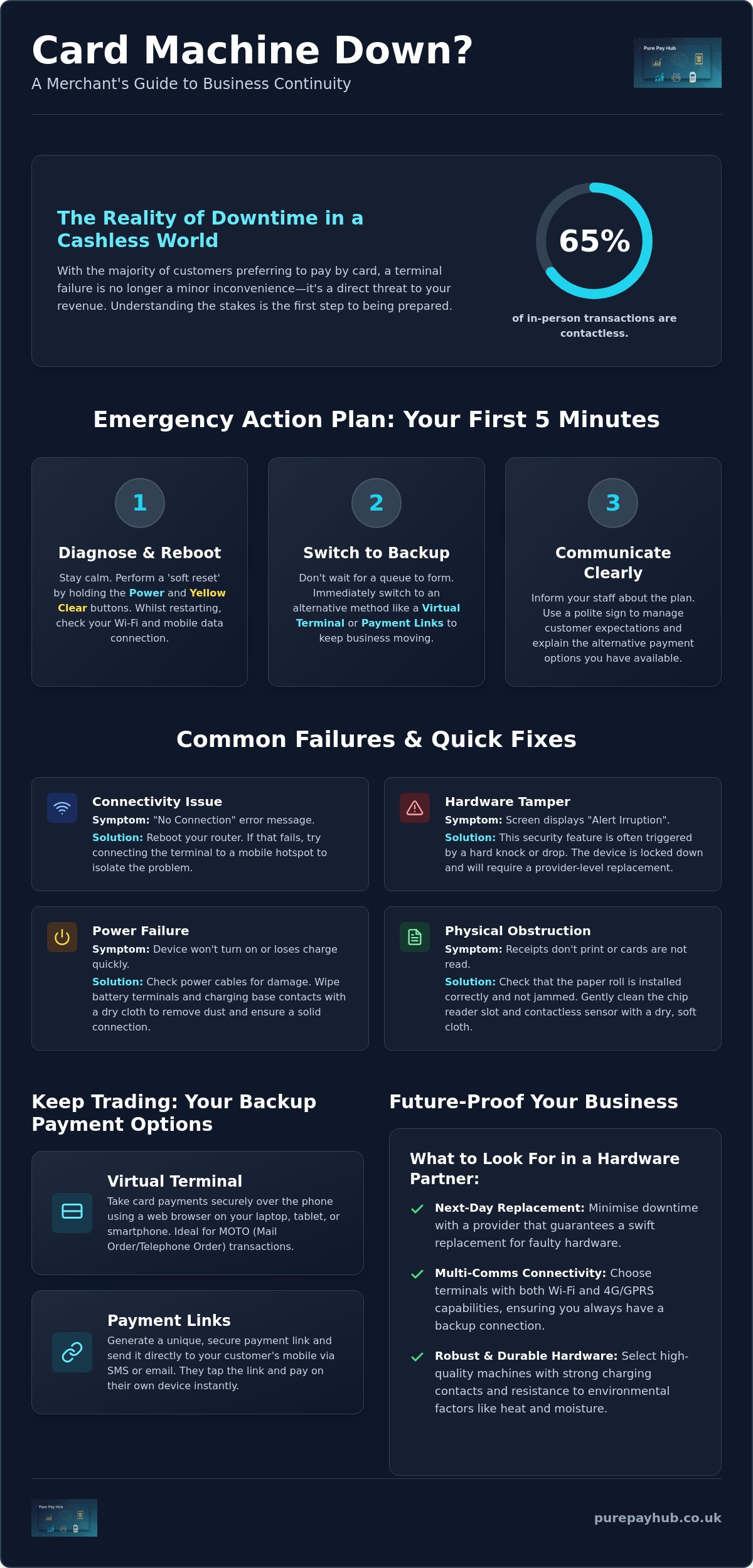
Security is another area where fees often hide. PCI compliance is a mandatory data security standard, yet many providers use it as a revenue stream. They might charge you a monthly “non-compliance” fine that costs more than the service itself. A supportive partner helps you complete your compliance self-assessment quickly to ensure you avoid these unnecessary penalties entirely.
Debit vs. Credit: The Pricing Divide
Your profit margin changes with every tap. A local customer using a standard UK debit card costs you very little. However, international or corporate cards are not subject to the same fee caps. These premium cards can carry interchange fees as high as 1.5% or more. A transparent provider will list these card types separately on your statement. This allows you to see your “effective rate” across all card types rather than guessing based on a blended average. It’s the difference between seeing a blurred total and a high-definition breakdown of your expenses.
Hidden Fees to Scrutinise
Small charges often add up to large monthly losses. Authorisation fees are a prime example; these are tiny costs (often 1p to 3p) charged every time the machine talks to the bank. Whilst they seem negligible, they can be significant for businesses with hundreds of daily sales. You should also check for refund fees and chargeback costs. Some providers even charge you a monthly fee just to access your own transaction data through an online portal. Always demand a provider that offers clear, accessible data without a subscription tax.
Comparing the Best Card Machine Providers for UK SMEs
The right provider for your neighbour might be the wrong choice for you. Your monthly turnover is the most important metric when searching for the lowest card machine rates for small business UK. If you process less than £1,000 a month, the convenience of a flat-rate mobile reader often outweighs the higher transaction cost. However, once your sales hit the £5,000 mark, those “simple” percentages start to drain your bank account. For businesses processing £20,000 or more, a bespoke Interchange-Plus agreement is the only way to protect your margins from unnecessary markups.
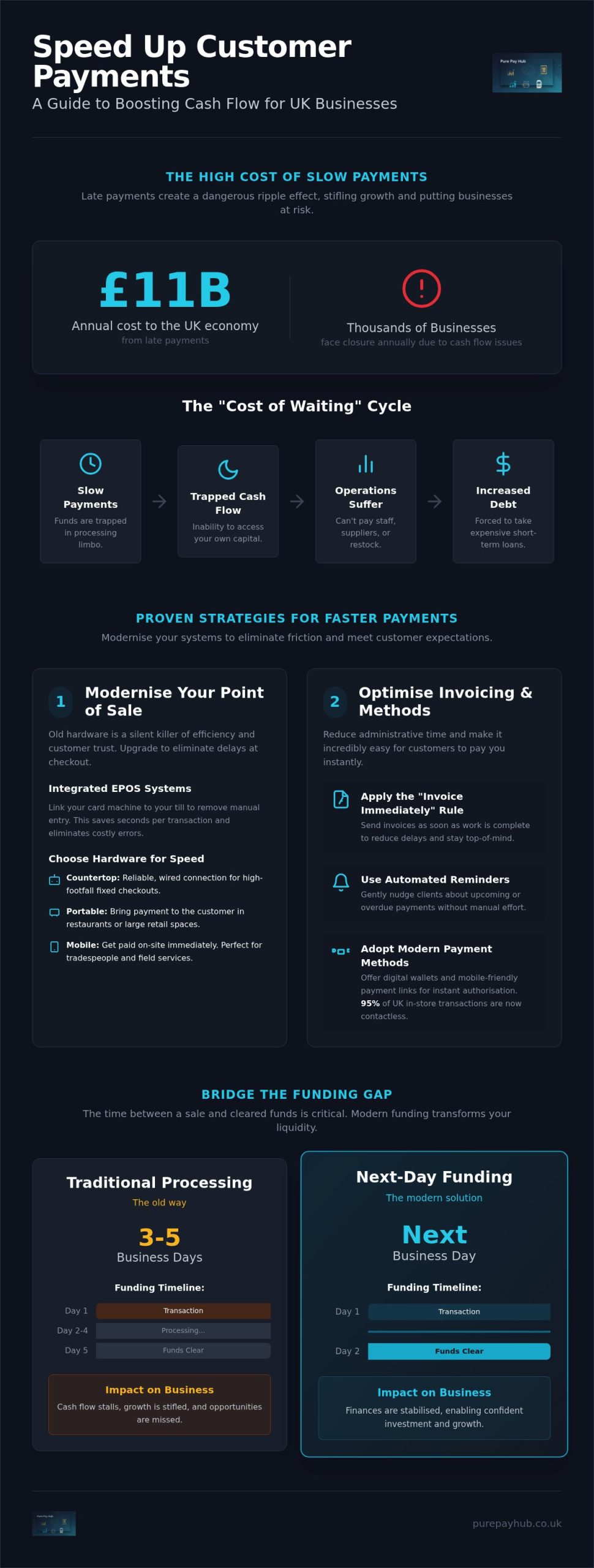
Next-day funding has become a non-negotiable standard for the modern UK high street. Waiting three to five working days for your money to clear is a relic of old-fashioned banking that stifles your cash flow. Whether you use a Countertop Card Machine at a fixed till or a Portable Card Machine for table service, you should expect your funds to arrive the following morning. This speed allows you to pay suppliers and manage staff wages without relying on expensive overdrafts.
Traditional Banks vs. Specialist Fintechs
High-street banks often treat merchant services as a secondary product. Their systems are frequently slower to set up and their fee structures remain rigid. Specialist UK providers and Independent Sales Organisations (ISOs) are far more agile. They focus exclusively on payments, which allows them to offer more competitive, tailored rates. Perhaps most importantly, specialists usually provide better support. When your terminal fails on a busy Saturday afternoon, you need to speak to a human expert immediately rather than getting lost in a corporate phone menu.
Hardware Rental vs. Upfront Purchase
You have two main paths for equipment: buying a basic reader or leasing professional-grade hardware. Entry-level mobile readers are cheap to buy upfront but often lack the durability and print speed required for a busy retail environment. Leasing a Countertop Card Machine or a Mobile Card Machine usually involves a small monthly fee, but this often includes vital benefits. A typical rental package should cover:
- Ongoing Technical Support: Rapid assistance if the hardware develops a fault.
- Hardware Replacements: A new unit sent out if your current one breaks.
- Security Updates: Ensuring your terminal always meets the latest encryption standards.
Choosing the right hardware depends on your specific environment. A fixed Countertop Card Machine is the most reliable for retail desks. A Portable Card Machine uses Bluetooth or Wi-Fi to reach customers within your premises, whilst a Mobile Card Machine uses a roaming SIM card to take payments anywhere in the UK with a signal. Matching your hardware to your business model ensures you aren’t paying for features you don’t use.
How to Secure the Lowest Rates: A Checklist for Success
Securing the lowest card machine rates for small business UK requires more than just a quick search. It requires preparation. You need to approach providers as an informed partner rather than a passive customer. Start by gathering at least three months of your most recent merchant statements. These documents hold the key to your current spending. You can calculate your “effective rate” by dividing your total monthly fees by your total monthly turnover. If this figure is significantly higher than the headline rate you were promised, you are likely paying for hidden markups and unnecessary admin costs.
Don’t settle for “off-the-shelf” pricing. Every business is unique, and your rates should reflect that. Request a bespoke quote that accounts for your specific industry and card mix. Finally, scrutinise your contract length. The payments market changes rapidly, and you need the flexibility to move if a better deal emerges. Avoid long-term ties that lock you into outdated pricing models for years at a time.
The Power of Your Transaction Data
Your processing history is your strongest negotiation tool. A proven track record of reliable transactions lowers your risk profile in the eyes of an underwriter. This lower risk should translate directly into a lower provider margin. Your Average Transaction Value (ATV) is equally vital for your strategy. If you have a high ATV, you should prioritise negotiating a lower percentage rate. If your ATV is low, focus on reducing the fixed pence fee per transaction. Demand next-day access to your funds as a standard feature. It’s your money; you shouldn’t have to wait a week to use it for your own business growth.
Switching Providers Without the Stress
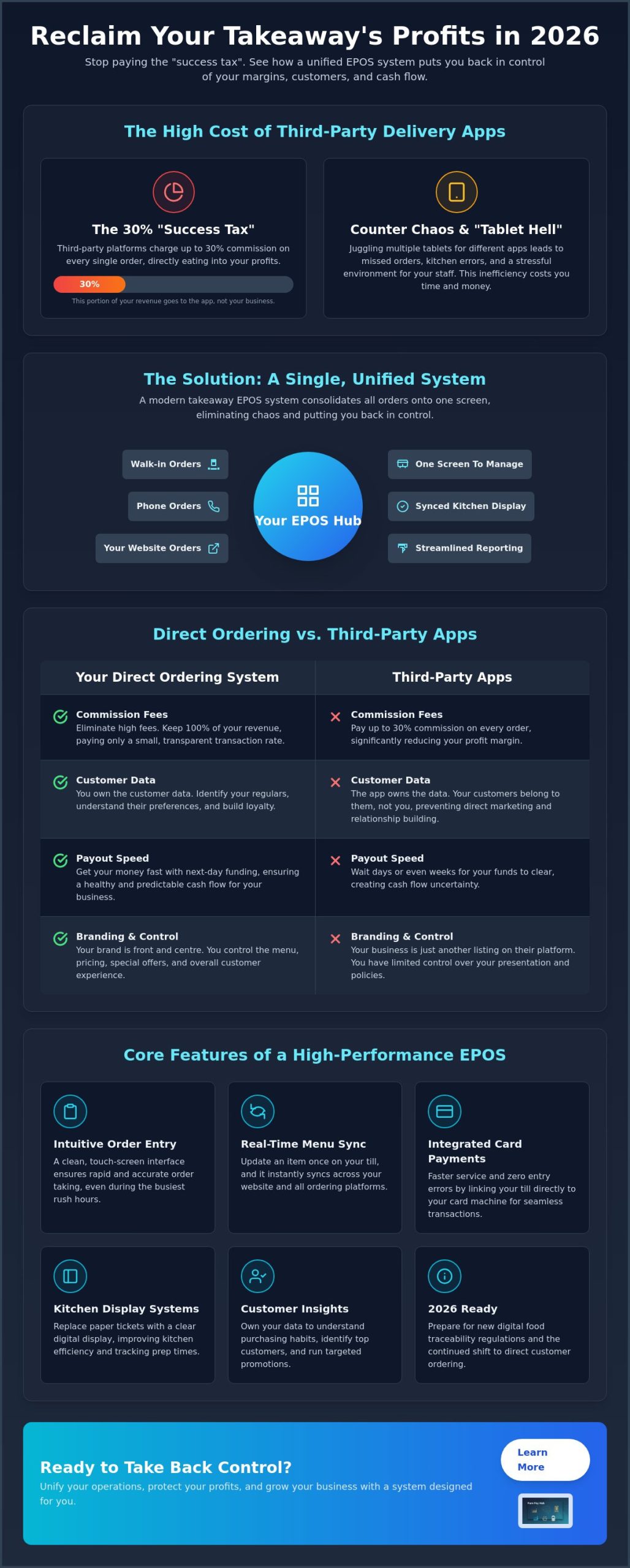
Moving to a fairer deal is simpler than most people think. First, check your current contract for exit fees or notice periods. Many traditional banks require 30 to 90 days of notice, whilst some modern providers offer rolling monthly terms. Once you’ve identified your exit path, the onboarding timeline for a transparent partner is typically five to seven working days. Ensure your new hardware, such as a Countertop Card Machine or a Portable Card Machine, integrates seamlessly with your existing EPOS Systems. Proper integration prevents manual entry errors and saves you hours of reconciliation work every single week.
Ready to see how much you could save? Switch to transparent payments today and reclaim your margins.
PurePay Hub: Transparent Payments for UK Businesses
PurePay Hub exists as the antidote to the opaque fee structures that have frustrated UK merchants for decades. We don’t believe in hiding behind complex terminology or “all-in” rates that favour the provider over the partner. Instead, we offer a stabilising force for your business finances through absolute clarity. By providing the lowest card machine rates for small business UK, we ensure that more of your revenue stays where it belongs: in your local business. Getting a transparent quote designed for your growth is the first step toward reclaiming your hard-earned margins.
Our model is built on fairness. We offer debit card charges starting from 0.3% and credit card rates from 0.5%. When you combine these competitive rates with next-day access to your funds, your cash flow becomes predictable and healthy. We also provide integrated EPOS Systems that talk directly to your card terminals. This eliminates the stress of manual reconciliation and reduces the risk of human error at the till. We provide the tools you need to run a modern, efficient business without the corporate jargon.
Why Our Rates Stay Low
We maintain our commitment to a no-nonsense approach by stripping away the hidden markups common in traditional banking. There are no surprise admin fees or inflated PCI compliance charges to worry about. We support UK SMEs across the retail, hospitality, and service sectors by treating every merchant as a long-term ally. Your merchant account is designed to grow with you. As your volume increases, your pricing remains transparent and principled. We act as a supportive business partner rather than a distant financial institution.
Beyond the Card Machine
Our support extends past the physical till. If you need to bill customers remotely, our Virtual Terminal and Payment Links provide secure, professional ways to take payments without a physical card present. For businesses looking to expand, we offer a Business Cash Advance. This allows you to secure funding for development based on your future card sales, providing a flexible alternative to traditional bank loans. Every service we offer is designed to foster your business development through simplicity and honesty. We win your trust through steady, fair service rather than shouting for attention.
Secure your lowest card machine rates with PurePay Hub today and experience a fairer way to get paid.
Secure a Fairer Future for Your Business
You now have the knowledge to look past the marketing “simplicity” of flat rates and identify the true cost of your merchant services. By switching to a transparent model that separates interchange fees from provider margins, you can significantly reduce your monthly overheads. Finding the lowest card machine rates for small business UK is the first step toward building a more resilient and profitable operation. It’s about ensuring your hard-earned revenue stays within your business rather than padding a bank’s bottom line.
We’re here to act as your reliable expert and supportive partner. Our commitment to a no-nonsense approach means you can access debit rates from 0.3% and credit rates from 0.5%. We also provide next-day funding as standard; this ensures your cash flow remains steady and predictable whilst you focus on serving your customers. Don’t let hidden fees or opaque structures hold your growth back any longer. Your business deserves a payment solution built on honesty, clarity, and efficiency.
Get a Transparent Quote from PurePay Hub
Frequently Asked Questions
What are the average card machine rates for small businesses in the UK?
Average merchant service fees in the UK typically range from 1.4% to 3.4% per transaction for small businesses. These costs depend heavily on your card mix and monthly turnover. If you process around £10,000 per month, you should expect to pay between £140 and £250 in total fees. Securing the lowest card machine rates for small business UK often requires moving away from these high averages toward more transparent, volume-based pricing models.
Is it cheaper to buy or rent a card machine?
Renting a card machine is often the better choice for established retailers, whilst buying a reader suits low-volume traders. Upfront purchases for basic readers cost between £19 and £49 plus VAT, but these devices often lack durability. Renting professional hardware like a Countertop Card Machine ensures you receive ongoing technical support and rapid replacements if the unit fails. This approach protects your ability to trade without the risk of long-term hardware downtime.
How do I avoid hidden fees on my merchant statement?
You can avoid hidden fees by demanding an Interchange-Plus pricing structure. This model clearly separates the bank’s interchange fee, the card scheme fee, and the provider’s margin on your monthly statement. Always scrutinise your bill for “non-compliance” penalties or authorisation fees that weren’t clearly stated in your contract. Transparent providers will provide a clean breakdown that eliminates these murky markups and ensures you only pay for the service you actually use.
Can I get a card machine with no monthly contract?
You can obtain a card machine with no monthly contract from providers like Square or Zettle, but this flexibility usually comes with a higher flat-rate fee. These “pay-as-you-go” models often charge around 1.75% per transaction. Whilst this is helpful for seasonal businesses or startups, it quickly becomes expensive as your sales grow. More competitive rates are usually found through providers that offer short-term rolling agreements tailored to your specific monthly volume.
What is the difference between a merchant account and a business bank account?
A merchant account is a dedicated financial facility that allows you to accept card payments, whereas a business bank account is where your cleared funds are stored. When a customer taps their card, the funds first sit in your merchant account for security checks. Once processed, the money is transferred to your business bank account. You need both to operate, and a transparent provider will ensure the link between them is seamless and fast.
How long does it take for card payments to reach my bank account?
Card payments typically take three to five working days to reach a business bank account through traditional providers. However, modern fintech partners now offer next-day funding as a standard feature for UK merchants. This speed is vital for managing cash flow and paying suppliers without delays. Accessing your revenue the following morning allows you to reinvest in your business growth immediately rather than waiting for outdated banking cycles to complete.
Do I need to pay for PCI compliance separately?
You should not have to pay for PCI compliance as a hidden extra, but many providers charge “non-compliance” fees if you haven’t completed your annual self-assessment. Some companies include the compliance service in their package, whilst others charge a separate monthly or annual fee. A fair partner will guide you through the security standards to ensure you remain compliant and avoid these unnecessary penalties. Always check if your provider uses compliance as a revenue stream.
Are mobile card readers cheaper than countertop machines for small shops?
Mobile card readers have lower upfront costs, but a Countertop Card Machine is usually more cost-effective for busy shops with high transaction volumes. Mobile readers are perfect for market stalls or businesses on the go. However, fixed terminals offer faster printing speeds and more reliable connections for a permanent retail desk. Finding the lowest card machine rates for small business UK involves matching your hardware choice to your actual trading environment to avoid overpaying for convenience.