Why are you still waiting three to five days for your hard-earned money to clear in a world where cash usage has dropped below 8%? If you’re tired of chasing unpaid invoices or losing a chunk of your profit to high transaction fees, you’re not alone. Most UK business owners feel the same frustration with complex setups and opaque pricing. Using payment links allows you to bypass these hurdles entirely. You can turn any text, email, or social media message into a secure checkout without needing a complex website or technical degree.
At PurePay Hub, we believe you deserve a fair partner rather than a distant financial institution. This guide shows you how to reclaim your time and accelerate your cash flow. You’ll discover how to access your funds the very next day and secure the lowest possible transaction rates, starting from just 0.3% for debit cards. We’ll walk through the simple “copy and paste” steps to get you paid instantly whilst staying fully compliant with the latest PCI DSS v4.0.1 standards. It’s time to move away from the murky fee structures of global giants and embrace a simpler, more transparent way to do business.
Key Takeaways
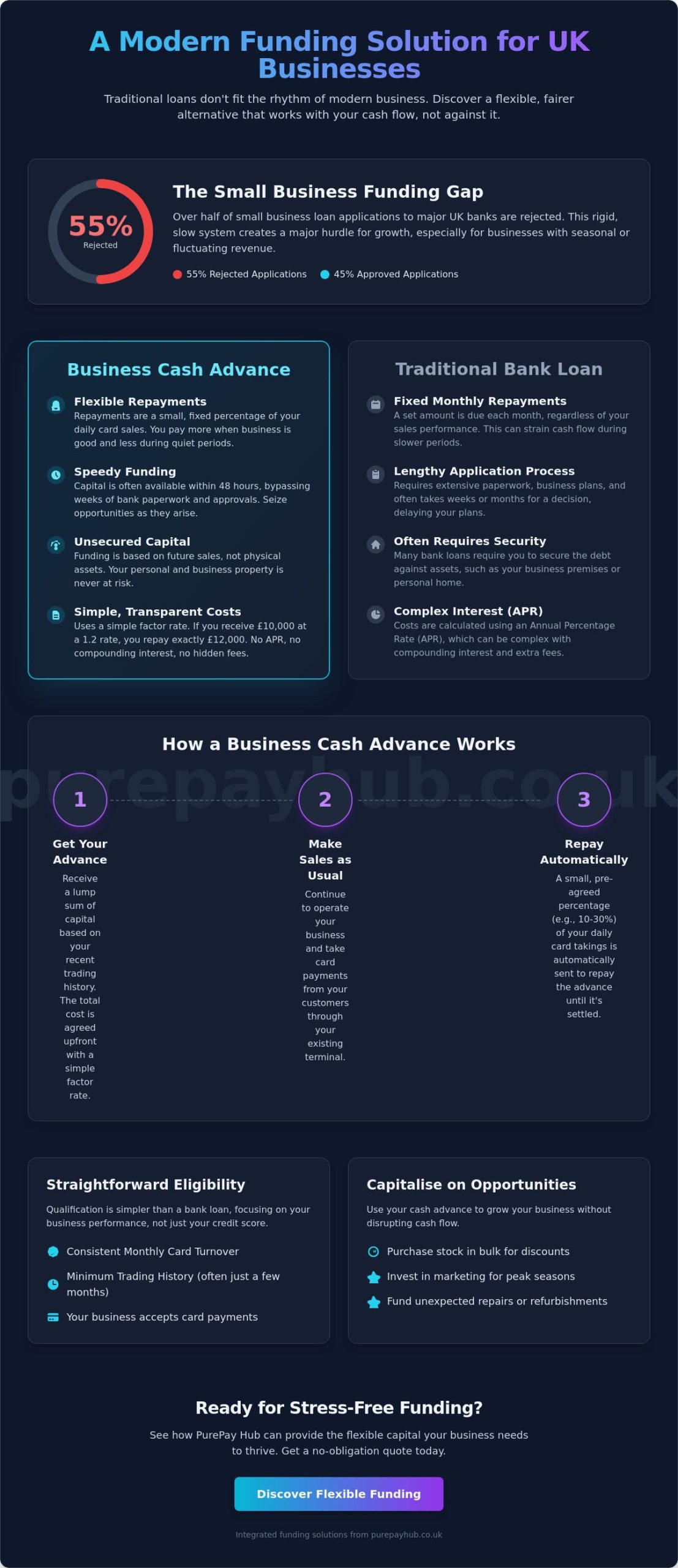
- Master the art of converting any SMS, email, or social media message into a professional checkout without the expense of a full e-commerce website.
- Identify the specific steps to accelerate your cash flow and ensure your hard-earned funds reach your bank account the very next day.
- Compare the true cost of payment links and discover how moving away from flat-fee giants can reduce your debit card rates to just 0.3%.
- Learn how to simplify your administrative workload by letting a dedicated partner manage the complexities of PCI DSS v4.0.1 compliance.
- Find out how to generate secure URLs in seconds using a Virtual Terminal to handle deposits and final balances with ease.
What Are Payment Links and How Do They Work for UK Businesses?
A payment link is a unique URL that directs your customers to a secure, branded checkout page. It functions as a digital “buy button” that you can share across any communication channel, from WhatsApp messages to professional emails. Unlike traditional e-commerce, this method requires no website, hosting, or complex coding knowledge. It’s a streamlined solution designed for the modern business owner who needs to accept payments without the overhead of a full online shop.
This technology is particularly effective for wholesalers, consultants, tradespeople, and retailers who take remote orders. Instead of waiting for a customer to manually set up a bank transfer, you simply send a link. Your customer clicks, enters their card details, and the transaction is complete. It’s a direct, no-nonsense approach to cash flow that fits perfectly into a busy working day.
Selling Without a Website: The New Standard
Social commerce and “conversational selling” are frequently outperforming traditional storefronts because they meet customers where they are. Whether you’re finishing a consultation or confirming a quote, payment links allow you to close the deal in the moment. They remove the common friction points found in manual invoicing and bank transfers. By offering a familiar card-payment interface, you provide a psychological sense of security that a simple list of bank details cannot match. It makes your small business look and act like a global player whilst maintaining your local identity.
The Shift from BACS to Instant Card Payments
Sharing your sort code and account number over email is an outdated practice that carries unnecessary security risks. A professional payment service provider handles the heavy lifting of encryption, ensuring that sensitive data is never exposed. When a customer pays via a card link, you receive an instant confirmation. This allows you to release goods or begin services immediately rather than waiting for days for funds to clear. A payment link is a secure gateway for remote transactions that protects both your business and your clients.
By moving away from slow BACS transfers, you gain a level of certainty that is vital for managing a healthy balance sheet. You no longer have to guess if a payment is “on its way.” You see the result in real-time. This shift represents a move toward a more disciplined and efficient way of operating, where the focus remains on your work rather than chasing administrative loose ends.
The Mechanics of Secure Digital Payments and PCI Compliance
Security isn’t just a technical requirement; it’s the foundation of the trust between you and your customers. Every transaction processed through payment links is protected by high-level encryption. This ensures that sensitive cardholder data is never exposed during transit. We also utilise tokenisation, a process that replaces actual card details with unique, non-sensitive identifiers. Even in the unlikely event of a data interception, the information remains entirely useless to unauthorised parties. This layered approach to safety allows you to focus on your work whilst we handle the digital fortress protecting your revenue.
Identity verification has become more sophisticated with the implementation of 3D Secure 2.0. This protocol is a mandatory part of Strong Customer Authentication (SCA) in the UK. It requires customers to verify their identity through their banking app or a one-time passcode. For you, this means a significant reduction in fraudulent chargebacks. It shifts the liability for fraud away from your business and onto the card issuer. It’s a disciplined way to ensure that the person paying you is exactly who they claim to be.
PCI Compliance: Protecting Your Business and Reputation
The PCI Security Standards Council establishes the global rules for handling card data, known as PCI DSS. For many small business owners, the administrative burden of staying compliant is a major source of stress. PurePay Hub manages the heavy lifting by providing a hosted checkout environment. Because the payment data never touches your own devices or servers, your scope for compliance is drastically reduced. This setup doesn’t just protect your reputation; it also helps you avoid the monthly non-compliance fines that traditional banks often slip into their fee structures.
Delivery Methods: From WhatsApp to QR Codes
Sharing your link is a simple “copy and paste” exercise that fits into your existing workflow. You can send payment links via WhatsApp, SMS, or Facebook Messenger to close a sale during a conversation. This flexibility is perfect for tradespeople or consultants who agree on a price and want to secure a deposit immediately. You can also generate QR codes for physical assets like brochures, menus, or shop windows. This turns every physical touchpoint into a potential point of sale. To ensure a professional finish, you can customise the checkout page with your own logo and brand colours. If you want to see how this simplicity could work for your business, you can explore secure payment solutions with PurePay Hub today.
Comparing Costs: Transparent Rates vs. Flat-Fee Providers
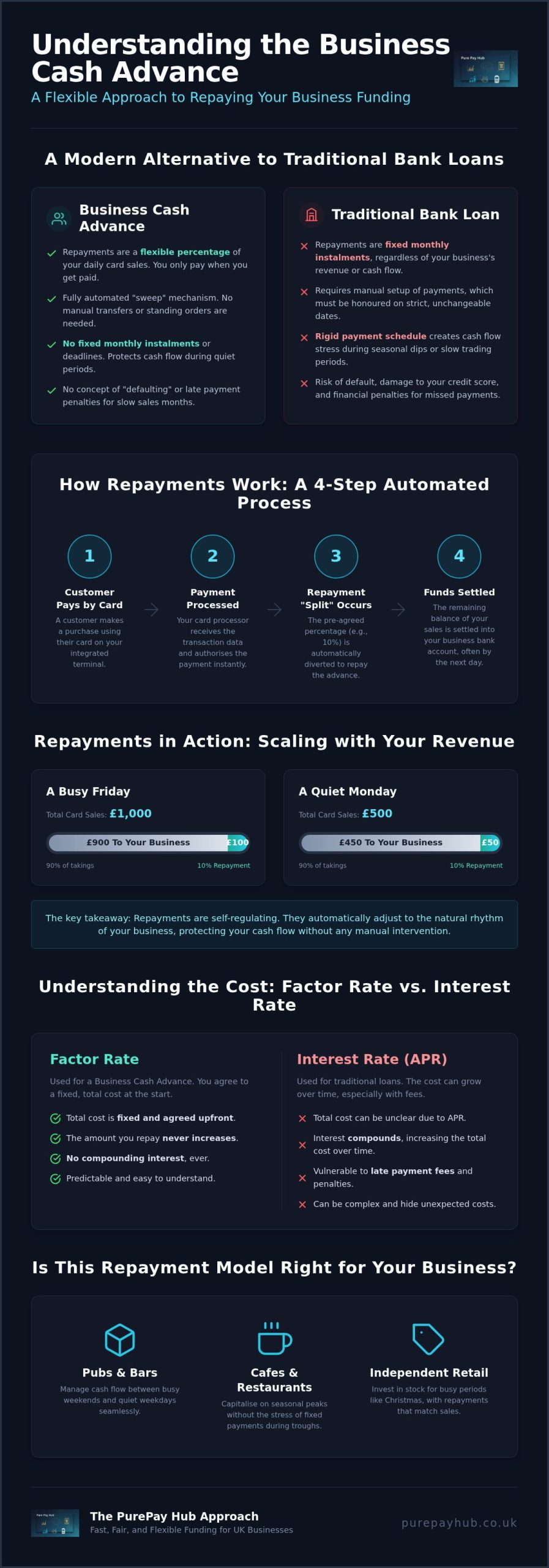
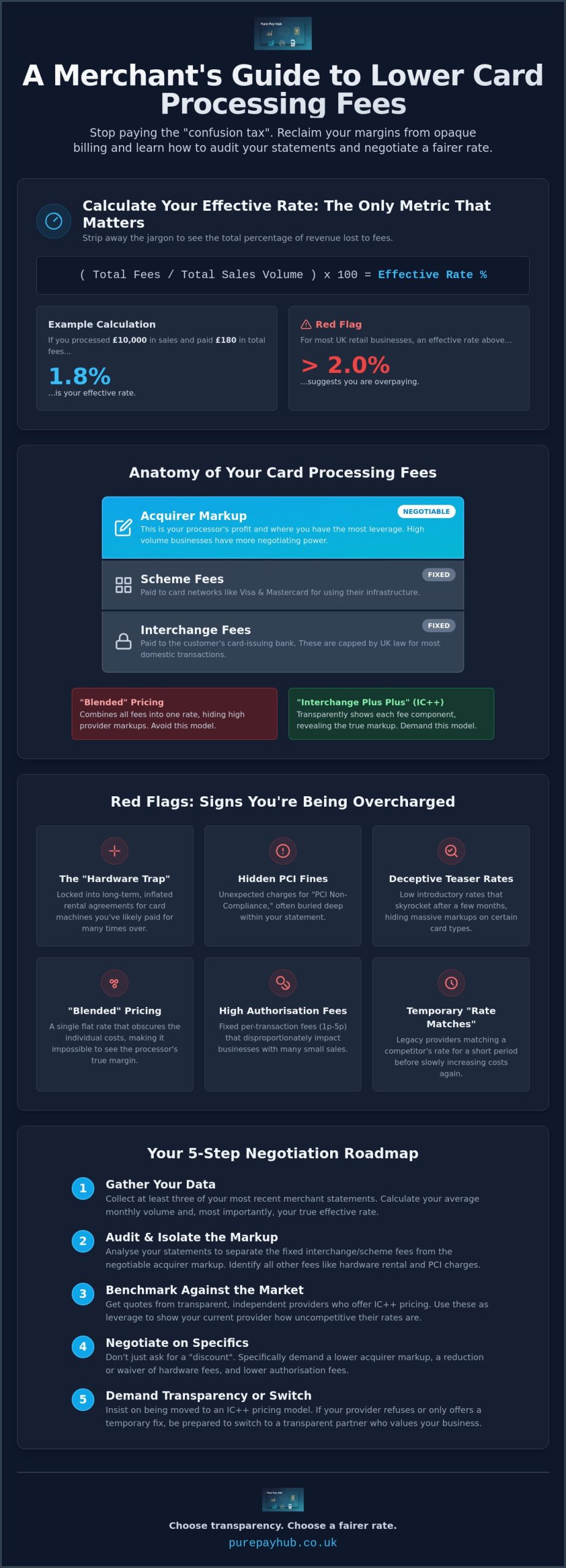
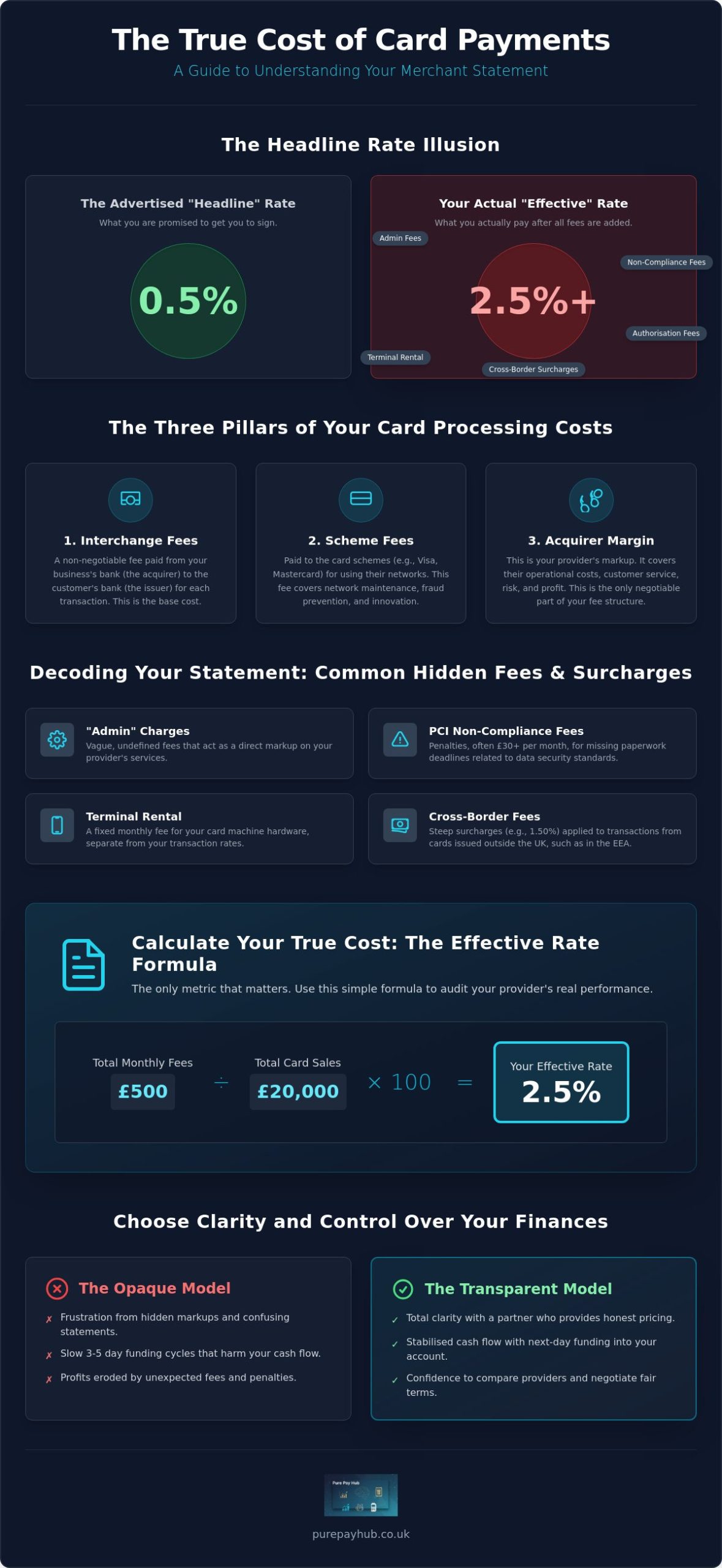
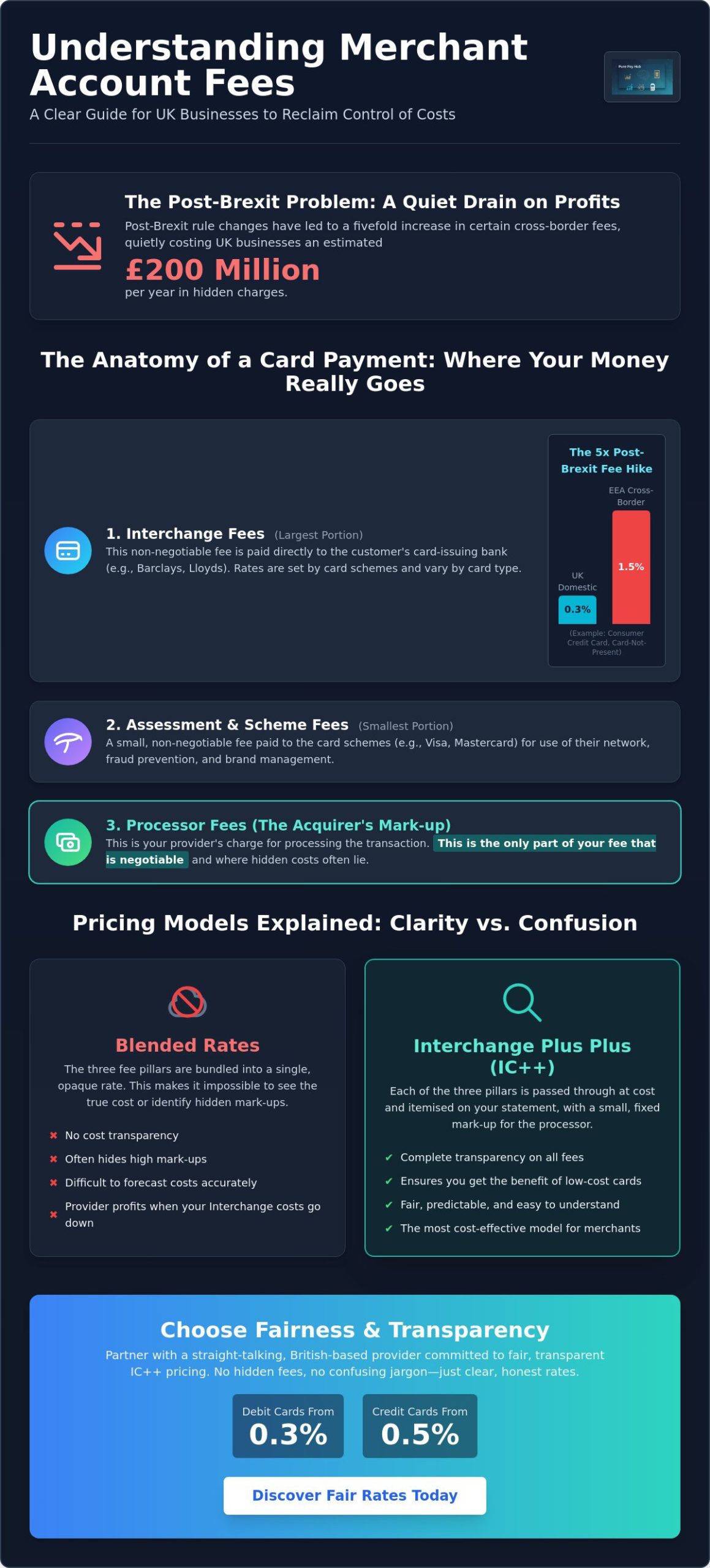
Many global providers lure business owners in with the promise of “no monthly fees.” This sounds appealing on the surface. However, the true cost of payment links is often hidden in the transaction rates. A flat fee of 1.5% or 1.75% might seem small on a single transaction. For a business with a healthy turnover, these rates represent a significant drain on your annual profit. Choosing a provider based on a “free” software hook often results in paying far more than necessary over the long term.
PurePay Hub takes a different approach by offering debit card rates from 0.3%. When you compare this to the standard 1.5% charged by big-name competitors, the difference is stark. Reducing your transaction costs by just 1% can translate into thousands of pounds in additional profit every year. This is money that stays in your business to fund growth, stock, or staff rather than disappearing into the pockets of a distant financial giant. We believe in a fair partnership where your success isn’t penalised by inflated margins.
Interchange-Plus: The Transparent Alternative
Understanding your bill requires looking at the three components of a transaction fee: the Interchange fee (paid to the card-issuing bank), the Scheme fee (paid to Visa or Mastercard), and the Merchant Service Charge (the provider’s margin). Flat-rate providers bundle these together and add a significant markup to cover their risks. Our interchange-plus model strips away this complexity. It prevents “markup creep” by showing you exactly what you are paying for each component. This level of clarity ensures you always receive the best possible value for every link you send.
The Value of Next-Day Funding
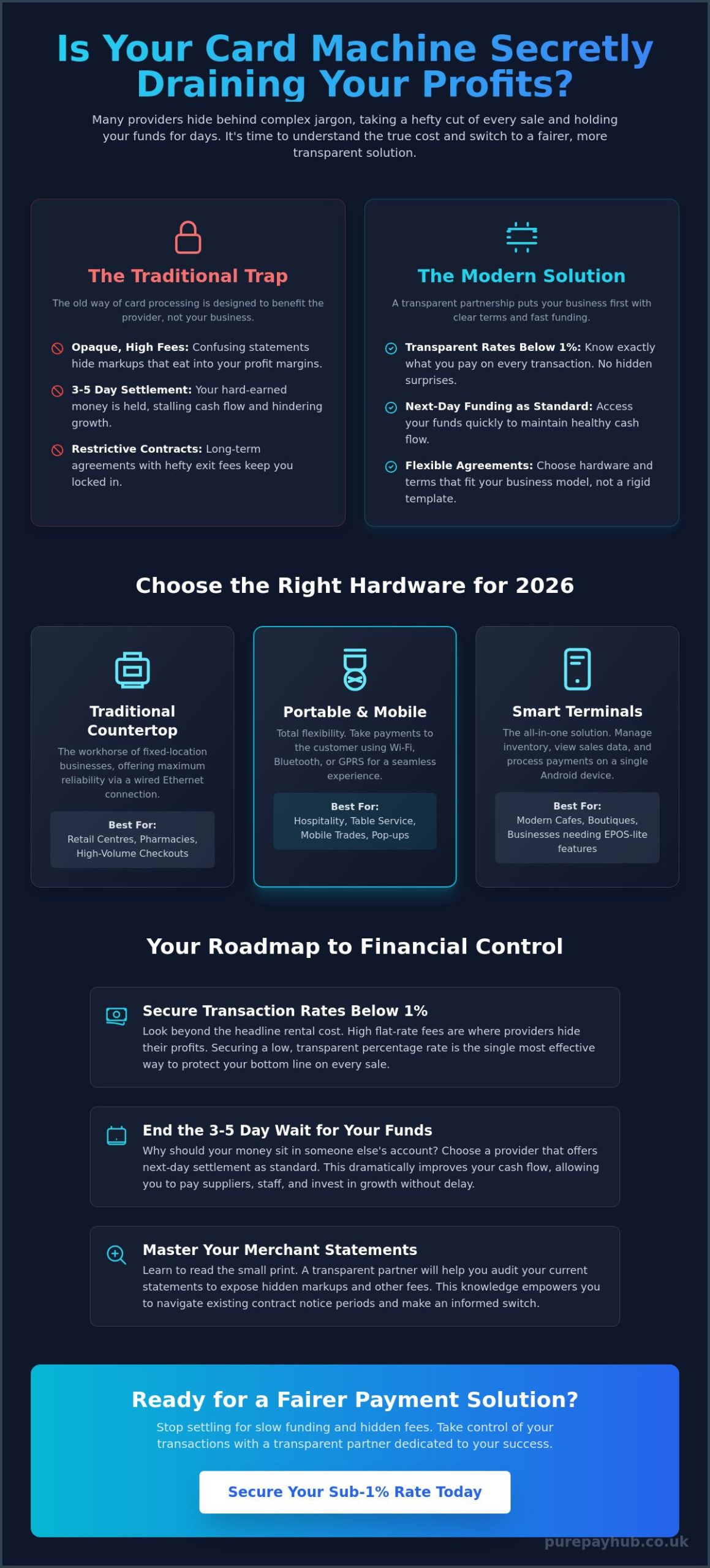
Waiting for your funds is a silent growth killer for UK small businesses. Most traditional providers make you wait between three and seven days for your money to clear. There is a vital distinction between “settlement,” which is the approval of the transaction, and “funding,” which is when the cash actually hits your bank account. We prioritise your cash flow by providing next-day access to your funds. This means your Saturday sales are typically in your account by Monday. It’s a disciplined approach to finance that provides the stability you need to manage your daily operations with confidence.
By combining lower transaction rates with faster funding, you create a more resilient business. You aren’t just saving money; you are gaining time and liquidity. This shift from a passive fee-payer to an informed merchant is the first step toward true financial efficiency.
How to Maximise Revenue Using Versatile Payment Links
Generating revenue shouldn’t be a complicated process. To get the most out of your payment links, you need a disciplined workflow that fits into your existing daily routine. By following a simple, five-step method, you can turn every digital interaction into a potential sale without the need for a complex website.
- Step 1: Identify your most frequent remote payment scenarios. This might include taking deposits for bespoke orders or collecting final balances after a service is completed.
- Step 2: Generate a link in your Virtual Terminal or mobile app in seconds. It is a quick, no-nonsense process that doesn’t disrupt your work.
- Step 3: Embed the link into your favourite digital channels. You can paste it directly into a WhatsApp message, an SMS, or even an Instagram DM.
- Step 4: Track real-time clicks and payment status via your centralised dashboard. This allows you to see exactly when a customer has viewed the link and when the funds are secured.
- Step 5: Reconcile your digital and physical sales with a single reporting tool. This connects your remote efforts with your in-store EPOS Systems for a clear, unified financial picture.
Social Commerce and the Power of Instagram
Instagram is a powerful tool for modern business, but the transition from follower to customer is often clunky. Using “Link in Bio” strategies or direct message links converts interest into immediate revenue. These links are the perfect companion for influencer marketing, as they allow you to track the success of specific campaigns with precision. By simplifying the path to purchase, you drastically reduce the abandoned cart rate that often plagues traditional e-commerce sites. It’s about meeting your customers where they already spend their time.
Streamlining Invoices and Deposits
For service-based businesses, chasing money is an exhausting task that eats into your productive hours. You can replace the inefficient “Call to Pay” instruction with a clickable link in your PDF invoices. This allows customers to pay at their convenience without needing to speak to a member of staff. Taking secure deposits for bookings is just as simple, as you don’t need a physical card reader present to secure your time. This proactive approach reduces your “days sales outstanding” (DSO) and ensures your cash flow remains steady and predictable. If you’re ready to simplify your workflow, you can set up your payment links with PurePay Hub today.
Adopting these versatile tools allows you to act as a modern, efficient merchant. You aren’t just taking payments; you’re building a more resilient business model that values both your time and your customer’s convenience. This level of professional service builds the long-term trust that is essential for any regional business owner.
PurePay Hub: Your Partner for Integrated UK Payments
PurePay Hub provides a unified platform that brings your entire payment ecosystem under one roof. Unlike global competitors that treat payment links as a detached digital tool, we integrate them seamlessly with our Countertop, Portable, and Mobile Card Machines. This approach ensures your business stays agile and organised. Our no-nonsense philosophy means you’ll never encounter hidden markups or opaque fee structures. We’re a fair partner to regional business owners, offering the technical power of a modern fintech with the personal touch of a dedicated UK-based team.
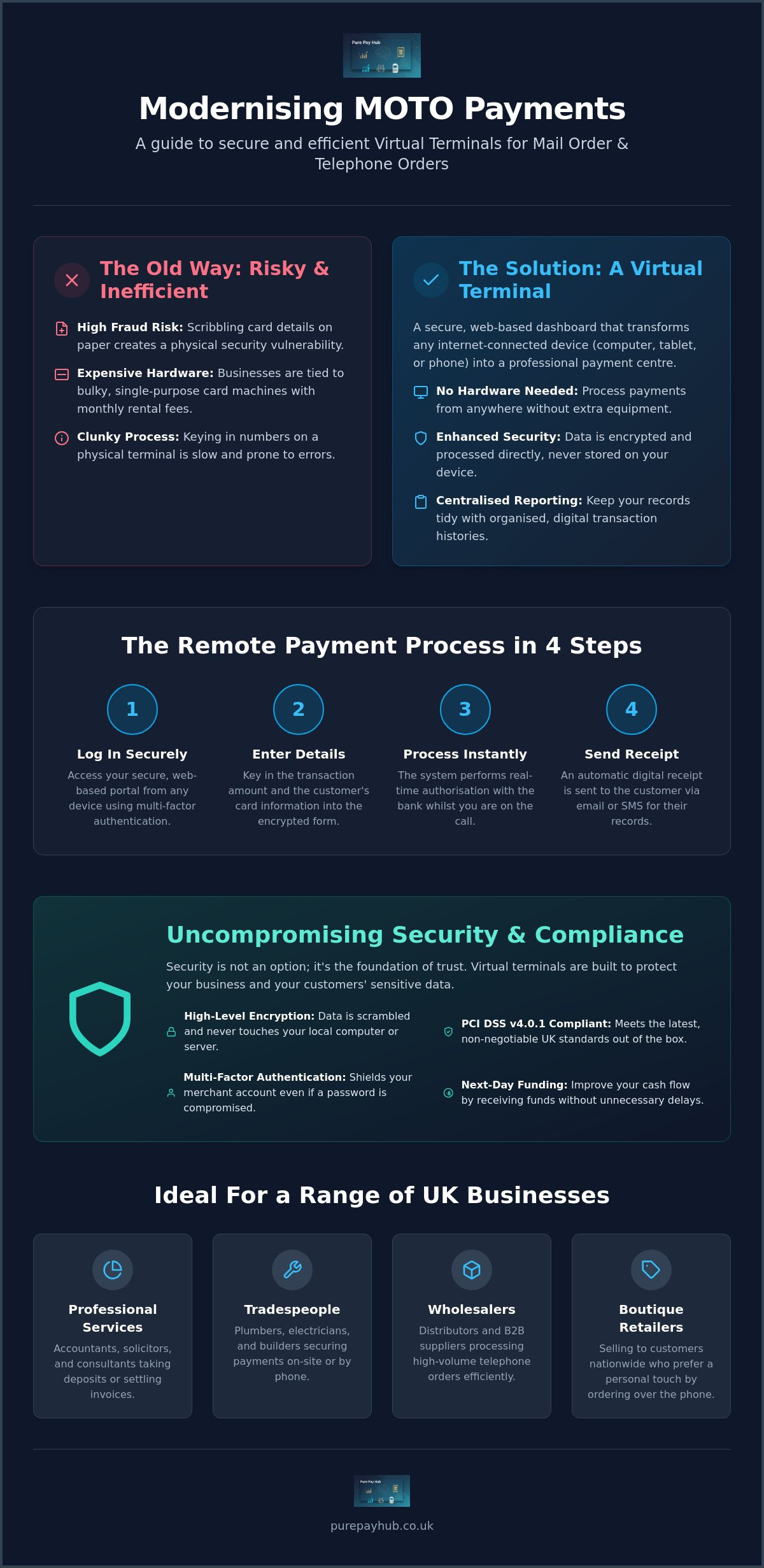
Scaling your operations is simple when your infrastructure is built for growth. You might start by sending your first payment link to secure a remote deposit, but our platform grows with you. As your needs evolve, you can transition to a fully integrated EPOS system or add a Virtual Terminal for telephone orders. PurePay Hub acts as a stabilising force for your finances, providing a disciplined framework that lets you focus on your customers rather than your card processor.
Seamless Omnichannel Integration
Managing a physical shop whilst handling online orders often leads to administrative headaches. PurePay Hub solves this by allowing you to manage both through a single merchant ID. A centralised dashboard simplifies your end-of-month accounting by providing a unified view of all transactions. You won’t have to waste time reconciling data from different providers or dealing with multiple support desks. Having a single point of contact for your hardware and digital payments reduces frustration and ensures your business runs like a well-oiled machine.
Getting Started: Quick Onboarding and Support
Switching to a fairer service shouldn’t be a hurdle. We’ve simplified the onboarding process for UK businesses to ensure you can start accepting payments without delay. In many cases, we can even help you move from your current provider without you having to worry about exit fees. Our UK-based experts don’t just set up your account; they help you choose the fee structure that provides the most value for your specific transaction volume. This principled approach to service is what sets us apart from distant financial institutions. Ready to lower your rates? Get your PurePay Hub payment links today.
By choosing PurePay Hub, you’re investing in a partnership built on clarity and trust. We believe that when your payment processing is transparent and efficient, your business is free to thrive. It’s time to move away from the skepticism of the past and embrace a modern, dependable way to get paid.
Take Control of Your Cash Flow Today
The shift toward digital commerce doesn’t have to be complex or expensive. By adopting payment links, you remove the barriers between your services and your customer’s wallet. You’ve seen how this simple tool eliminates the need for a website whilst providing the security of a global bank. You now have the knowledge to move away from high-fee, flat-rate providers and embrace a more transparent, disciplined approach to your revenue. It’s about reclaiming your time and ensuring your business is ready for the demands of 2026.
PurePay Hub is here to act as your fair partner in this transition. We offer debit card rates starting from 0.3% and provide next-day funding as standard. Our dedicated UK-based account management team ensures you never feel like just another number in a global database. We provide the stability your business needs to flourish in a rapidly changing market. It’s time to stop chasing invoices and start growing your business with confidence. Switch to PurePay Hub and get your first payment link today. We look forward to supporting your journey toward better, fairer merchant services.
Frequently Asked Questions
What is a payment link and how do I send one?
A payment link is a unique URL that leads your customer directly to a secure checkout page. You generate these links through your Virtual Terminal or mobile app in seconds. Once created, you simply copy and paste the link into an email, SMS, or WhatsApp message. It’s a direct, no-nonsense way to close a sale during a digital conversation without needing a physical card reader.
Do I need a website to use payment links for my business?
You don’t need a website, hosting, or any technical coding skills to use this service. The checkout page is hosted on a secure server, which means your business can accept card payments instantly. This makes it an ideal solution for tradespeople, wholesalers, or consultants who prefer to work via direct communication rather than managing a complex e-commerce storefront.
Are payment links secure for my customers to use?
Every link uses high-level encryption and 3D Secure 2.0 to protect sensitive cardholder data. Your customers enter their details onto a secure, PCI-compliant page, so you never have to handle or store their card information yourself. This professional setup builds immediate trust and protects your reputation by ensuring every transaction meets the latest security standards.
How much do payment links cost per transaction?
Transaction costs depend on your specific volume, but we offer debit card rates starting from 0.3%. We use a transparent interchange-plus model to ensure you aren’t paying the inflated flat fees common with global providers. This approach keeps your overheads low and ensures that more of your hard-earned profit stays within your business.
Can I take recurring payments or subscriptions via a link?
You can set up recurring payment schedules or subscriptions through your centralised dashboard. This is particularly useful for service-based businesses that offer monthly retainers or membership fees. Once the customer authorises the first payment, the system handles the rest automatically, which reduces your administrative burden and ensures you get paid on time every month.
How quickly will I receive the money in my bank account?
We provide next-day funding as standard for our merchants. Whilst some traditional banks make you wait between three and seven days for funds to clear, our system ensures that your money is available in your account the following working day. This rapid access to cash flow is a vital tool for managing your daily operations and growth.
Can I use payment links alongside my physical card machine?
You can use payment links alongside your Countertop, Portable, or Mobile Card Machine. All your transactions are tracked through a single, unified platform. This makes it easy to reconcile your physical and digital sales at the end of the month without having to switch between different providers or complicated spreadsheets.
What payment methods can my customers use (e.g., Apple Pay)?
Your customers can pay using all major credit and debit cards, including Visa and Mastercard. The checkout page also supports modern digital wallets like Apple Pay and Google Pay for a faster experience. Providing these familiar and secure options makes the process more convenient for your clients and helps to reduce the likelihood of abandoned payments.