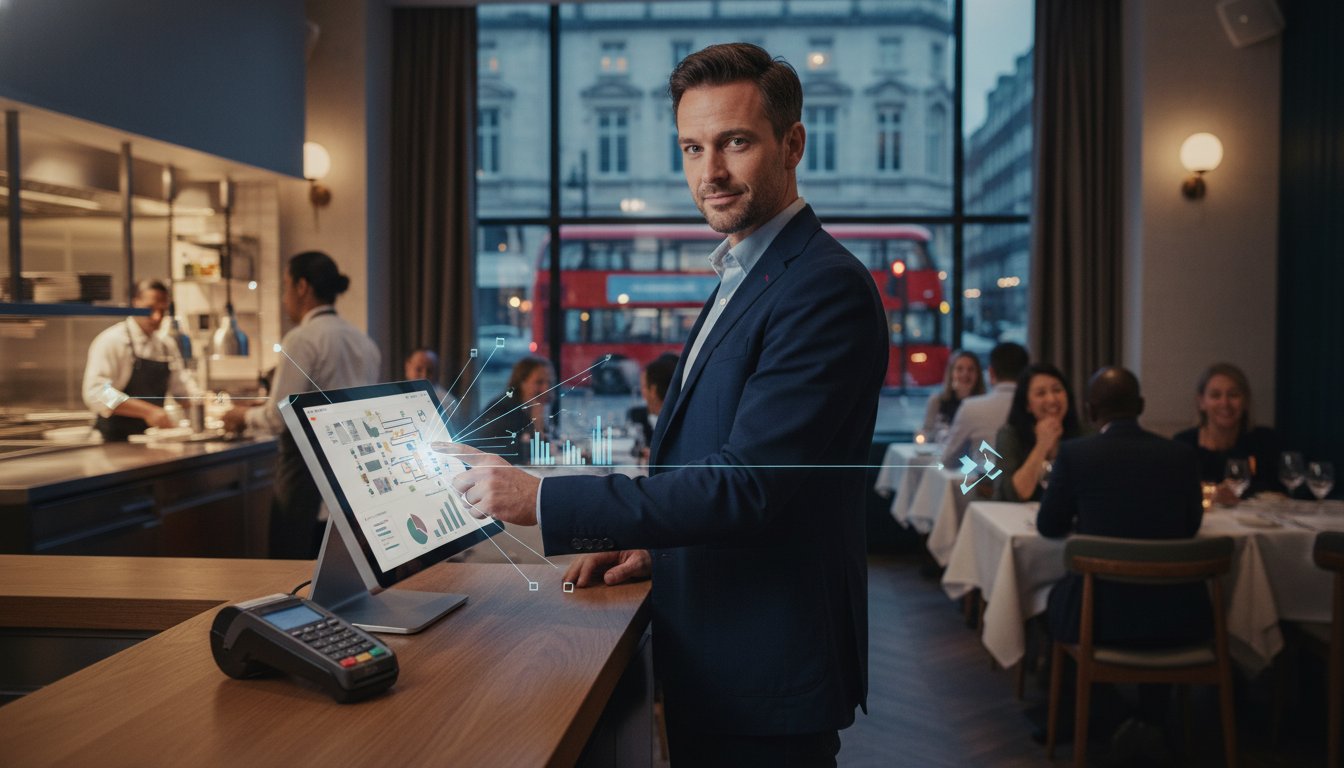
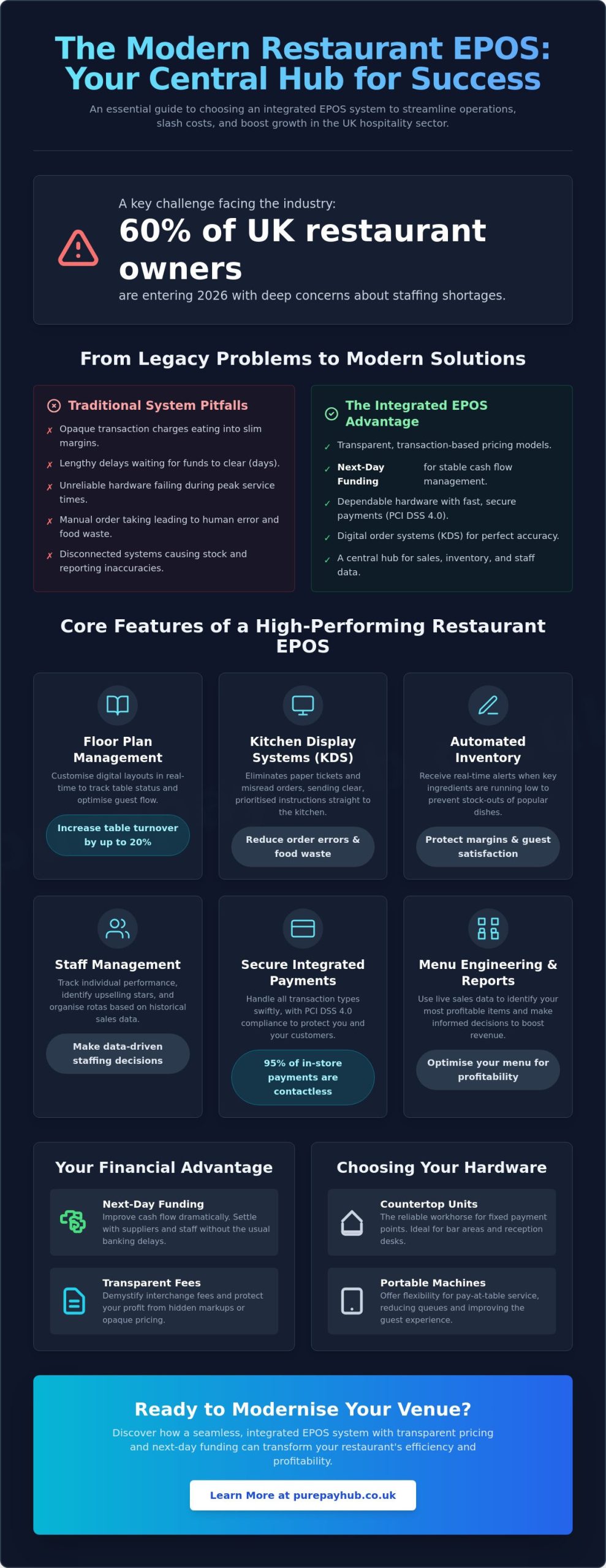
Did you know that 60% of UK restaurant owners are entering 2026 with deep concerns about staffing shortages? This reality makes your restaurant epos system the central hub of your entire operation. You have likely seen opaque transaction charges eating into slim hospitality margins. It is frustrating to wait days for your own money to arrive whilst hardware fails during a frantic Saturday night service. We understand that you need a solution that is as dependable as your head chef.
You deserve a partner that offers pure transparency and next-day funding to manage your suppliers better. This guide shows you how to choose an integrated EPOS to streamline your operations and slash unnecessary transaction costs. We will explore the latest PCI DSS 4.0 compliance standards and the shift toward AI-driven automation. You will learn how to achieve faster table turnover and a transparent, transaction-based pricing model that protects your hard-earned profit.
Key Takeaways
- Learn how a modern restaurant epos system acts as a digital hub to bridge the gap between front-of-house service and back-office efficiency.
- Discover the essential features like floor plan management and Kitchen Display Systems that eliminate paper waste and accelerate table turnover.
- Demystify the complex world of interchange fees to ensure your profit isn’t eroded by hidden markups or opaque pricing structures.
- Determine the ideal hardware mix for your service style, comparing the reliability of countertop units with the flexibility of portable machines.
- See how next-day funding creates a stable cash flow environment, allowing you to settle with suppliers and staff without the usual banking delays.
What is a Restaurant EPOS System and Why Does Your Venue Need One?
A restaurant epos system is no longer just a digital till for holding cash. In the modern UK hospitality sector, it is the central heartbeat of your entire venue. Short for Electronic Point of Sale, this technology integrates hardware and software to manage sales, inventory, and staff performance in one place. Unlike the clunky, isolated registers of the past, these systems act as a “Hub” for your entire business operation. They ensure that a pint ordered at the bar is instantly reflected in your stock levels and financial reports. This level of synchronisation is what separates a struggling café from a thriving restaurant.
The shift from traditional cash registers to integrated digital hubs has been rapid. A standard Point of Sale (POS) system now handles everything from table bookings to complex split-bill payments. This modernisation is a “Pure” necessity for any merchant aiming to grow in 2026. With contactless transactions making up 95% of in-store card payments as of 2024, your hardware must be fast and reliable. Customers expect a seamless experience. If your tech lags during a peak Saturday night, your reputation and your bottom line will suffer. Furthermore, with PCI DSS 4.0 requirements now mandatory, having a secure, updated system is essential to protect your business from data breaches and heavy fines.
The Evolution of the Hospitality Hub
We’ve moved beyond simple transactions into the era of data-driven guest management. Modern systems allow you to track customer preferences and dining habits with precision. This centralisation reduces human error significantly. When a waiter enters an order into a handheld device, it goes straight to the kitchen display. No more lost paper tickets or misread handwriting. Cloud-based technology is now the industry standard. It gives you the power to monitor your restaurant’s performance from your phone, whether you’re on-site or at home. You can adjust menu prices or check live sales figures in seconds.
Key Benefits: Efficiency, Accuracy, and Growth
Efficiency is the primary driver of profit in an industry with slim margins. An integrated restaurant epos system slashes “table-to-till” lag time, allowing your staff to focus on service rather than admin. Consider these key advantages:
- Improved Accuracy: Precise order entry means fewer “comps” for incorrect dishes and less food waste in the kitchen.
- Menu Engineering: Use integrated stats to identify your most profitable items. If a high-margin dish isn’t selling, you’ll know by Tuesday morning and can adjust your strategy.
- Staff Management: Track which servers turn tables fastest and identify training needs based on hard data rather than guesswork.
The UK hospitality market is projected to reach £99 billion by 2032. To claim your share, you need tools that support growth and scale with you. Accuracy in your kitchen leads to happier guests and better reviews. When your front-of-house and back-of-house are in perfect sync, your venue runs like a well-oiled machine. It’s about creating a transparent environment where every penny is accounted for and every customer feels valued.
Core Features of a High-Performing Restaurant EPOS
A high-performing restaurant epos system is defined by its ability to simplify complex tasks. It isn’t just about the hardware; it’s about the software’s capacity to mirror your physical space. Table and floor plan management allows you to customise layouts in real-time. This visual aid helps staff identify which tables are waiting for drinks or nearing the end of their meal. This clarity can increase table turnover speed by 20% during peak service. When every minute counts, having a clear view of your dining room is essential to maintaining a steady flow of guests.
Integrating a Kitchen Display System (KDS) removes the chaos of paper tickets. Orders from the floor appear instantly on screens in the kitchen, organised by priority. This eliminates lost chits and ensures your head chef stays in control. Beyond the kitchen, automated inventory alerts protect your margins. You can set notifications for when favourite ingredients, like your Sunday roast essentials, run low. This proactive approach prevents the dreaded conversation where staff must tell a guest that a popular dish is unavailable. The cost of a POS system is often justified by these efficiency gains and the reduction in food waste.
Staff management tools within the hub allow you to track individual performance with ease. You can see who is upselling effectively and organise rotas based on historical sales data. This level of insight turns a good venue into a highly profitable one. It creates a transparent environment where hard work is recognised and training needs are identified through hard data. If you’re looking to streamline your venue’s workflow, exploring an integrated restaurant epos system is the first step toward better management and long-term growth.
Intuitive Order and Table Management
The “park order” function is a game-changer for venues with a bar area. It allows staff to start a tab at the bar and seamlessly transfer it to a table once the party is seated. Split-billing capabilities are equally vital for a modern experience. In 2026, guests expect to pay for exactly what they consumed without a 10-minute struggle at the till. Making the end-of-meal process painless ensures your guests leave on a high note and are more likely to return.
Advanced Kitchen and Inventory Sync
KDS technology improves communication between chefs and servers by providing a real-time status of every dish. Front-of-house staff don’t have to interrupt the kitchen to ask for updates, which keeps the kitchen focused on quality. Ingredient-level tracking allows you to manage the cost versus profit on every plate you serve. By automating resupply orders, you ensure your kitchen is always stocked with the essentials. This level of automation reduces the administrative burden on your management team, allowing them to focus on guest satisfaction.
Navigating Costs: Transaction Fees and Hardware Rental
Many UK merchants find the world of card processing intentionally murky. Traditional banks often use complex jargon to hide high interchange fees and service charges. A transparent restaurant epos system should do the exact opposite. Transaction-based pricing is the fairest model for the hospitality sector. It ensures you only pay for the service you actually use. Flat-rate models might seem simple at first glance, but they often result in you subsidising the provider’s risk. If your business processes a high volume of debit cards, paying a flat 1.75% fee is a significant and unnecessary drain on your weekly cash flow.
We advocate for a “Pure” approach where debit rates start at a competitive 0.3%. This strategy prioritises your margins over corporate profit. Some owners worry that switching providers is too expensive or time-consuming. However, a 1% saving on a £500,000 annual turnover puts £5,000 back into your pocket every year. When choosing the best restaurant POS system, look for partners who offer clear, itemised reporting. This transparency is essential for your monthly accounting. It helps you spot any unexpected discrepancies early and ensures your financial records are always accurate.
Understanding the Fee Structure
Clarity starts with knowing exactly what you pay for each tap or insert. We break this down simply: debit card processing at 0.3% and credit cards at 0.5%. Many bundled contracts include “hidden markups” that inflate these base rates without providing extra value. These extra costs are often buried in the small print of a long-term agreement. Transparent reporting allows you to see the “interchange” cost versus the “service” fee. This level of detail is vital for maintaining a healthy balance sheet in a competitive market where every penny counts.
Hardware Rental vs. Outright Purchase
Choosing between renting or buying your hardware depends on your long-term growth plans. Monthly hardware rental is often the smarter choice for busy venues. It includes ongoing maintenance and technical support, ensuring you are never left stranded during a frantic Saturday night rush. Countertop units are reliable for fixed points like bars or takeaway counters. Portable machines are essential for full table service, allowing staff to take payments without leaving the guest’s side. This flexibility improves the customer experience and speeds up the final stage of the meal.
All hardware must be compliant with PCI DSS 4.0 standards. These new requirements became mandatory on March 31, 2025. Failing to meet these updated security rules can lead to monthly non-compliance fines that quickly erode your savings. Investing in modern, compliant hardware is a direct investment in your business’s security and reputation. It provides peace of mind that your customer data is always protected from potential breaches. Reliable hardware means fewer service interruptions and a more professional environment for your staff and guests alike.
Choosing the Right Hardware: Countertop vs. Portable Machines
Your service style is the blueprint for your hardware needs. A bustling quick-service cafe has different requirements than a sophisticated full-service restaurant. In 2026, the visual appeal of your restaurant epos system matters as much as its processing speed. Sleek, modern aesthetics reflect your brand’s quality. Bulky, beige terminals are a thing of the past. You need hardware that blends into a high-end interior whilst remaining rugged enough for daily use. This balance of form and function ensures your staff feel confident and your guests feel impressed.
Hospitality is a high-impact environment. Hardware must be durable. Spilt drinks and accidental drops are inevitable during a busy shift. Look for devices with high IP ratings for waterproofing and reinforced casings for drop-resistance. This longevity ensures your investment lasts for years rather than months. Reliability is the cornerstone of a successful service. When your hardware is built to last, you avoid the stress of mid-service failures that disrupt your operations and frustrate your team.
Digital wallet integration is now a non-negotiable standard. With nearly 95% of in-store transactions being contactless as of 2024, your machines must support Apple Pay and Google Pay flawlessly. This speed at the point of sale keeps queues moving and customers happy. It also aligns with the removal of the mandatory £100 contactless limit in March 2026, giving your guests more flexibility in how they pay. If you’re ready to upgrade your hardware, view our range of sleek card machines designed for modern hospitality.
The Countertop Powerhouse
Fixed terminals are the workhorses of quick-service venues. They provide a stable point of sale for high-volume transactions at a single point. Integrated receipt printers and customer-facing displays create a professional “Hub” at the counter. We recommend a wired ethernet connection for these units. It provides the ultimate stability, especially in older UK buildings with thick walls that can interfere with Wi-Fi signals. A stable connection means no lag during the morning coffee rush.
Mobile and Portable Flexibility
Taking the till to the table is the gold standard for full table service. Portable machines allow staff to process orders and payments without leaving the guest’s side. This convenience naturally increases “upsell” opportunities. It’s much easier for a guest to order another round of drinks if the server can add it to the bill instantly. For outdoor seating areas or pop-up events, ensure your devices have 4G roaming capabilities. This prevents service interruptions when the Wi-Fi signal drops, ensuring a “Pure” and uninterrupted payment experience for every guest.
The PurePay Hub Advantage: Seamless Integration and Next-Day Funding
PurePay Hub acts as your dedicated merchant ally in a financial landscape that’s often far too complex. While many providers focus solely on software “bells and whistles”, we prioritise the lifeblood of your business: your cash flow. A restaurant epos system is only effective if it helps you access your hard-earned money without delay. We’ve built our service to be a stabilising force, providing the clarity and speed that traditional banks simply cannot match. Our partnership approach ensures you aren’t just another account number in a distant database.
Cash flow management remains the biggest hurdle for the 176,685 hospitality businesses currently operating in the UK. With 99.6% of these being small or medium-sized enterprises, every day spent waiting for funds impacts your ability to grow. We provide Business Cash Advances that facilitate expansion based on your future card turnover. This means you can invest in new equipment or refurbish your dining room without the rigid constraints of a traditional bank loan. It’s a transparent way to fuel your ambition using the steady momentum of your own sales.
Next-Day Access to Your Funds
Waiting three to five working days for your funds to clear is a relic of the past that your business cannot afford. Faster funding allows you to negotiate significantly better terms with your food and drink suppliers, as you can settle invoices with confidence and speed. Next-Day Funding is the definitive operational standard for the UK hospitality sector in 2026. This rapid access ensures your weekend takings are available to cover staff wages or emergency repairs by Monday morning. It removes the stress of “penniless” weekends and puts you back in control of your financial destiny.
Support and Partnership
We provide UK-based technical support that’s available whilst your restaurant is actually open and serving guests. There’s nothing more frustrating than a system glitch during a Saturday night rush with no one to call. Our team understands the urgency of hospitality and speaks your language, avoiding corporate jargon at every turn. We also take the weight of PCI compliance management off your shoulders. By handling the complex security requirements of the 2025 PCI DSS 4.0 standards, we let you focus on what you do best: providing an exceptional dining experience. We believe in a no-nonsense onboarding process that gets your restaurant epos system live and taking payments in record time.
Organise a transparent quote for your restaurant EPOS today and experience the difference of a partner that values your profit as much as you do.
Secure Your Venue’s Future and Profitability
Choosing the right restaurant epos system is the most impactful decision you’ll make for your venue this year. You’ve seen how integrated hardware and transparent, transaction-based pricing protect your margins whilst improving table turnover. By moving away from opaque fee structures, you reclaim total control over your business finances. We believe your success depends on a partnership built on honesty, clarity, and technical excellence. It’s about turning your payment terminal into a stabilising force for your entire operation.
Accessing your funds shouldn’t be a waiting game in a fast-paced hospitality environment. With next-day funding as standard and debit card rates starting from 0.3%, we provide the stability you need to manage suppliers and staff with absolute confidence. There are no hidden monthly markups to surprise you when you check your statements. It’s time to simplify your operations and focus on delivering the exceptional service your guests expect. We’re here to help you grow with tools that work as hard as you do.
Get your free, no-obligation restaurant EPOS quote from PurePay Hub and start your journey toward a fairer, more profitable future today. We look forward to supporting your restaurant’s growth.
Frequently Asked Questions
How much does a restaurant EPOS system cost in the UK?
Typical monthly software costs range from £20 to £150, whilst upfront hardware bundles generally fall between £500 and £2,500. For instance, basic cloud-based plans from major providers often start around £69 per month. These costs vary based on the number of terminals and the complexity of your floor plan. Investing in a reliable restaurant epos system ensures you avoid the long-term costs of manual errors and slow service.
Can I use my existing card machine with a new EPOS system?
Integration depends on whether your current hardware is “open” or “locked” to a specific merchant acquirer. Many traditional providers lock their terminals to prevent you from switching to a fairer rate. We specialise in seamless integration to ensure your front-of-house hardware talks to your back-office software without friction. It’s best to check compatibility before signing a new contract to avoid unnecessary hardware replacement costs.
What is the difference between an EPOS and a standard POS?
An EPOS system is the modern, cloud-based evolution of a traditional Point of Sale. While a standard POS might only handle the final transaction, an EPOS acts as a digital hub for your entire operation. It manages inventory, tracks staff performance, and provides real-time sales data from any location. This connectivity is essential for the 176,685 hospitality businesses currently operating in the UK market.
Does a restaurant EPOS system work offline if the Wi-Fi fails?
Yes, most high-performing systems include an “offline mode” that allows you to continue taking payments if your Wi-Fi fails. The system securely stores transaction data and synchronises with the cloud once the connection is restored. This prevents service interruptions during a busy Saturday night shift. It’s a critical safety net that ensures you never have to turn away a guest due to temporary technical issues.
How do I switch EPOS providers without paying massive exit fees?
You should start by reviewing your current contract for specific notice periods or early exit clauses. Some modern providers offer incentives to help cover these costs when you switch to a more transparent, transaction-based model. We recommend moving toward a partnership that avoids hidden monthly markups. This approach protects your margins and makes the transition to a fairer service much easier for your business.
What are the typical transaction rates for UK restaurants in 2026?
Standard transaction fees in 2026 typically sit between 1% and 2.5% for most UK providers. However, we advocate for a fairer approach, offering debit rates from 0.3% to help you retain more of your hard-earned profit. This transparency protects your annual balance sheet and overall growth, especially as digital wallets continue to dominate the payment landscape.
Is next-day funding available for all card types?
Next-day funding is standard for major card types like Visa and Mastercard through our integrated restaurant epos system. This ensures your weekend takings are in your account by Monday morning to help with urgent supplier payments. Some niche cards may have slightly different clearing cycles depending on the provider. Faster access to your money is a “Pure” necessity for managing a modern hospitality cash flow effectively.
How does an EPOS system help with VAT and MTD compliance?
Your system automates VAT calculations for every sale and integrates directly with accounting software for Making Tax Digital (MTD) compliance. This removes the need for manual data entry and reduces the risk of expensive errors in your HMRC submissions. By synchronising your daily sales with platforms like Xero or QuickBooks, you save hours of administrative work every week. It provides a transparent audit trail that simplifies your year-end accounting.