Why does a small piece of payment hardware often come with a forty-page contract designed to leave you feeling more confused than when you started? For many merchants, understanding card machine rental agreements UK feels like navigating a minefield of aggressive sales tactics and opaque fee structures. You want a tool that works for your business; you don’t want a legal headache that ties you into expensive, long-term commitments with no clear exit strategy.
We believe that transparency is the only way to build a real partnership. It’s time to pull back the curtain on how these contracts actually function in 2026. You deserve a payment setup that prioritises your cash flow over confusing fine print. This guide will help you master the complexities of merchant contracts, identify sneaky hidden costs, and learn how to secure a flexible agreement that suits your specific needs. We’ll examine the reality of terminal hire, explain how to navigate termination terms, and show you how to access modern hardware that actually supports your growth.
Key Takeaways
- Learn how the three-way relationship between your business, the ISO, and the acquirer works to ensure you aren’t paying for services you don’t need.
- Master the fine print by understanding card machine rental agreements UK, specifically focusing on how to spot hidden service charges and minimum monthly fees.
- Evaluate whether renting or purchasing hardware is better for your cash flow, factoring in the importance of ongoing technical support and avoiding outdated technology.
- Identify common red flags, such as automatic renewal clauses and restrictive notice periods, to keep your business flexible and avoid expensive exit fees.
- See how next-day funding and transparent, no-nonsense pricing can support your business growth more effectively than traditional, slow-moving banks.
The Landscape of Card Machine Rental Agreements in the UK
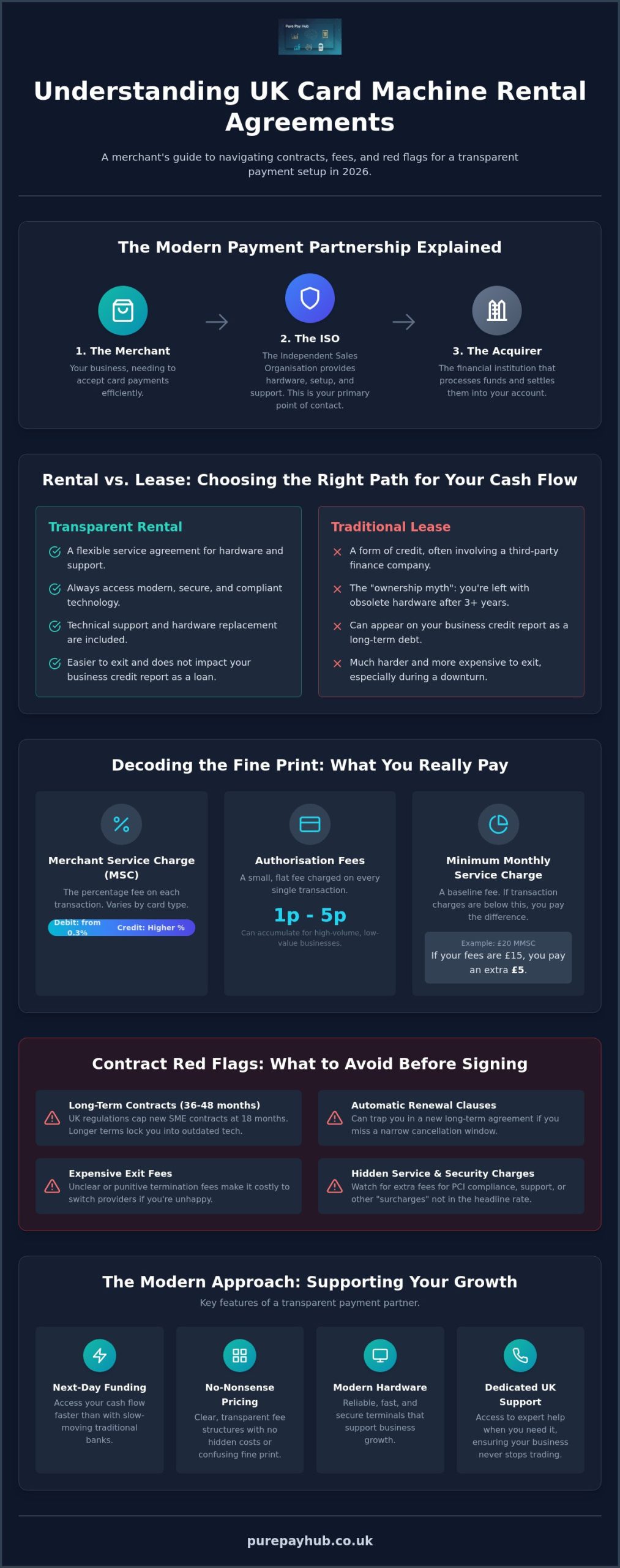
The UK payment sector has changed. It’s no longer dominated by rigid, five-year contracts from high-street banks. Instead, a more agile system has emerged. When you look into understanding card machine rental agreements UK, you’ll find a three-way partnership at its core. First, there is you, the merchant. Second, there is the Acquirer; this is the financial institution that processes the funds and settles them into your account. Finally, there is the Independent Sales Organisation (ISO), such as PurePay Hub. We act as your primary point of contact, handling the setup, support, and hardware provision.
This shift towards ISOs has brought much-needed transparency to the market. Unlike traditional banks, we focus on providing a Payment terminal that fits your specific trade. Whilst pay-as-you-go models are popular for very small startups, they often carry transaction rates as high as 1.75%. For established businesses, a rental agreement offers a more predictable cost structure with significantly lower transaction rates, often starting from 0.3% for debit cards. This balance of a small monthly fee and low processing costs usually results in better long-term value.
The 18-Month Rule: Your Regulatory Protection
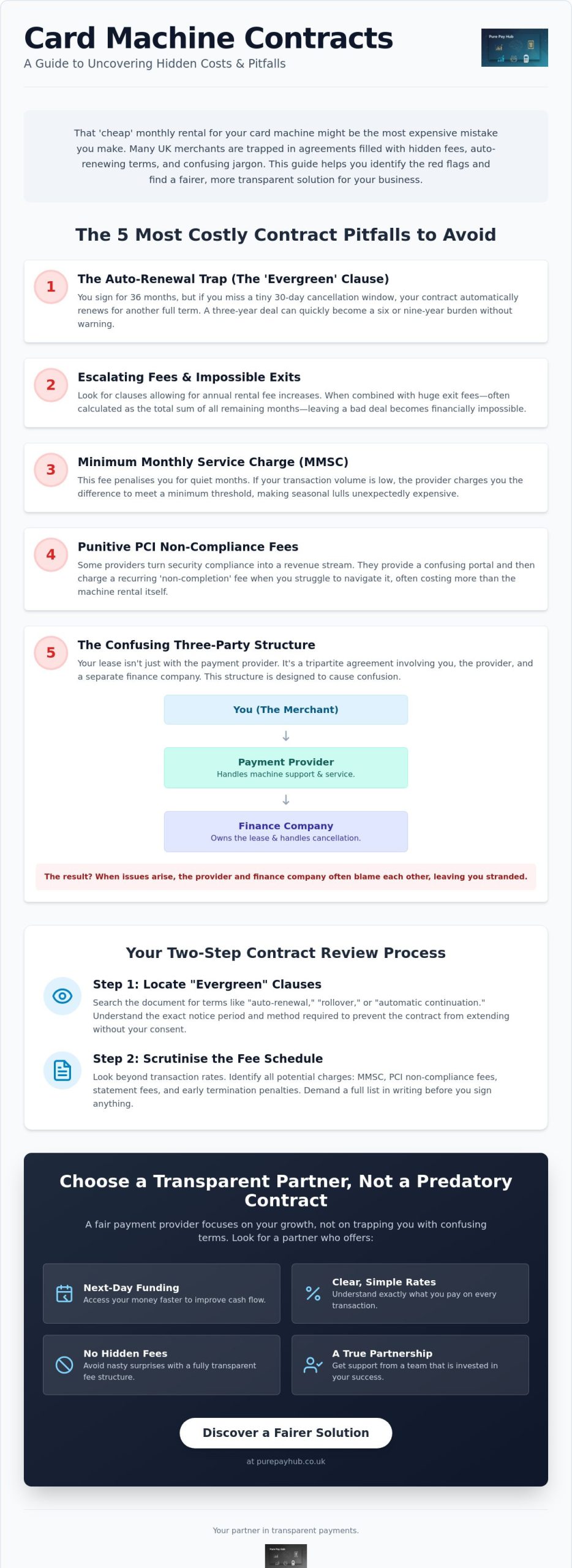
The Payment Systems Regulator (PSR) stepped in to fix a broken market. In the past, many providers used “lock-in” tactics, forcing small businesses into four or five-year commitments. These contracts often included automatic renewals that were nearly impossible to cancel. Under current regulations, terminal hire contracts for small and medium enterprises are capped at a maximum of 18 months. This ensures you aren’t trapped with outdated technology or unfair pricing. You should never sign a 36 or 48-month terminal lease; it’s usually a sign of an outdated provider using aggressive sales tactics.
Rental vs. Leasing: Knowing the Difference
It’s vital to distinguish between a simple rental and a financial lease. A rental is a service agreement. You pay a monthly fee for the use of the hardware and the associated support. If the machine breaks, we replace it. A lease, however, is a form of credit. It often involves a third-party finance company and can appear on your business credit report. If your business experiences a downturn, a lease is much harder to exit than a standard rental agreement.
Leasing often leads to the “ownership myth.” Some providers claim you’ll own the device after three years. In reality, a three-year-old card machine is often technically obsolete. Security standards evolve, and software slows down. By choosing a transparent rental model, you ensure your business always has access to modern hardware and dedicated technical support without the risks associated with long-term debt.
Decoding the Fine Print: Fees and Contractual Terms
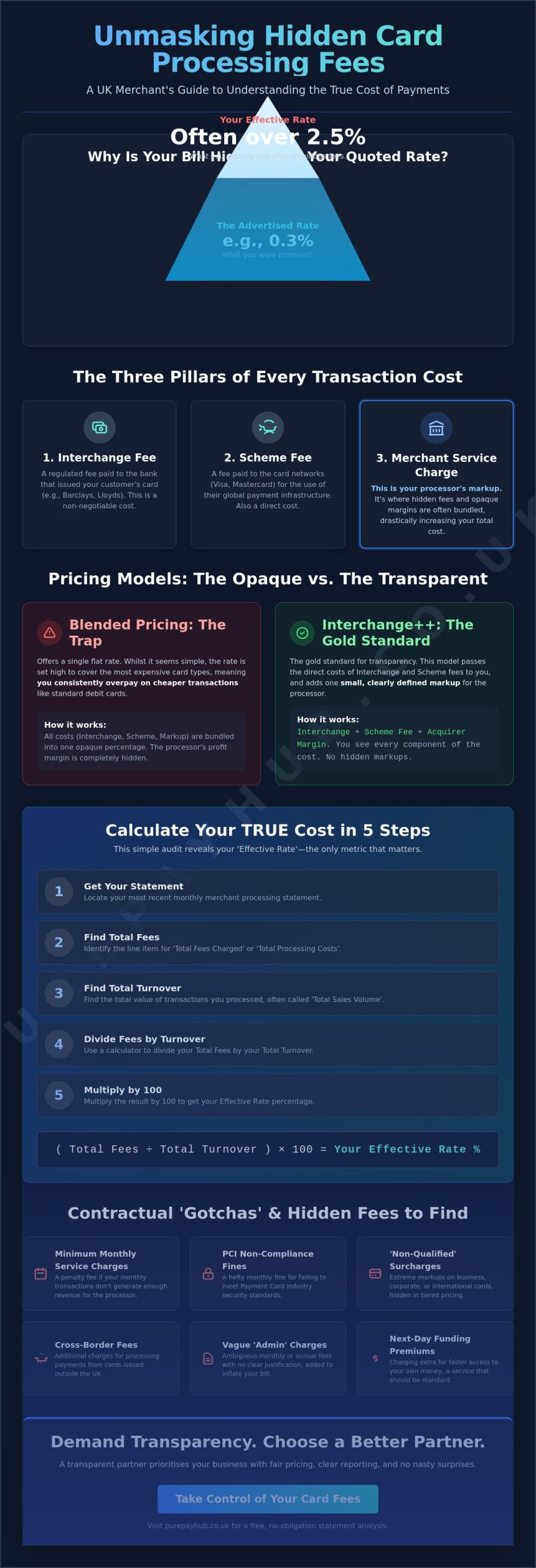
A card machine contract is more than just a monthly rental fee. The Merchant Service Charge (MSC) is the primary cost you’ll encounter. It’s the percentage charged on every transaction you process. For many UK businesses, consumer debit rates are the most affordable, whilst commercial or international credit cards carry higher premiums. Gaining a thorough understanding card machine rental agreements UK means looking past the headline rate to see how these percentages impact your specific sales mix.
Authorisation fees also play a significant role. These are small, flat fees, typically between 1p and 5p, applied to every transaction regardless of the sale value. If you run a high-frequency business with low average transaction values, such as a newsagent or a coffee shop, these pennies can accumulate into a substantial monthly expense. You must ensure your provider is clear about these “per-click” costs before you sign on the dotted line.
The Minimum Monthly Service Charge (MMSC) Explained
The MMSC is the floor price you pay regardless of sales volume. If your total transaction fees for the month don’t reach a specific threshold, the provider charges you the difference. For example, if your agreement has a £20 MMSC but you only generate £15 in transaction charges, you’ll still be billed the full £20. It’s a mechanism used by many providers to guarantee a baseline revenue from every account, even during seasonal lulls or quiet periods. We advocate for transparent payment solutions that clearly define these thresholds so you can accurately forecast your monthly overheads.
PCI DSS and Security Surcharges
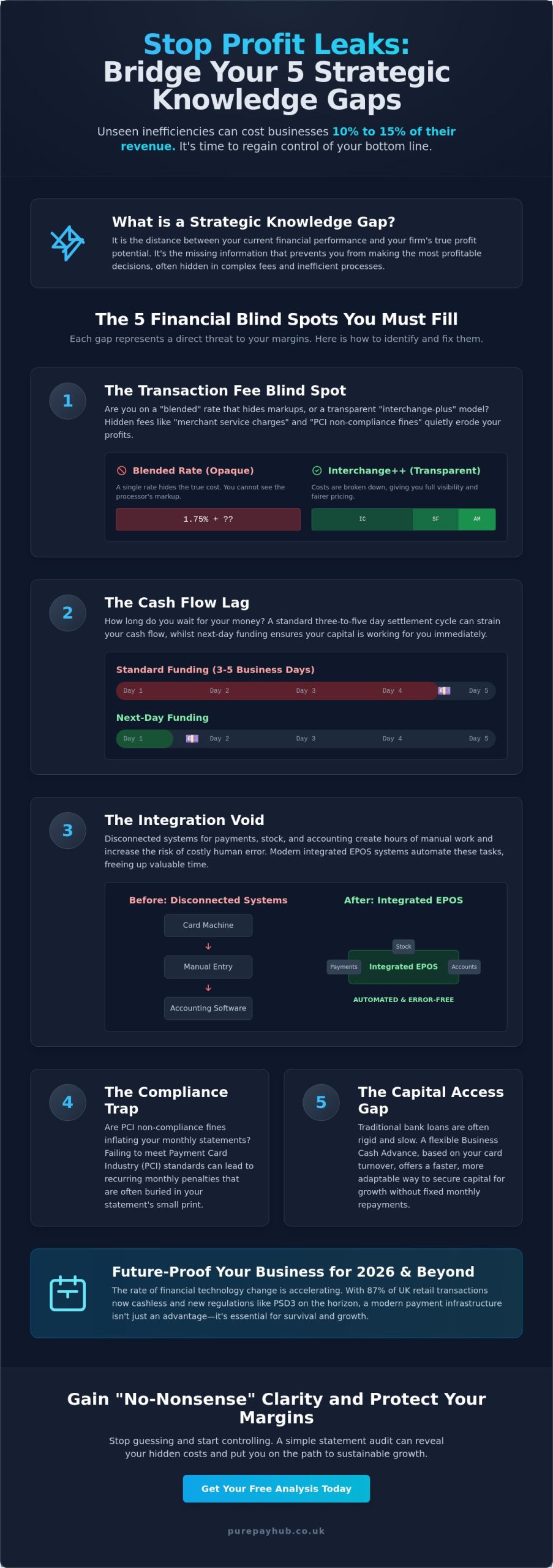
Security is a mandatory requirement in the payments industry. Every merchant must comply with the Payment Card Industry Data Security Standard (PCI DSS). However, some providers turn this into a profit centre by charging “non-compliance fees” if you haven’t completed your annual self-assessment questionnaire. These fines can range from £20 to £50 per month. You should look for partners who offer managed compliance support rather than those who simply penalise you for administrative delays. Always verify your provider’s credentials through the Financial Conduct Authority (FCA) to ensure they meet the necessary regulatory standards for handling your business data. This prevents you from falling into the trap of paying “admin fees” that add no genuine value to your security posture.
Rental vs Purchase: Making the Right Choice for Your Cash Flow
Decisions regarding payment hardware often come down to a choice between capital expenditure and operational expenditure. When you buy a card reader outright, you own the asset. However, for many established businesses, the ongoing service provided by a rental agreement outweighs the appeal of ownership. A deeper understanding card machine rental agreements UK reveals that rental models often include essential technical support and hardware insurance that purchase models lack.
The choice is about more than the initial price tag. It’s about ensuring your business remains operational regardless of technical glitches. Whilst pay-as-you-go readers are popular for market stalls, a dedicated rental terminal provides the stability needed for high-volume environments. It’s a strategic partnership that allows you to focus on your customers instead of your hardware.
The Total Cost of Ownership (TCO) Analysis
Let’s look at the numbers. A basic mobile reader might cost £79 to buy, whilst a professional standalone terminal with a SIM card and printer can cost between £100 and £250. Conversely, a rental agreement might cost around £20 per month. Over three years, the rental totals £720. Whilst the purchase price is lower, it doesn’t account for the complex Credit Card Processing Fees and security updates required to keep the device compliant.
- Tax efficiency: Rental payments are usually treated as deductible business expenses rather than capital assets, which can be simpler for your accounting.
- Software lifecycle: Security patches and software updates are managed remotely by the provider, ensuring you never fall behind on PCI standards.
- Scalability: You can easily add extra units for seasonal peaks or new locations without a massive upfront capital hit.
Hardware Reliability and “Swap-Out” Services
What happens when your machine stops working on a busy Saturday afternoon? If you own the hardware, you’re responsible for the repair or replacement. This downtime can cost your business hundreds in lost sales. PurePay Hub prioritises business continuity. Our rental agreements typically feature “swap-out” services, ensuring a replacement device arrives quickly, often by the next working day. This level of support is rarely available when you buy a device from a retail shelf.
Modern payment methods like Apple Pay and Google Pay require frequent firmware updates. Rental terminals receive these automatically. This ensures your customers always enjoy a seamless checkout experience. We believe that a card machine should be a tool for growth, not a source of technical frustration. By choosing a transparent rental model, you secure both modern hardware and the peace of mind that comes with professional technical advocacy.
Red Flags: What to Look for Before Signing a Contract
Signing a contract shouldn’t feel like a gamble. When you’re understanding card machine rental agreements UK, you must look for the small print that dictates your future freedom. Many aggressive providers rely on automatic renewal clauses. These roll-over terms can bind you to a new 18-month term if you miss a tiny cancellation window. A fair contract should offer a standard 30-day notice period. If you see a 90-day requirement, consider it a major warning sign. These tactics are designed to keep you paying long after the service has stopped being competitive.
Stability matters in a fluctuating economy. Fixed rates provide predictable costs, whilst variable rates can leave your monthly bill at the mercy of market shifts. You should also check for exclusivity agreements. Some contracts forbid you from using alternative payment methods, such as payment links or mobile readers from other providers. This limits your flexibility. It prevents you from adopting new technology as it emerges. A supportive partner will encourage you to use the best tools for your business, not restrict your choices through legal threats.
Understanding Termination and Exit Fees
The term “Liquidated Damages” is often buried deep in the terms and conditions. It essentially means you must pay a significant portion of the remaining contract value if you leave early. A vital part of understanding card machine rental agreements UK involves scrutinising these termination clauses. Calculating this cost is simple but painful; you multiply the monthly rental by the months left on your term. Some providers also add an admin fee on top. When negotiating, ask for a no-exit-fee trial period. This gives you time to test the service without the risk of a heavy financial penalty. If a provider refuses this, they likely don’t have confidence in their own service levels.
Integration and EPOS Compatibility
Your card machine needs to talk to your till. Proprietary lock-in happens when a provider forces you to use their specific EPOS system to get a better rate on your card machine. This makes it incredibly difficult to switch either service later. You end up stuck with software that might not suit your workflow just to keep your processing costs down. At PurePay Hub, we offer integrated EPOS solutions designed for hospitality and retail that maintain your flexibility. We believe your hardware should work for you, not the other way around. If you want to avoid these common traps and secure a fair deal, get a transparent quote from PurePay Hub today.
PurePay Hub: Transparent Payment Solutions for UK Growth
PurePay Hub isn’t just another distant financial institution. We are a supportive partner for UK merchants. We believe that understanding card machine rental agreements UK should be a straightforward process. You shouldn’t need a law degree to process a simple payment. Our approach is built on total transparency and efficiency. We offer debit rates starting from 0.3% and credit from 0.5%, ensuring your costs remain predictable and fair. We strip away the corporate jargon to provide a service that prioritises your business growth over our own bottom line.
Next-day funding is a core part of our commitment to your success. Many traditional banks still hold your funds for three to five days. We find this practice outdated and unnecessary. Your cash flow is the lifeblood of your business. By providing next-day access to your funds, we help you manage your stock, pay your staff, and handle daily expenses with confidence. It is your money. You earned it. You should have it.
Leveraging Your Turnover with Business Cash Advances
Your card machine is more than a way to take payments; it’s a gateway to capital. We facilitate business cash advances based on your future card sales. This isn’t a traditional loan with fixed, stressful monthly payments. Instead, you pay back a small, agreed percentage of your daily card takings. If you have a quiet day, you pay back less. If you’re busy, you clear the balance faster. Understanding card machine rental agreements UK through a partner like PurePay Hub means unlocking a flexible way to fund renovations, new stock, or business expansions without rigid bank terms.
Setting Up Your Countertop or Mobile Solution
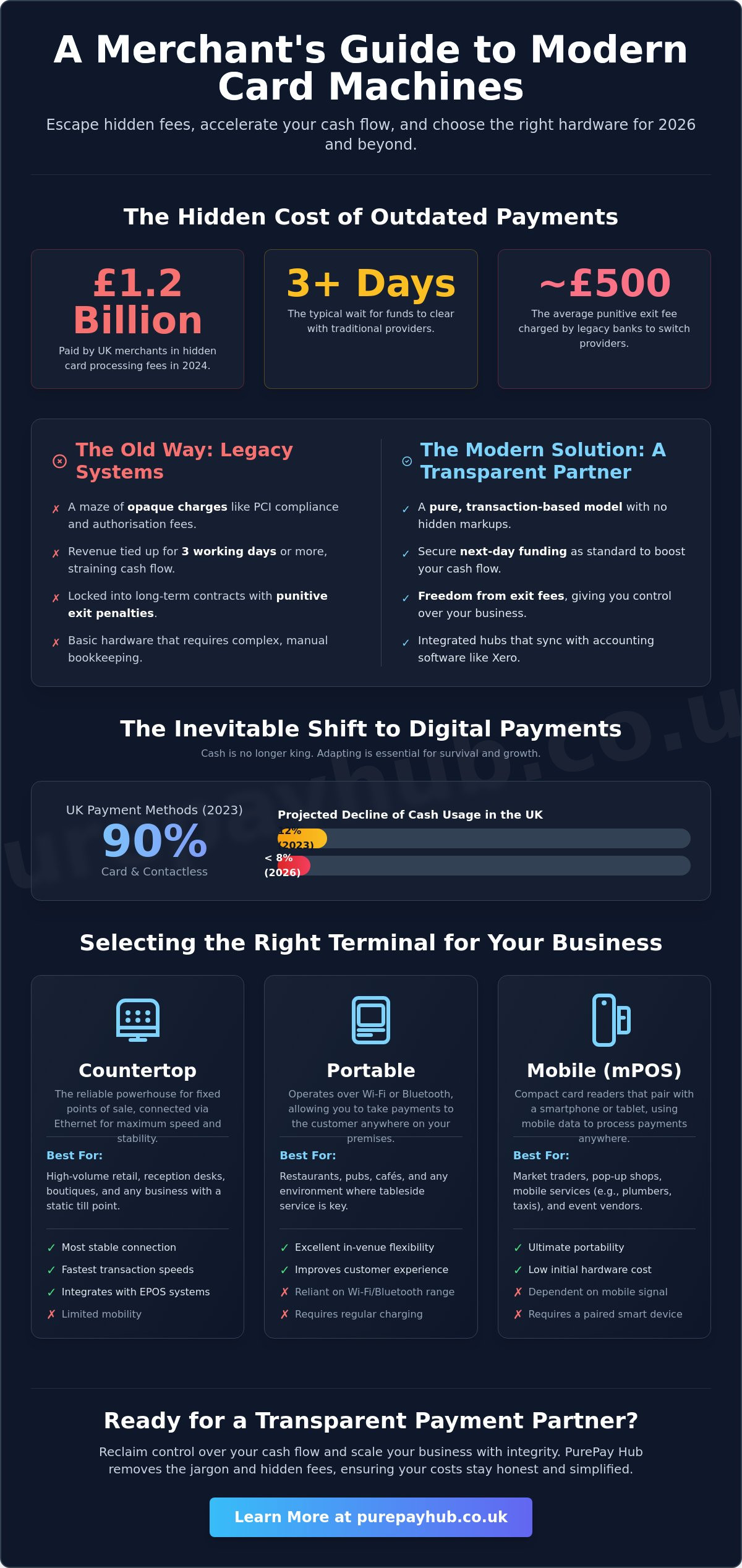
We’ve streamlined the onboarding process to be as fast as possible. We want you trading without delay. From your initial application to your first transaction, our expert team provides constant advocacy and support. You can choose the hardware that fits your specific business workflow:
- Countertop Card Machine: Ideal for fixed retail points and reception desks.
- Portable Card Machine: Perfect for tableside service in hospitality environments.
- Mobile Card Machine: Designed for tradespeople and businesses on the move.
Every unit we provide is modern, secure, and fully compliant with the latest standards. We handle the technical updates and security patches remotely, ensuring your service is never interrupted. We believe in straight-talking and fair deals. Get a transparent quote from PurePay Hub today and experience a partnership that actually works for your business.
Secure a Fairer Deal for Your Merchant Services
You now have the tools to identify predatory contract terms and hidden service charges. By staying informed about PSR regulations and the true cost of terminal hire, you can protect your business from unnecessary financial strain. Choosing the right partner means prioritising flexibility and transparency over rigid, long-term debt. It’s about ensuring your payment setup supports your growth rather than hindering your cash flow.
Gaining a clear understanding card machine rental agreements UK is the first step toward reclaiming control of your finances. You don’t have to accept slow funding or opaque pricing models from traditional banks. We offer a modern alternative with debit rates starting at 0.3% and the reassurance of independent, UK-based support. You deserve a payment partner that treats you as an equal ally.
Switch to PurePay Hub for fair rates and next-day funding and gain next-day access to your hard-earned funds. Your turnover belongs in your business account, not tied up in processing delays. Take the next step toward a more predictable and supportive payment setup today. We are ready to help your business thrive.
Frequently Asked Questions
How long is a standard card machine rental contract in the UK?
Standard contracts for small and medium businesses are now capped at a maximum of 18 months due to Payment Systems Regulator (PSR) rules. This regulation was introduced to stop providers from locking merchants into three or five-year commitments that were difficult to exit. You should always check your agreement for any automatic renewal clauses that could roll you into a new term without your explicit consent.
Can I switch card machine providers if I am still in a contract?
You can switch providers at any time, but you will likely face early termination fees if your minimum term hasn’t expired. These exit costs are often calculated by multiplying your monthly rental fee by the number of months remaining on the contract. It’s vital to review your “Liquidated Damages” clause to understand the exact financial impact before moving to a new partner.
What is the average monthly cost for card machine rental?
Monthly costs depend on whether you choose a countertop, portable, or mobile unit and your expected transaction volume. Most businesses pay a fixed monthly hire fee plus a small percentage on every sale processed. When understanding card machine rental agreements UK, it’s important to remember that the lowest monthly rental doesn’t always mean the best deal if the transaction rates are high.
Do I need a separate merchant account for my rental agreement?
Yes, every card machine requires a merchant account to process payments and settle funds into your bank. Most modern providers bundle the terminal hire and the merchant account setup together to simplify the onboarding process. This ensures that your hardware and your payment processing are fully integrated and supported by a single point of contact.
What happens if my card machine breaks during the rental period?
Your provider is responsible for the maintenance and repair of the hardware throughout the rental term. Unlike buying a machine, where you’d have to pay for a replacement, a rental agreement usually includes a next-day swap-out service. This minimises downtime and ensures you don’t lose out on sales due to technical failures or hardware age.
Are there any hidden fees in card machine rental agreements?
Common extra costs include Minimum Monthly Service Charges (MMSC) and PCI non-compliance fees. Some providers also charge for paper statements or “account management” fees that add little value to your service. A transparent provider will list every potential charge clearly in your initial quote so you aren’t surprised by your first monthly bill.
Is it better to rent or buy a card machine for a small business?
Renting is generally better for businesses that prioritise technical support, regular hardware upgrades, and lower transaction rates. Buying a machine outright might suit very low-volume traders who only process a few hundred pounds a month. However, owners of purchased machines must handle their own repairs and often pay much higher processing fees than those on a rental contract.