Tag: EPOS System

  • Takeaway EPOS System with Online Ordering: The Complete 2026 Guide

    Takeaway EPOS System with Online Ordering: The Complete 2026 Guide

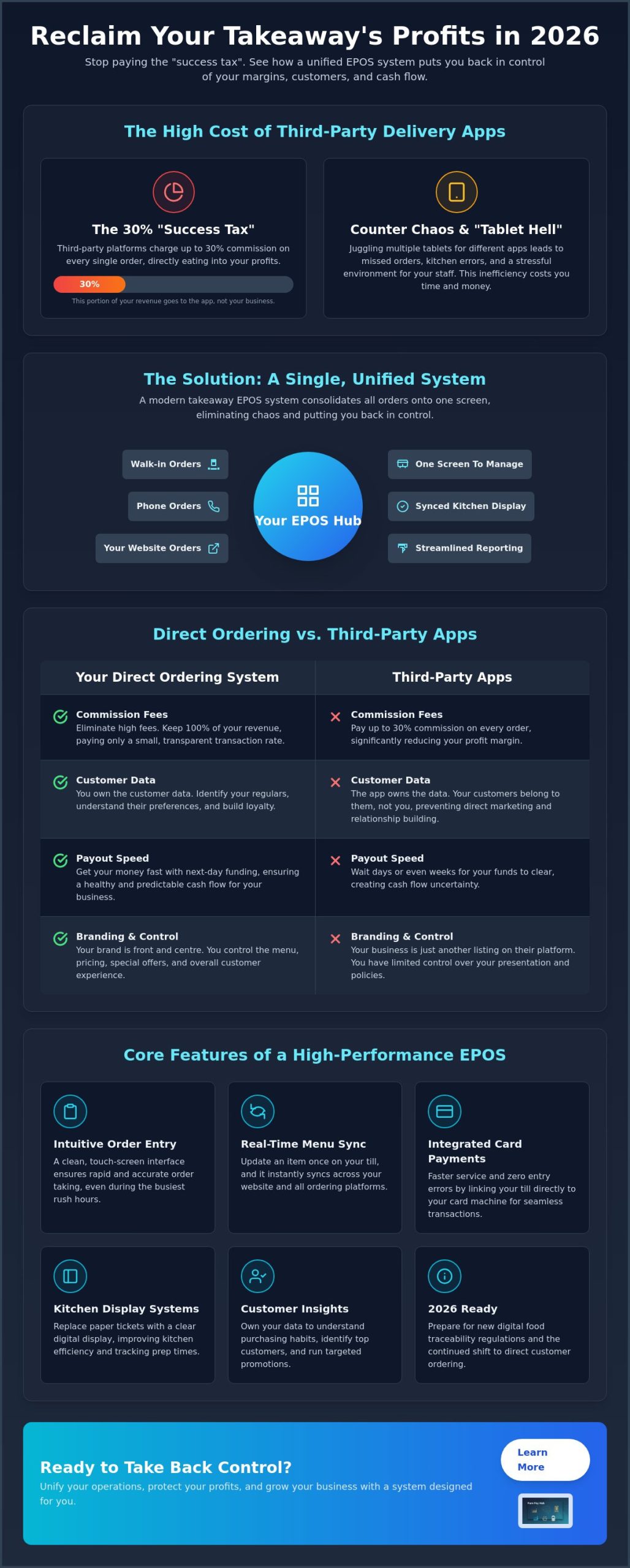
    Why are you paying a 30% “success tax” on every meal you cook just to let a third-party app handle your deliveries? It’s a common frustration for local business owners who feel trapped by high commission fees and the chaos of managing multiple tablets at the counter. Switching to a dedicated takeaway EPOS system with online ordering isn’t just about modernising your till; it’s about protecting your margins in a market where every penny counts.

    We understand that you’re tired of complex fee structures and waiting days for your funds to clear. You deserve a partner that prioritises your cash flow with next-day funding and transparent transaction rates. This guide will show you how to unify your counter sales and online orders into one high-margin system. You’ll learn how to bin the extra tablets and run your entire shop from a single, dependable screen that puts you back in control of your profits.

    We’ll walk you through the essential 2026 requirements, including how to navigate new digital food traceability regulations and the shift toward direct customer ordering. By the end of this guide, you’ll have a clear roadmap to a more profitable, professional, and stress-free takeaway business that keeps your hard-earned money in your own pocket.

    Key Takeaways

    • Learn why 2026 is the year to adopt a direct-to-consumer model to protect your margins and reclaim customer loyalty.
    • Discover how a takeaway EPOS system with online ordering unifies walk-ins, phone calls, and web orders onto a single, efficient screen.
    • Understand the true impact of third-party commission fees and how to implement a system that eliminates these unnecessary costs.
    • Identify the core hardware requirements needed to create a seamless link between your kitchen, your counter, and your online menu.
    • Explore how transparent processing rates and next-day access to funds can help you maintain a healthy and predictable cash flow.

    The Evolution of Takeaway EPOS Systems in 2026

    The humble cash register is a relic of the past. In 2026, a Point of Sale (POS) system is no longer just a place to park cash; it’s the central hub of your entire operation. A modern takeaway EPOS system with online ordering acts as a digital air traffic controller. It manages walk-in customers, phone enquiries, and web orders simultaneously. This shift isn’t just about technology. It’s about survival. High commissions from third-party apps have forced a move toward a “Direct-to-Consumer” model. Business owners are reclaiming their margins by encouraging customers to order through their own platforms.

    Why is 2026 the tipping point for direct sales? It’s largely due to the maturity of the market. Customers are now accustomed to ordering via QR codes and mobile apps. They are often happy to support local businesses directly if the experience is smooth and professional. By owning the ordering platform, you aren’t just saving on fees; you’re owning the customer data. You can see who your regulars are and what they like to eat. This level of insight was once reserved for global chains, but integrated EPOS systems have made it accessible to every local chippy and curry house.

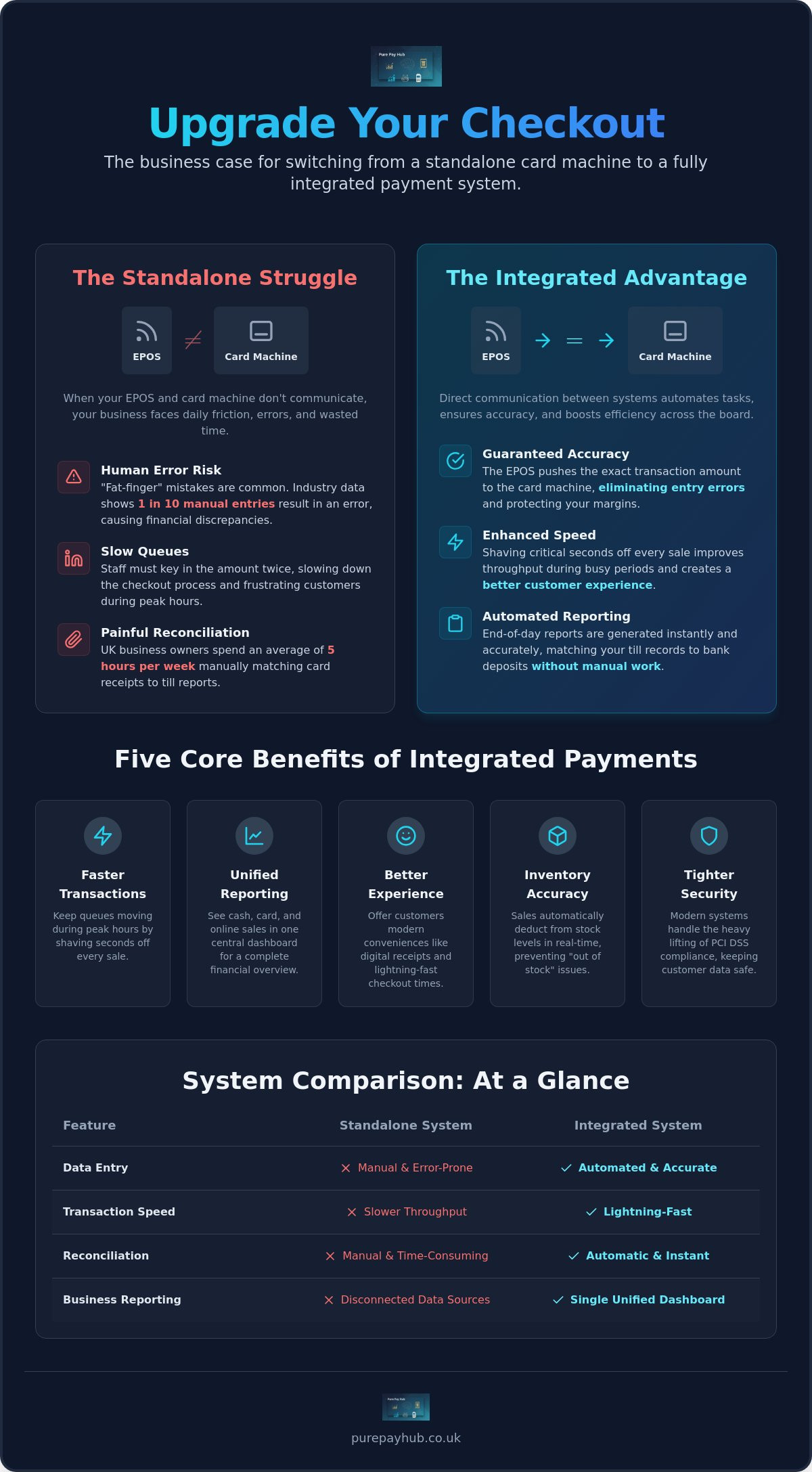
    Speed is everything in a busy takeaway. Integrated card machines have replaced standalone units that require staff to manually type in amounts. When your till talks directly to your card terminal, service is faster and human error is virtually eliminated. It turns your EPOS into a data-driven management tool rather than a simple calculator. It ensures that every transaction is tracked, every penny is accounted for, and your staff can focus on getting the food out the door.

    The Death of Tablet Hell

    If you’ve ever stood behind a counter surrounded by five different tablets, all pinging with different notification sounds, you’ve experienced tablet hell. It’s inefficient and stressful. A unified system pulls every order from external marketplaces into one master list on your main screen. You don’t need to manually re-enter an online order into your till. This single step alone slashes the risk of kitchen errors and ensures your staff can focus on the food, not the hardware.

    Real-Time Inventory and Menu Synchronisation

    Customer frustration often starts with an “out of stock” phone call. If you sell the last portion of a popular special in-store, your online menu needs to reflect that instantly. Modern systems allow for real-time synchronisation. You update a dish once on your terminal, and it changes across your website and delivery platforms. You can also schedule seasonal specials or price changes in advance, ensuring your digital presence is always as accurate as your physical menu.

    Essential Features of a High-Performance Takeaway Platform

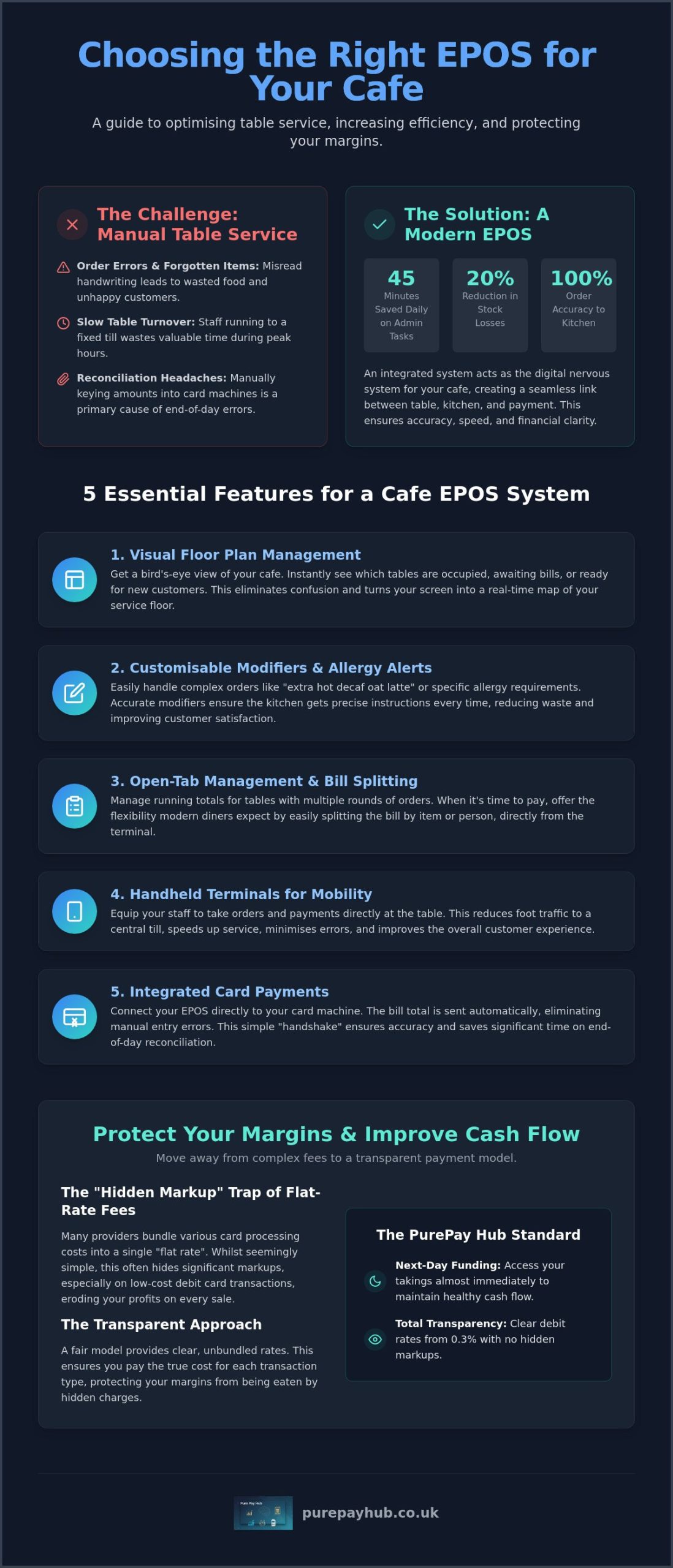
    Efficiency is the heartbeat of any successful shop. A takeaway EPOS system with online ordering must be more than a digital till; it needs to be an intuitive partner. Your staff shouldn’t struggle with complex menus during a Friday night rush. A clean, touch-screen interface allows for rapid order entry, reducing wait times at the counter. It’s about making the technology work for you, not the other way around. Clear layouts and logical categories ensure that even new staff can take orders with minimal training.

    Your online presence should be a mirror of your physical brand. An integrated ordering module ensures that when a customer visits your website, they see your colours, your logo, and your specific menu layout. This consistency builds trust and professionalises your business. It’s a key part of using technology for restaurant success in 2026. When the system is unified, you can manage your own delivery drivers with built-in tracking tools, ensuring every meal arrives hot and on time without relying on expensive third-party logistics.

    Kitchen Display Systems (KDS) vs. Traditional Printers

    Paper tickets are prone to getting lost, stained, or misread in a humid, high-pressure kitchen. Digital screens provide a clear, organised view of every active order. A KDS tracks “time-to-prep” metrics automatically. This data helps you spot bottlenecks in your service. If the burger station is consistently slower than the fryers, you can adjust your staffing levels based on facts. Once an order is marked as ready, the system can auto-print a receipt specifically for the delivery driver, including the address and any special delivery instructions.

    Caller ID and Customer Databases

    Personalisation wins loyalty. When a regular customer calls, your EPOS should recognise their number immediately. Accessing their order history allows your staff to ask, “Do you want the usual?” This saves time and makes the customer feel valued. These databases also serve as a powerful marketing tool. You can build a compliant list for SMS promotions or midweek special offers to drive sales during quieter periods. Automated loyalty programmes can then reward these direct customers, giving them a reason to skip the third-party apps.

    Managing these features shouldn’t feel like a second job. Choosing a professional EPOS system ensures these tools work together seamlessly, allowing you to focus on the quality of your food rather than fighting with your software.

    Direct Online Ordering vs. Third-Party Apps: Protecting Your Margins

    Third-party marketplaces aren’t your partners; they’re your most expensive landlords. Every time a customer finds you through a major delivery app, you’re likely handing over a 15% to 30% commission. This “success tax” eats into your profit before you’ve even paid for ingredients or staff. Investing in a takeaway EPOS system with online ordering allows you to reclaim this lost revenue. It shifts the power back into your hands by removing the middleman from the transaction.

    Owning your platform gives you total control over your pricing. Many businesses feel forced to inflate their marketplace prices to cover the heavy fees, which can make them look uncompetitive. When customers order directly, you can offer fairer prices whilst still retaining a higher margin. There’s a psychological benefit here, too. Customers who order from your website develop a relationship with your brand, not the app’s interface. They become your regulars, not the marketplace’s data points.

    The most effective way to migrate customers away from expensive apps is through “Direct Only” incentives. Offering a small discount or a free side dish for orders placed on your own site is a win-win. You might give away 10% in value, but you’re still saving significantly more compared to a 30% marketplace fee. It’s a simple, transparent strategy that builds long-term loyalty and keeps your hard-earned money in your business.

    Analysing the Profit Gap

    Let’s look at the numbers. A £30 order on a marketplace often leaves a business with just £21 after commissions and service fees are deducted. On your own site, that same order keeps nearly the full amount in your till. Saving £5 or £9 on every single delivery quickly adds up to thousands of pounds over a year. This found money can fund your business expansion, pay for equipment upgrades, or simply provide a much-needed financial cushion. Switching to direct ordering increases annual net profit by up to 20%.

    Data Ownership and Customer Retention

    Marketplace apps keep your customer data for their own marketing. They’ll often use the fact that someone bought from you to suggest a competitor’s deal the following week. Direct ordering changes the game. You get the email address and phone number of every diner who interacts with your site. This allows you to send personalised SMS promotions on a slow Tuesday or reward your most frequent visitors. A professional takeaway EPOS system with online ordering also lets customers save their favourite meals, allowing them to checkout in seconds and making your site the most convenient choice for their next Friday night treat.

    Takeaway EPOS System with Online Ordering: The Complete 2026 Guide

    Hardware Requirements and Seamless Setup Guidance

    Building a reliable takeaway EPOS system with online ordering requires more than just high-quality software. You need a physical setup that can withstand the heat of a busy kitchen and the pressure of a Friday night rush. The core stack for any modern takeaway consists of a durable touchscreen terminal, a high-speed thermal printer for orders, and a secure cash drawer. These components form the foundation of your shop’s operations. They must be robust enough to handle constant use without failing when you need them most.

    Your till and card terminal must talk to each other. Manual entry is a recipe for disaster during peak times. When your hardware is fully integrated, the amount from the till is sent directly to the card terminal, eliminating typing errors and speeding up the queue. This connection also ensures that every online payment is logged correctly against the specific order in your system. It makes your end-of-day reconciliation a five-minute task rather than a late-night headache.

    Network stability is non-negotiable for a business that relies on web orders. A dropped connection means lost sales and frustrated customers. In 2026, we are also seeing a significant rise in self-service kiosks. These units allow walk-in customers to browse your menu and pay independently. This trend is helping local takeaways reduce front-of-house labour costs whilst ensuring that staff can focus on preparing high-quality food and managing deliveries.

    Choosing the Right Card Machine

    The right hardware depends on how your customers prefer to pay. A Countertop Card Machine is the standard choice for permanent till points where space is consistent. However, if you offer “pay at the door” delivery services, a Portable Card Machine is essential. These units use mobile data or Wi-Fi to process payments anywhere. Regardless of the model, security is paramount. All hardware must be PCI compliant to protect your customers’ data and shield your business from heavy non-compliance fines.

    The Installation Process

    Downtime is lost revenue, so look for “plug and play” systems. These arrive pre-configured with your menu already loaded, allowing you to start trading almost immediately. Staff training should be straightforward if the interface is intuitive, but don’t overlook the importance of ongoing support. Having access to UK-based technical assistance whilst you are actually trading provides vital peace of mind. If a printer jams or a connection drops during a busy shift, you need a partner who answers the phone and understands the urgency of your business.

    Ready to upgrade your shop’s technology? Explore our range of EPOS systems designed for the modern takeaway.

    Maximising Revenue with PurePay Hub Integrated Solutions

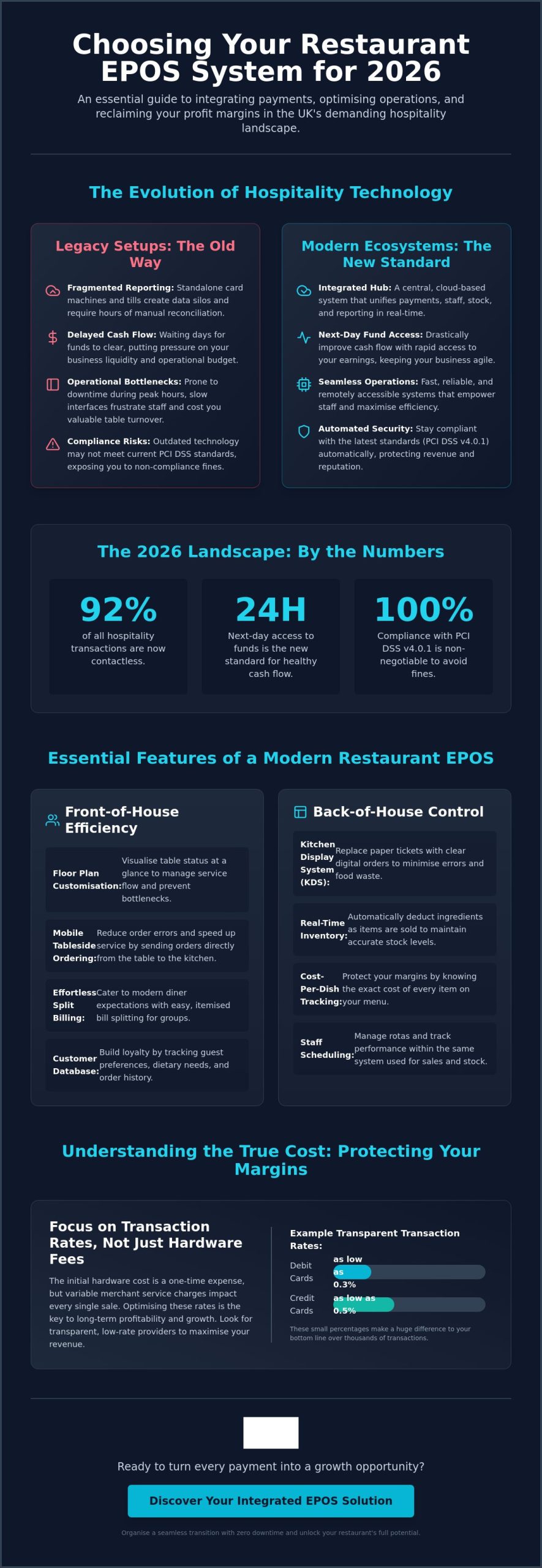
    Operational efficiency is only half of the battle. You’ve streamlined your kitchen and unified your tablets, but your profit still depends on what you keep after transaction fees. Many providers hide their true costs behind complex tiers and monthly service charges. We take a different approach. With PurePay Hub, you benefit from transparent pricing that lets you plan your finances with confidence. Debit card charges start from just 0.3%, whilst credit card rates begin at 0.5%. These are some of the fairest rates in the industry, designed specifically to help local takeaways thrive.

    Cash flow is the lifeblood of any food business. Waiting days for your hard-earned money to reach your bank account can make it difficult to pay suppliers or staff. We solve this by providing next-day access to funds. When you process a transaction through your takeaway EPOS system with online ordering, the money is available to you almost immediately. This stability allows you to manage your daily expenses without the stress of “pending” balances or slow bank transfers.

    Our hardware doesn’t work in isolation. PurePay Hub card machines offer seamless integration with leading takeaway EPOS software. This means that every order, whether it’s a walk-in sale or a web delivery, flows through a single, dependable financial pipeline. You won’t have to deal with mismatched totals or manual reconciliation at the end of a long shift. Everything is synchronised, secure, and designed to save you time.

    The PurePay Hub Advantage for Takeaways

    We pride ourselves on being a fair partner to regional business owners. There are no hidden markups or opaque fee structures here; just straight-talking merchant services that put you first. Our quick onboarding process means you can get your new ordering system live in days, not weeks. Once you’re up and running, you’ll have access to dedicated account management. We’ll work with you to optimise your transaction costs and ensure you’re always getting the best possible value from our partnership.

    Supporting Your Growth

    Growth often requires an initial investment that isn’t always sitting in your bank account. Whether you need a new delivery bike, more efficient fryers, or a kitchen refurbishment, our Business Cash Advance can help. Unlike traditional loans, this is based on your card turnover. Repayments are flexible and move in line with your daily sales volume. If you have a quiet Tuesday, you pay back less. If you have a busy Friday, you pay back more. It’s a supportive way to fund development without the pressure of fixed monthly payments. Contact PurePay Hub today to secure your bespoke takeaway rate and take the first step toward a more profitable 2026.

    Take Control of Your Takeaway’s Future

    The days of juggling multiple tablets and losing 30% of your revenue to third-party marketplaces are over. By implementing a modern takeaway EPOS system with online ordering, you’re choosing a path of efficiency and higher margins. You’ve seen how a unified hub simplifies your kitchen workflow and how direct sales build lasting customer loyalty. It’s time to stop paying a success tax on every meal you cook and start keeping more of your hard-earned money.

    We’re here to be the fair partner your business deserves. You won’t find any hidden markups or confusing fee structures here. Instead, you get debit rates from 0.3%, next-day funding as standard, and no-nonsense UK-based support whenever you need it. We’ve built our reputation on transparency because we know that’s what local business owners actually value. Your success is our priority, and we have the tools to help you reach it.

    Get a Transparent Quote for Your Takeaway EPOS and Payments today. Let’s work together to make 2026 your most profitable year yet.

    Frequently Asked Questions

    What is the best EPOS system for a small takeaway?

    The best system for a small takeaway is one that unifies all your sales channels into a single screen whilst protecting your margins. You need a solution that prioritises direct ordering to help you avoid heavy third-party commissions. Look for a partner that offers transparent pricing and reliable UK-based support. This ensures your technology remains a supportive ally rather than a source of stress during a busy shift.

    How much does a takeaway EPOS system cost per month?

    Monthly costs for an EPOS system typically depend on your specific software needs and hardware choices. Some providers offer basic software plans, whilst others include advanced features like real-time inventory and kitchen display integrations. Instead of focusing solely on the monthly fee, you should consider the total cost of ownership. This includes transaction rates and the potential savings gained from moving customers away from high-commission platforms.

    Can I use my own website for online ordering with an EPOS?

    You can absolutely use your own website for ordering when you choose a modern takeaway EPOS system with online ordering. The system provides a professional web module that mirrors your physical brand. This allows you to keep the full value of every sale. It also gives you direct access to customer data, enabling you to send personalised promotions and build long-term loyalty without a middleman.

    Do takeaway EPOS systems integrate with Just Eat and Deliveroo?

    Yes, high-quality takeaway EPOS system with online ordering solutions integrate directly with major marketplaces like Just Eat, Deliveroo, and Uber Eats. This integration ends the chaos of managing multiple tablets by pulling every order into one master list on your main terminal. It eliminates the need for manual re-entry. This reduces the risk of kitchen errors and ensures your staff can focus on preparing food rather than fighting with hardware.

    What hardware do I need for a takeaway online ordering system?

    The essential hardware stack includes a durable touchscreen terminal, a thermal receipt printer, and a secure cash drawer. You’ll also need an integrated card machine that communicates directly with your till to prevent entry errors. For kitchens, a Kitchen Display System (KDS) is often a better choice than paper tickets. It provides a clear, digital view of active orders and tracks your preparation times automatically.

    How do integrated payments speed up my takeaway service?

    Integrated payments speed up service by removing the need for staff to type transaction amounts into a standalone card terminal. When your EPOS and card machine are linked, the total is sent instantly and accurately. This slashes wait times at the counter and ensures your end-of-day reconciliation is simple and error-free. It turns your payment process into a seamless part of the customer experience.

    Is next-day funding available for takeaway businesses?

    Next-day funding is available and serves as a stabilising force for your shop’s finances. We understand that takeaways need healthy cash flow to pay suppliers and staff without delay. By choosing a partner that offers rapid access to your funds, you avoid the frustration of waiting days for card payments to clear. It ensures that the money you earn today is in your account tomorrow.

    Can I get a business cash advance for my takeaway?

    You can secure a business cash advance based on your daily card sales volume. This is a flexible alternative to traditional bank loans, as repayments move in line with your turnover. If you have a quiet week, you pay back less. It’s an ideal way to fund new kitchen equipment, a delivery vehicle, or a shop refurbishment without the pressure of fixed monthly repayments.

  • Choosing the Best Restaurant EPOS System in the UK for 2026

    Choosing the Best Restaurant EPOS System in the UK for 2026

    How much of your hard-earned Friday night profit is disappearing into opaque transaction fees before the weekend even starts? You likely know the frustration of thin margins being eaten away by hidden charges and the stress of system downtime during a peak dinner rush. It’s common to feel that your current setup, with its fragmented reporting between the till and the card machine, is holding your business back rather than helping it grow.

    Choosing the right restaurant EPOS system UK for 2026 can change that by slashing transaction costs and finally uniting your front-of-house with the kitchen. We promise to show you how to select an integrated solution that provides next-day access to your funds, lowers your merchant service charges, and ensures your operations run seamlessly. This guide explores the latest hardware and software strategies to help you reclaim your margins whilst maintaining the transparency your business deserves. You’ll learn how to move from a state of frustration to one of informed confidence, ensuring your technology acts as a supportive partner in your success.

    Key Takeaways

    • Understand how to transition from a basic till to an integrated ecosystem that manages payments, staff, and stock from one central hub.
    • Identify the essential features for a restaurant EPOS system UK, including floor plan customisation and Kitchen Display Systems that reduce order errors.
    • Learn to calculate the Total Cost of Ownership by contrasting fixed hardware costs with variable merchant service charges to protect your margins.
    • Discover the steps to ensure a seamless transition between providers without experiencing system downtime or losing a single night of trade.
    • Leverage transparent transaction rates as low as 0.3% for debit and 0.5% for credit to turn every payment into a growth opportunity.

    What is a Restaurant EPOS System and Why is it Critical in 2026?

    A What is a Point of Sale (POS) system is no longer just a box for holding cash. In 2026, a restaurant EPOS system UK acts as the central nervous system of your entire hospitality business. It’s the point where every customer interaction, kitchen order, and stock adjustment meets. The days of simple, standalone tills are over. Modern owners have transitioned toward integrated ecosystems that manage payments, staff scheduling, and inventory in one place. This shift is critical because 2026 brings unique pressures. With rising operational costs and thin margins, you need real-time data synchronisation to make informed decisions. You aren’t just managing a till anymore; you’re optimising a digital business partner that works as hard as you do.

    The Evolution of Hospitality Tech: From Tills to Ecosystems

    Legacy setups often relied on standalone card machines that didn’t talk to the till. This created fragmented reporting and endless manual reconciliation. Modern EPOS systems remove this friction entirely. Because they’re cloud-based, you can monitor your restaurant’s performance from your phone whilst away from the site. This transparency is vital for spotting waste or staffing issues early. In a high-inflation economy, the speed of your cash flow is also paramount. Integrated systems provide next-day access to funds, ensuring your business stays liquid and ready for the next delivery. This reliability helps alleviate the stress that business owners feel regarding complex fee structures and delayed payments.

    Why “Good Enough” is No Longer Enough for UK Restaurants

    Consumer behaviour has changed rapidly. Statistics from early 2026 show that contactless payments now account for 92% of all hospitality transactions. If your system is slow or prone to downtime, you’re directly hurting your table turnover. A laggy interface during a peak Friday night doesn’t just frustrate staff; it costs you covers. Security is another non-negotiable factor. With PCI DSS v4.0.1 now being the sole supported standard as of 2025, using outdated tech risks monthly non-compliance fines. A modern restaurant EPOS system UK keeps you compliant automatically, protecting your reputation and your revenue. By prioritising clarity and efficiency, you ensure your technology supports your growth rather than acting as a bottleneck.

    Essential Features Every UK Restaurant EPOS Must Have

    The best systems don’t just process payments; they orchestrate the entire floor. A robust restaurant EPOS system UK provides a clear, customisable floor plan that acts as the foundation for your service speed. Your staff should be able to see, at a glance, which tables are waiting for drinks, which are mid-course, and which are ready for the bill. This visual clarity prevents bottlenecks and ensures no customer is left waiting during a frantic shift. Beyond the floor plan, your system must offer granular inventory tracking. With food prices remaining volatile in 2026, knowing your exact cost-per-dish is the only way to protect your margins. Every ingredient should be accounted for, from the premium steaks to the garnish.

    Front-of-House Efficiency: Table Management and Mobile Ordering

    Speed at the table is the heartbeat of a busy shift. By adopting restaurant industry technology trends like mobile tableside ordering, you eliminate the constant back-and-forth to a central terminal. Waitstaff can send orders directly to the kitchen the moment they are taken; this significantly reduces lead times and improves order accuracy. For weekend diners, split-billing features are no longer optional. Customers expect to pay for exactly what they had without a mathematical debate at the end of the night. These tools also allow you to build a database of your guests. Recognising a favourite customer’s previous order or dietary preference builds the kind of loyalty that keeps a local business thriving.

    Back-of-House Control: Inventory and Kitchen Integration

    Your kitchen is where your margins are won or lost. A Kitchen Display System (KDS) replaces messy paper tickets with clear, digital prompts that reduce errors and food waste. These screens ensure the kitchen team receives orders the second they are placed, keeping the rhythm of service steady. Integration with your inventory is equally vital. When a burger is sold, your system should automatically deduct a bun and a patty from your stock levels in real-time. Automated low-stock alerts prevent the awkwardness of a server having to tell a guest that a menu item is unavailable mid-service. This level of control allows you to run a leaner, more profitable operation. If you are looking to upgrade, choosing a modern EPOS system can help you centralise these complex tasks into one manageable dashboard.

    Managing your team effectively requires more than just a paper rota. Modern systems include staff management tools that track individual performance and handle shift scheduling. You can see which servers are upselling effectively and which shifts require more support. By identifying these patterns, you can optimise your labour costs whilst ensuring your best staff are rewarded. This data-driven approach turns your EPOS from a simple tool into a strategic asset for your restaurant’s long-term growth.

    Calculating the Real Cost: Software Fees vs. Transaction Rates

    Finding the most cost-effective restaurant EPOS system UK requires looking past the initial sales pitch. You must evaluate the Total Cost of Ownership (TCO) to understand how much money actually leaves your bank account each month. Many owners focus on the hardware price or the software subscription whilst ignoring the variable merchant service charges that follow. These transaction fees are often the largest expense in your technology stack. The effective rate is the true measure of payment processing costs; it represents your total monthly fees as a percentage of your total sales volume.

    A transparent financial strategy balances fixed and variable costs. Fixed monthly hardware rentals provide predictability, but they shouldn’t be bundled with opaque processing terms. You need a partner that identifies every cost clearly, from the terminal lease to the per-transaction markup. This clarity helps you move from a state of frustration regarding hidden fees toward a state of informed confidence in your margins. Your technology should be a stabilizing force for your business finances, not a source of unexpected overheads.

    The Trap of “Free” EPOS Software

    Entry-level providers often lure business owners with the promise of “free” software. This is frequently a financial trap that punishes your success. These systems usually carry high transaction rates of 1.75% or more, which can cost a thriving restaurant thousands of pounds in unnecessary fees. For a restaurant with a £20,000 monthly turnover, a “free” system at a 1.5% rate costs you £300 a month. Conversely, a paid system with a £50 monthly fee and a 0.3% rate costs you only £110 in total. The “free” option is actually £190 more expensive every single month. You should also insist on next-day access to funds as a standard feature. In a fast-moving hospitality environment, waiting days for your own money is an outdated practice you don’t have to accept.

    Understanding Merchant Service Charges (MSC)

    Transparency in Merchant Service Charges (MSC) is the no-nonsense approach every owner should demand. You deserve to know exactly what you’re paying for debit and credit transactions. Fair rates, such as those from PurePay, typically start around 0.3% for debit cards and 0.5% for credit cards. These small differences in percentage points can save you enough to hire another staff member or upgrade your kitchen equipment over the course of a year. Avoid long-term contracts that hide annual fee increases or exit penalties. A supportive business ally won’t need to lock you in with complex legalese; they’ll keep your business through fair service and honest pricing. By prioritising these clear fee structures, you ensure your technology acts as a growth engine rather than a drain on your resources.

    Choosing the Best Restaurant EPOS System in the UK for 2026

    Organising a Seamless Transition to Your New System

    Switching your restaurant EPOS system UK shouldn’t feel like a leap into the dark. It’s a strategic move. It requires a structured plan to avoid losing a single night of trade. Many owners worry about the administrative headache of setting up new technology during a busy season. The right partner makes this transition effortless by prioritising clarity over complexity. You need a system that stabilises your finances from day one. This transition follows a simple logic: identify the bottlenecks in your old setup and configure the new one to solve them. It’s about improvement, not just replacement.

    Data Migration: Moving Your Menu and Stock

    Moving your data is the perfect time for a digital spring clean. Audit your current menu before you start the import. Remove unpopular items that clutter your interface and slow down your servers. This ensures a clean import into your new setup. Crucially, you must map your VAT categories correctly. This keeps you compliant with HMRC and prevents accounting errors later. Generic global advice often ignores these UK-specific banking and tax requirements. A provider that offers dedicated technical support during this phase prevents costly mistakes. They help you bridge the gap between your old till and your new integrated ecosystem whilst ensuring your historical data remains accessible for year-end reporting.

    Staff Buy-In: Training for Peak Performance

    Your staff use the system during the frantic Saturday night rush. They need an interface that makes sense immediately. A punchy, intuitive design reduces the learning curve for new hires and seasoned veterans alike. Don’t go live without a mock service. Run a practice shift with your team to test the workflow. This builds the confidence your team needs to handle high-pressure situations without hesitation. Once live, use the granular reporting to reward your most efficient performers. You can see which staff members are upselling effectively or managing their tables with the most speed. This turns a technical change into a motivational tool for your entire team.

    A successful transition relies on a partner who values your time and your margins. You deserve a system that is as disciplined and professional as your kitchen. By following a clear onboarding framework, you can upgrade your technology without the stress usually associated with new software. If you’re ready to leave behind opaque fees and fragmented reporting, you can switch to a more transparent EPOS system today and start reclaiming your hard-earned profits.

    Why PurePay Hub is the Growth Engine for UK Restaurants

    PurePay Hub acts as a stabilising force for your restaurant’s finances. In an industry often viewed with scepticism, we provide a transparent alternative to the opaque practices of traditional banks. Choosing our restaurant EPOS system UK means you aren’t just buying hardware; you’re entering a disciplined partnership. We offer 0.3% debit and 0.5% credit transaction rates to ensure your margins remain protected. This clear fee structure allows you to forecast your overheads with absolute certainty. Our goal is to alleviate the stress that business owners feel regarding hidden costs and complex markup models.

    Integrated Payments and Next-Day Funding

    Integrated payments remove the frustration of manual entry on card machines. When your till and your terminal speak the same language, human errors disappear. This efficiency is supported by our range of Countertop Card Machines and Portable Card Machines, designed to suit any restaurant layout. We believe in calm advocacy for our partners, which is why next-day access to your funds is a standard feature. You shouldn’t have to wait for your own money to arrive whilst your suppliers need paying. By prioritising your cash flow, we ensure your technology acts as a supportive ally rather than a bottleneck.

    Unlocking Capital with Business Cash Advances

    We understand that growth requires capital, but traditional bank loans are often too rigid for the hospitality sector. Our Business Cash Advance allows you to use your future card sales to secure unsecured capital today. This is a game-changer for owners planning refurbishments or kitchen upgrades. Unlike bank loans with fixed monthly repayments, this model follows a “pay-as-you-earn” structure. Your repayments are a small, agreed percentage of your daily card sales. If you have a quieter week, your repayments automatically reduce. It’s a flexible, no-nonsense way to fund your expansion without the pressure of traditional debt cycles.

    Our focus remains on the individual business owner. We disdain hidden markups and corporate jargon, choosing instead to lead our partners toward a state of informed confidence. By centralising your payments, your reporting, and your funding, we help you lead your business with a clear head. You deserve a partner that values efficiency and straight-talking as much as you do. You can organise a transparent rate review with PurePay Hub today to discover how much your business could save.

    Reclaiming Your Margins in 2026

    The right technology should be a stabilising force for your finances, not a source of stress. You’ve seen how a modern restaurant EPOS system UK acts as a central nervous system, uniting your front-of-house with the kitchen whilst protecting your hard-earned margins. By looking past the trap of “free” software and focusing on transparent transaction rates, you can turn every payment into a growth opportunity. Whether you’re streamlining a single site or planning a multi-venue expansion, the path to a more profitable 2026 starts with clarity and integrated reporting.

    We are here to act as your fair partner in an industry that often feels opaque. You deserve a setup that offers next-day funding as standard and provides no-nonsense, UK-based support when you need it most. It’s time to stop letting hidden fees eat into your success. We provide debit rates from 0.3% and credit rates from 0.5% to ensure you keep more of what you earn every single day.

    Switch to PurePay Hub for 0.3% rates and integrated EPOS

    Take the next step toward a more efficient, profitable future for your restaurant. Your success is our priority.

    Frequently Asked Questions

    How much does a typical restaurant EPOS system cost in the UK?

    The total cost depends on your specific hardware needs and the number of terminals required for your floor plan. You will typically encounter a combination of upfront hardware costs for screens and printers; a monthly software subscription fee; and variable transaction rates. It is vital to look at the total cost of ownership rather than just the initial price tag to ensure your margins remain protected from hidden markups.

    Can I keep my existing card machine when I switch EPOS providers?

    You can technically use a standalone card machine, but you will lose the significant advantages of an integrated restaurant EPOS system UK. Integrated systems allow your till and terminal to communicate directly; this removes the need for manual data entry and prevents reconciliation errors at the end of a shift. Switching to a unified provider usually simplifies your reporting and results in faster access to your funds.

    What is the difference between an EPOS system and a standard cash register?

    A standard cash register is a passive tool for recording sales and storing cash; an EPOS system is an active partner that helps you optimise your entire business. It tracks inventory in real-time, manages staff rotas, and provides granular data on your most profitable dishes. Whilst a till only handles the final transaction, an EPOS system orchestrates everything from the initial order to the final kitchen prompt.

    How long does it take to install a new restaurant EPOS system?

    A standard installation usually takes between one and three days depending on the size of your venue and the complexity of your menu. This period includes the physical setup of your terminals and a dedicated training session to ensure your team is confident before the first live service. Choosing a partner that prioritises quick onboarding helps you transition between systems without losing a single night of trade.

    Do I need a specific internet speed to run a cloud-based EPOS?

    Stability is more important than raw speed; most cloud-based systems run perfectly on a standard fibre connection with speeds of 10-20Mbps. You should ensure your Wi-Fi coverage is consistent across your entire dining area to support portable card machines for tableside ordering. We recommend using a dedicated network for your business operations to keep your connection fast and secure during peak periods.

    Is a business cash advance better than a traditional bank loan for my restaurant?

    A business cash advance offers more flexibility for the hospitality sector because repayments are based on a small percentage of your daily card sales. This “pay-as-you-earn” model means you pay back less during quieter weeks, which protects your cash flow. Traditional bank loans require rigid monthly payments regardless of your turnover; this can create unnecessary financial pressure during the off-season or slower months.

    What happens if my internet goes down during service?

    Modern systems include an offline mode that allows you to continue taking orders and processing payments even if your connection drops. All data synchronises automatically once your internet is restored. This feature ensures that a temporary technical glitch doesn’t disrupt your service or lead to lost revenue during a busy Friday night rush. Your business remains operational and your data remains secure.

    How does an integrated EPOS help with HMRC and VAT reporting?

    An integrated restaurant EPOS system UK automatically maps every sale to the correct VAT category; this ensures your reporting is accurate and fully compliant with HMRC requirements. You can export clean, professional data directly into your accounting software, which saves hours of manual reconciliation for your bookkeeper. This level of transparency provides you with an effortless audit trail and total confidence in your financial records.

  • Restaurant Table Management System UK: The 2026 Guide to Efficient Service

    Restaurant Table Management System UK: The 2026 Guide to Efficient Service

    How much revenue did your restaurant lose to empty chairs and third-party commission fees last month? You likely feel the pressure of rising wages and the new 2026 business rates multipliers, yet manual booking logs and inaccurate wait times continue to frustrate your guests. It’s a common struggle. Many owners find that high booking fees for every cover quickly erode their hard-earned profits. Implementing a modern restaurant table management system UK venues can trust is the most effective way to regain control over your floor plan and your finances.

    We understand that you want to provide a seamless guest experience without being penalised by hidden costs. This guide shows you how to optimise your seating, eliminate costly no-shows, and boost table turnover through better data. We also examine how 2026 regulatory changes, such as Martyn’s Law and the updated Employment Rights Act, impact your daily service. You’ll discover a clear strategy to increase your margins and streamline your operations using efficient EPOS systems and integrated payment technology.

    Key Takeaways

    • Learn how to replace manual logs with a digital “brain” that synchronises your dining room floor in real-time to prevent lost covers.
    • Discover how a modern restaurant table management system UK businesses rely on can increase turnover through visual floor plans and live status tracking.
    • Identify the “hidden tax” of per-cover commission fees and understand how switching to a direct booking model protects your profit margins.
    • Find out how to select durable hardware and implement a phased roll-out strategy that avoids service disruption during staff training.
    • See how integrated EPOS systems from PurePay Hub eliminate manual entry errors by connecting your table management directly to the payment process.

    Optimising Your Floor: Why UK Restaurants Need a Table Management System

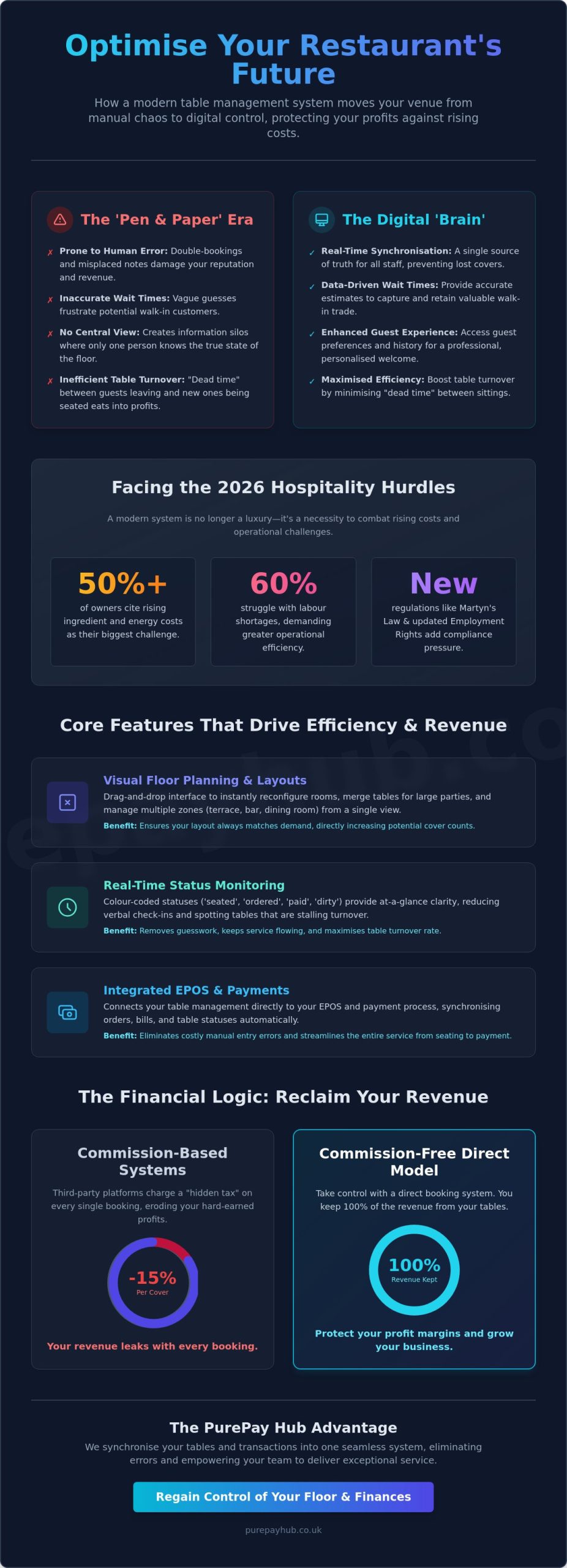
    Think about the dining room as a living organism. A restaurant table management system UK operators use acts as the central brain. It doesn’t just record names; it coordinates every movement on the floor. In 2026, the UK hospitality sector faces a unique set of hurdles. With over 50% of owners citing rising ingredient and energy costs as their biggest challenge, and 60% struggling with labour shortages, you can’t afford operational “blind spots.” Adopting a dedicated restaurant table management system UK wide is no longer a luxury; it’s a necessity for survival.

    Digital synchronisation replaces the guesswork of traditional service. While a physical diary might seem simple, it’s often a source of friction. It creates silos where only the person holding the book knows the true state of the room. A digital system ensures every staff member sees the same live data. This transparency allows your team to move beyond simple booking entries toward active floor control.

    The End of the ‘Pen and Paper’ Era

    Manual diaries are prone to human error. A single misplaced scribble can lead to double-bookings, which directly impacts your reputation and revenue. Beyond avoiding mistakes, switching to a digital platform provides a professional first impression. When a guest arrives, your team shouldn’t be frantically flipping through pages. Instead, they should have immediate access to guest preferences and booking history. This “single source of truth” empowers your team to work with confidence, even when you’re short-staffed. It ensures that every guest feels expected and valued from the moment they step through the door.

    Driving Revenue through Real-Time Visibility

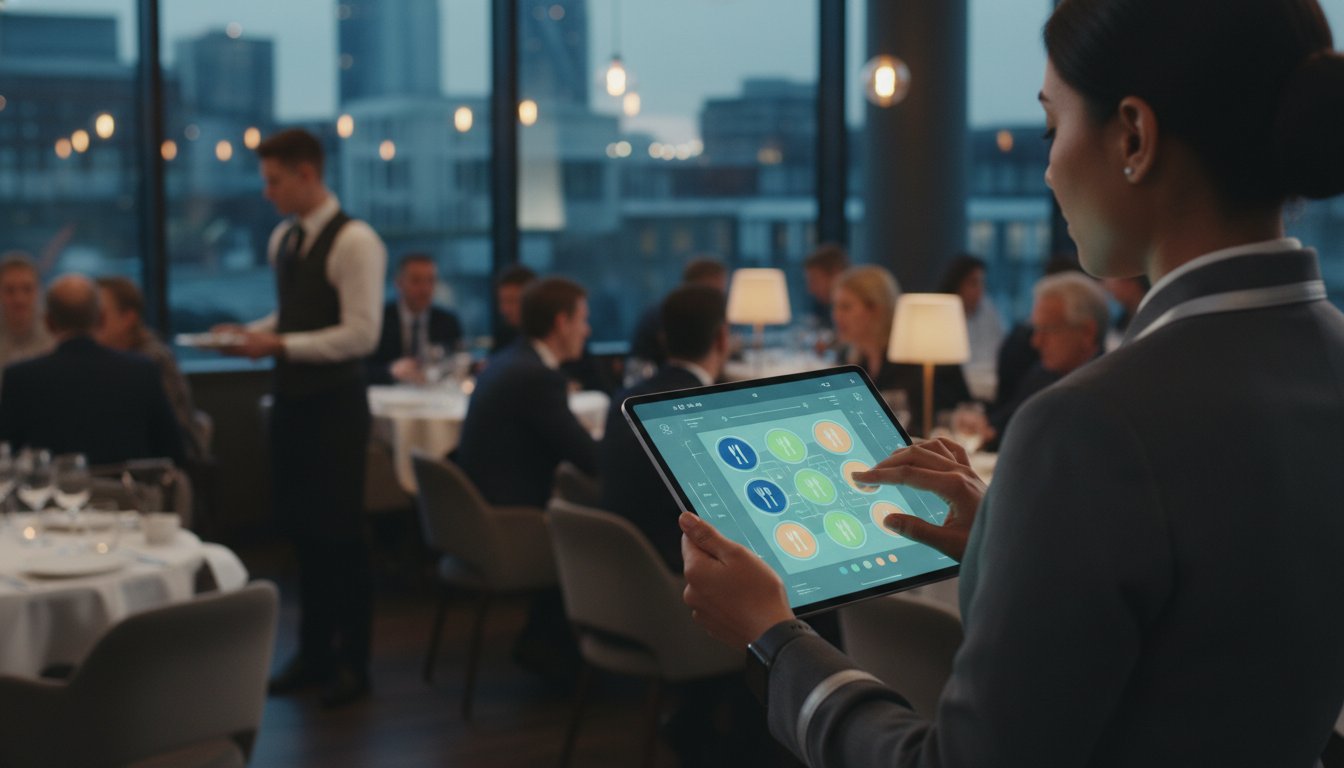
    Efficiency is your most powerful tool for protecting margins. Modern Point-of-sale (POS) systems now integrate directly with your floor plan to show exactly where every table stands. You’ll know at a glance if a party is on their mains, waiting for the bill, or if the table is currently “dirty” and needs clearing. This level of detail is vital for maximising your covers without overstretching your kitchen or front-of-house staff.

    This visibility reduces the “dead time” between a guest leaving and the next being seated. Even a five-minute saving per turn adds up to extra covers over a busy weekend. Additionally, it transforms the walk-in experience. Instead of vague “20-minute” guesses that frustrate guests, you can provide accurate, data-driven wait times. This level of control is essential for managing the 2026 economic climate, where every seated guest represents a vital contribution to your bottom line. By synchronising your floor, you ensure that no potential revenue is left on the table.

    Core Features That Drive Efficiency and Revenue

    Selecting a restaurant table management system UK operators can trust involves looking far beyond a basic digital diary. You need a suite of tools that actively solve service bottlenecks. Efficiency isn’t just about speed. It’s about making every square foot of your venue work harder for you. In 2026, where profit margins are under constant pressure from rising utility costs and inflation, these features act as your primary defence.

    Visual Floor Planning and Layouts

    A static floor plan is a liability during a busy shift. Modern systems offer drag-and-drop interfaces that allow you to reconfigure your room in seconds. Whether you’re managing a terrace, a bar area, or a main dining room, you need a single view of all zones. If a large walk-in party arrives, your staff can merge tables digitally to reflect the physical change immediately. Floor plan flexibility directly impacts your cover counts by ensuring your layout always matches the actual demand on the floor.

    Real-Time Status Monitoring

    Colour-coded statuses are the visual shorthand of a high-performing floor. By identifying ‘seated’, ‘ordered’, ‘paid’, or ‘dirty’ at a glance, your team reduces the need for constant verbal check-ins. This clarity is a key trend highlighted in the UK Food Council’s technology report, which notes that smarter integration between the floor and the kitchen is now a baseline expectation for successful venues. It removes the guesswork and keeps service moving at a steady pace.

    These systems also help you spot ‘slow’ tables that might be stalling your turnover. If a party has been ‘seated’ for an extended period without an order, the system flags it for attention. This allows for a subtle, professional nudge to move the meal along. When integrated with your EPOS systems, the status updates automatically when a bill is printed or paid. This automation closes the loop between the kitchen and the front door, ensuring your host knows exactly when a table is about to become free.

    Beyond the floor, your system should act as a guest database. Profiles allow you to track visit history and dietary requirements, turning a first-time visitor into a regular through personalised service. To protect your bottom line, automated reminders serve as your first line of defence against no-shows. By sending a simple SMS or email confirmation, you significantly reduce the risk of empty tables during peak hours. Waitlist management keeps walk-ins engaged by providing live updates to their phones, ensuring they don’t wander off to a competitor whilst waiting for their spot.

    Restaurant Table Management System UK: The 2026 Guide to Efficient Service

    The Financial Logic: Commissions vs. Commission-Free Systems

    Every booking on your floor has a price tag attached. When selecting a restaurant table management system UK operators must choose between two distinct financial models: third-party marketplaces or direct, commission-free systems. Third-party platforms like OpenTable or Resy offer visibility, but they often impose a “hidden tax” that erodes your hard-earned margins. Every time a guest clicks “book” through their app, you pay a fee for a customer you might have already earned through your own reputation.

    The numbers quickly become staggering. If your venue handles 1,500 covers per month and you pay a £1.50 commission per head, you are losing £2,250 every single month. That is £27,000 a year paid out simply for the privilege of seating guests. A direct, commission-free restaurant table management system UK businesses prefer allows you to keep that revenue. Beyond the immediate cash saving, direct systems ensure you own your guest data. Your guest list is your most valuable marketing asset. Don’t let a third party sit between you and your regulars, controlling when and how you can contact them.

    Protecting Your Profit Margins

    For high-volume venues, a flat monthly subscription is almost always the more logical choice than unpredictable per-booking charges. It provides the financial clarity you need to plan for the long term. You can successfully transition guests from third-party apps by placing your direct booking link prominently on your social media profiles and physical menus. This shift ensures that the revenue from a busy Saturday night stays in your business. It allows you to reinvest in your team or your menu rather than subsidising a marketplace’s marketing budget.

    Tackling No-Shows with Integrated Payments

    No-shows are a direct threat to your profitability, especially on high-value Friday and Saturday nights. You can mitigate this risk by using “card on file” features or requiring pre-paid deposits for peak times. This simple step changes the psychology of the booking. When a guest has a financial stake in their reservation, they are far more likely to show up or cancel with enough notice for you to re-sell the table. Automated SMS reminders provide a professional nudge that further reduces unfulfilled bookings.

    PurePay Hub facilitates this security through PCI-compliant payment technology. By using our Online Payment Gateway or sending Payment Links for large party deposits, you ensure that every booking represents a commitment. This integration turns your reservation book into a stable, predictable revenue stream that protects your business from the volatility of empty chairs.

    Implementing Your System: From Floor Plans to Staff Training

    The success of a restaurant table management system UK operators choose depends entirely on how well it integrates into the daily heat of service. Software is only as effective as the hardware it runs on and the team using it. Transitioning from manual logs or basic spreadsheets requires a structured approach to avoid confusing your staff or frustrating your guests. A phased roll-out is the most reliable method. Start by using the system for simple bookings during quieter weekday shifts before relying on it for complex floor management during a busy Saturday night.

    Hardware and Connectivity Essentials

    Hospitality environments are notoriously harsh on technology. Your hardware must survive spills, drops, and high kitchen temperatures without failing. Reliable, high-speed Wi-Fi is the non-negotiable backbone of your operation. If your connection drops, your floor plan stops synchronising, which leads to immediate service delays. Many venues find that a mix of countertop units for the host stand and handheld terminals for the floor provides the best balance of control and mobility.

    Connectivity also extends to your payment hardware. Your table management software should communicate directly with your card machines to ensure that when a table is marked as “paid,” the status updates across all devices instantly. This prevents servers from hovering over tables that have already settled their bills. If you are looking to upgrade your physical setup, our range of EPOS systems provides the durability and integration needed for modern UK hospitality.

    Staff Adoption and Soft Turnover Tactics

    Training your team to use the system as a tool rather than a distraction is vital. Servers should be able to update table statuses in two or three taps whilst they are on the move. When your team understands that the data they enter helps them manage their sections more effectively, adoption rates increase. You can use this data to identify peak performance times and recognise your most efficient servers, creating a culture of transparency and reward rather than surveillance.

    Managing the human side of table turnover is often the most delicate part of implementation. During peak periods, you may need to enforce time limits on bookings. The key is to manage these “soft” turnovers politely. Digital systems help by tracking exactly how long a party has been seated, allowing your host to approach a table with accurate information. A simple, professional mention of the next booking when the bill is requested is usually enough to keep the floor moving. By using the system to provide accurate wait times for walk-ins, you maintain a steady flow of covers without ever making your seated guests feel rushed.

    The PurePay Hub Advantage: Synchronising Tables and Transactions

    The “last mile” of service is often where the guest experience falters. You have optimised your floor and managed your waitlist perfectly, but a slow payment process can leave a bitter taste. Integrating your restaurant table management system UK wide with your payment hardware is the final step in protecting your margins. PurePay Hub focuses on this critical link. Our EPOS Systems communicate directly with our card machines. This eliminates the need for staff to re-key amounts manually, which removes the risk of costly entry errors.

    Cash flow is the lifeblood of any UK venue. We provide next-day funding as standard to ensure your revenue is available when you need it. Our pricing is built on transparency rather than hidden markups. We offer clear transaction rates, such as 0.3% for debit cards, so you always know exactly what you are paying. This straightforward approach allows you to keep more profit within your business. It turns your payment processing from a necessary expense into a stabilizing force for your finances.

    Seamless Checkout, Faster Turnovers

    Reducing the time guests spend waiting for the bill is one of the easiest ways to increase satisfaction. By using a Portable Card Machine or a Mobile Card Machine, your servers can settle transactions at the table instantly. This speed allows you to turn tables faster and welcome the next party sooner. Integrated payments automatically sync with your records, which reduces the time spent on manual reconciliation at the end of every night.

    A Partnership for UK Hospitality Growth

    We view ourselves as a supportive partner rather than just a service provider. The UK hospitality industry is complex enough without opaque fee structures and corporate jargon. We offer a no-nonsense alternative that prioritises your growth. If you are looking to upgrade your venue or invest in new technology, our Business Cash Advance provides a flexible way to fund your next development. We are here to help you build a more efficient, profitable business through steady and fair service.

    Discover how PurePay Hub can transform your restaurant’s efficiency

    Future-Proofing Your Restaurant Floor

    Success in 2026 requires more than excellent service; it demands operational precision. A robust restaurant table management system UK venues rely on provides the foundation for this efficiency. It’s about total control. By reclaiming your guest data and avoiding the “hidden tax” of per-cover commissions, you protect your hard-earned margins. Every cover counts. You’ve seen how visual floor plans and real-time status tracking eliminate “dead time” and keep your kitchen running at peak performance.

    The final step is ensuring your service and your payments work in perfect harmony. PurePay Hub acts as your reliable business ally. We offer integrated EPOS solutions for UK hospitality that connect your table management directly to our card machines. With debit card rates from 0.3% and next-day funding as standard, we provide the stability you need to grow in a challenging market. We prioritise fairness over corporate jargon. Our goal is to help your business thrive through honest, dependable support.

    Switch to a fairer, faster payment partner with PurePay Hub and take control of your restaurant’s future today.

    Frequently Asked Questions

    What is a restaurant table management system?

    A restaurant table management system is the digital brain of your dining room floor. It replaces manual booking diaries with a live, visual map of your venue to coordinate reservations, walk-ins, and table statuses. By synchronising data across all devices, it ensures your host and servers are always looking at a single source of truth for every guest and table.

    How much does a table management system cost in the UK?

    Costs vary significantly depending on whether you choose a commission-based model or a flat monthly subscription. Some providers charge a fee for every cover booked through their marketplace, whilst others offer a fixed price for the software. You should also consider the hardware costs for terminals and the transaction rates for integrated payment processing when calculating your total investment.

    Can a table management system help reduce no-shows?

    Yes, these systems are your most effective tool for protecting your revenue against unfulfilled bookings. They use automated SMS and email reminders to confirm attendance and can require deposits for high-value shifts. Implementing a restaurant table management system UK wide allows you to secure a financial commitment from guests, which significantly changes the psychology of the reservation.

    Do I need a new EPOS system to use table management software?

    You don’t always need to replace your existing setup, but integration provides the best results. A standalone system requires manual updates, whereas integrated EPOS systems automatically change table statuses when a bill is printed or paid. This automation removes the risk of human error and ensures your host knows exactly when a table is about to become free for the next guest.

    Is it better to use a commission-free booking system?

    For high-volume venues, a commission-free system is almost always the more profitable choice. It removes the “hidden tax” of paying a fee for every guest seated, allowing you to keep more of your hard-earned margins. Additionally, commission-free systems ensure you own your guest data, which is vital for building a loyal customer base through direct marketing and personalised service.

    What happens if my Wi-Fi goes down during service?

    Most modern systems are designed with hospitality realities in mind and offer an offline mode or 4G/5G failover. This ensures that your floor plan remains accessible even if your primary internet connection falters. We recommend using hardware that supports SIM cards as a backup to keep your restaurant table management system UK operations running smoothly during peak hours.

    How do I move my floor plan from paper to a digital system?

    The transition starts with using a visual builder to recreate your physical layout, including specific zones like a terrace or bar. You define table capacities and joining rules for larger parties. We suggest a phased roll-out where you run the digital system alongside your paper diary for a few quiet shifts to ensure your team feels confident before a busy weekend.

    Can I take deposits through my table management system?

    Yes, you can take secure, PCI-compliant deposits using integrated payment technology. You can send payment links for large party bookings or require a “card on file” for peak times like Friday and Saturday nights. This ensures that if a party fails to show up, your business is still compensated for the lost table time and ingredients.