Why are traditional UK banks still judging your business by a credit score that doesn’t reflect your daily success? If you’ve faced a rejection letter because you lack property to secure a loan, you aren’t alone. High-street lenders often ignore your most valuable asset: your consistent card sales. Understanding the reality of qualifying for a merchant cash advance is the first step toward bypassing these rigid gatekeepers. We know the anxiety of fixed monthly repayments feels heavy when trade is quiet.
You deserve a clear path to growth without the confusing financial jargon. At PurePay Hub, we believe in transparent partnerships that help you move forward. This guide outlines the specific criteria for 2026, including minimum turnover requirements and the simple documentation needed to get a “yes.” We’ll explore how you can access funding based on your future card sales. This ensures your repayments remain fair and manageable. From trading history to daily transaction volumes, you’ll discover exactly how to position your business for a successful application.
Key Takeaways
- Learn why your daily card terminal data is more important than a traditional credit score when you are securing capital.
- Understand the specific turnover thresholds and trading history rules for qualifying for a merchant cash advance in 2026.
- Use our pre-qualification checklist to organise the exact merchant and bank statements required for a swift decision.
- Discover how PurePay Hub integrates your card machine data to provide next-day funding without the need for collateral.
- Explore how a flexible repayment structure adjusts to your daily sales, protecting your cash flow during slower trading periods.
What is a Merchant Cash Advance and Why is Qualification Different?
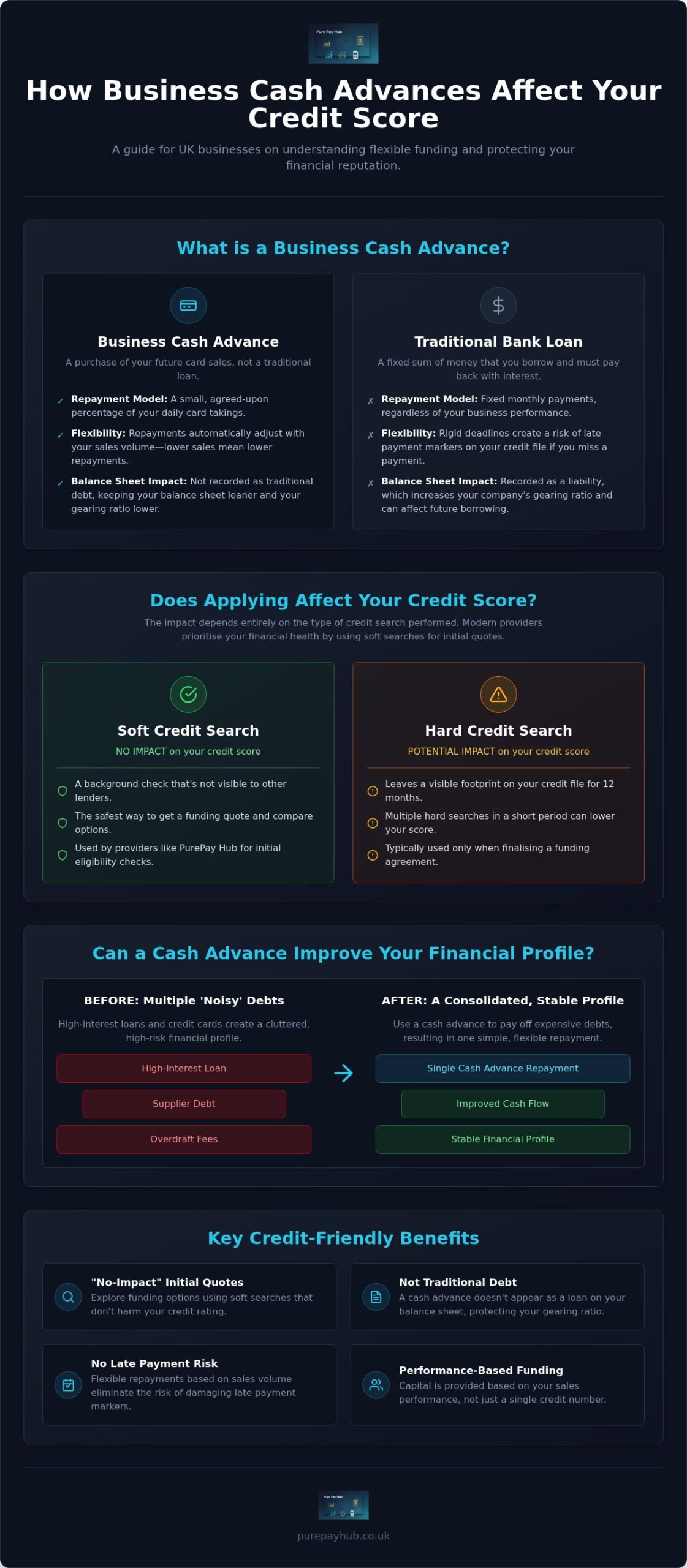
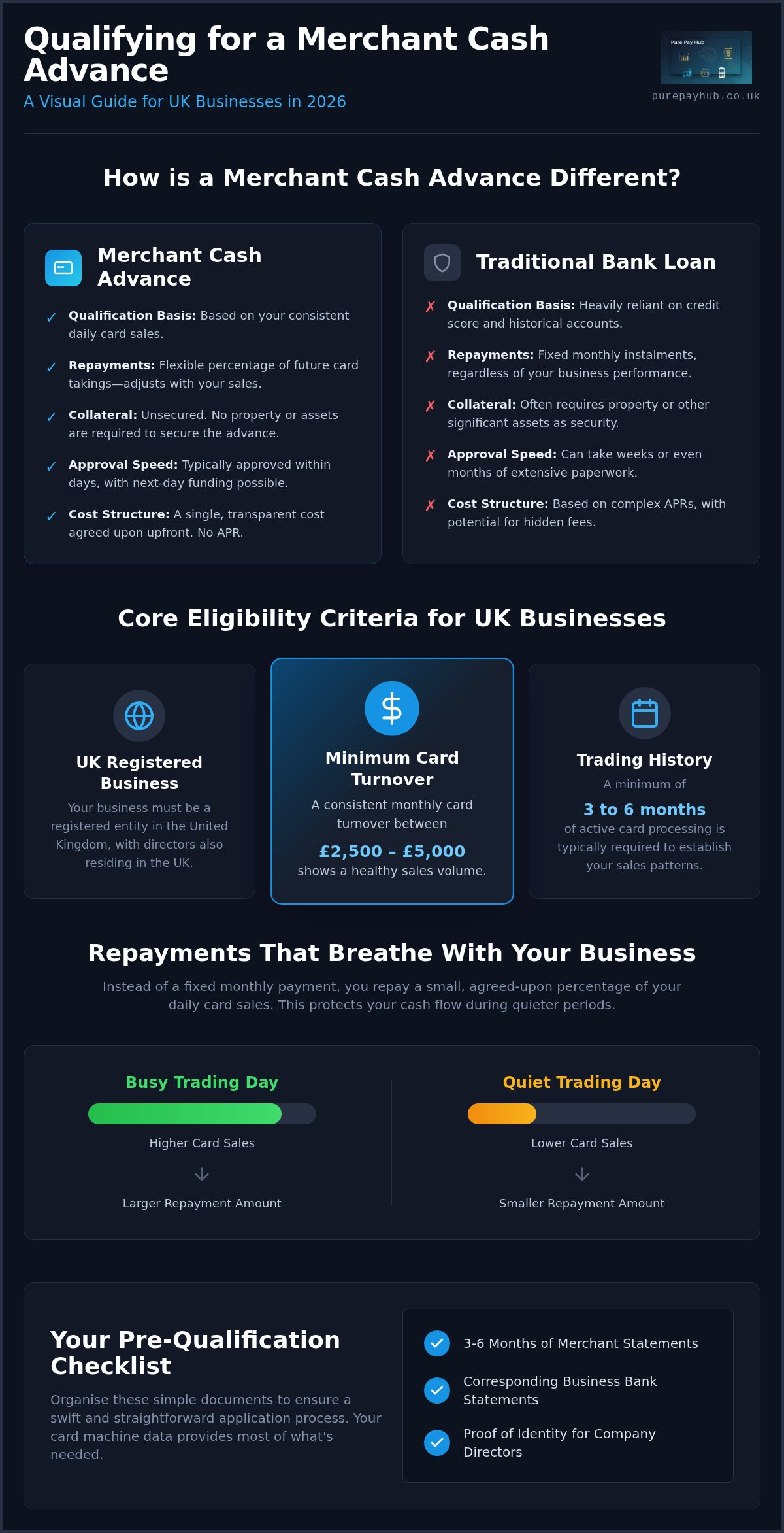
A Merchant Cash Advance (MCA) isn’t a loan in the traditional sense. It’s a purchase of your future credit and debit card sales. Instead of receiving a lump sum and paying it back in fixed monthly instalments, you receive an advance on revenue you haven’t earned yet. This fundamental shift changes everything about how you access capital. Traditional lenders often get bogged down in years of historical accounts and complex balance sheets. When you’re qualifying for a merchant cash advance, the focus shifts to the health of your daily trade.
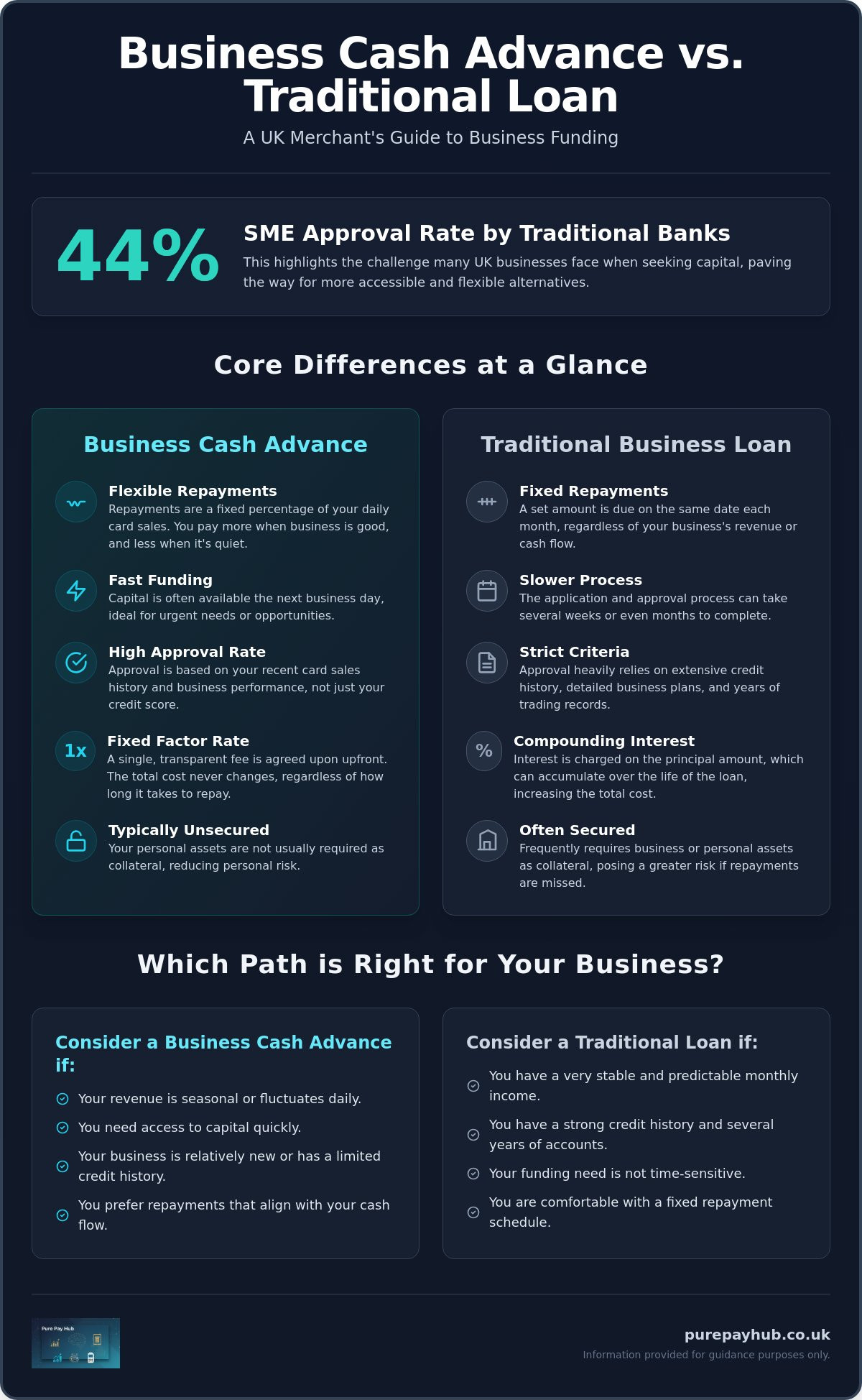
The most reassuring aspect for many owners is the unsecured nature of the funding. You don’t need to put up your home, your vehicle, or your shop premises as collateral. The lender isn’t betting on your assets; they’re betting on your customers’ loyalty and your business’s ability to keep making sales. The repayment model is designed to breathe with your business volume. Because the repayment is a fixed percentage of your daily card takings, it automatically adjusts to your performance. If you have a busy Saturday, you pay back a bit more. If Monday is quiet, the repayment amount drops. It’s a fair partnership that protects your cash flow during the inevitable peaks and troughs of the British high street.
MCA vs Traditional Business Loans
Speed is where the MCA truly outshines high-street banks. Traditional business loans can take months of back-and-forth, requiring detailed business plans and endless meetings. Our no-nonsense approach favours card turnover data over hypothetical five-year projections. Most businesses can secure approval in days rather than weeks. There are no fixed monthly interest rates or APRs in the traditional sense. You agree on a total cost upfront, so you know exactly what the final figure will be from the very start. This transparency eliminates the stress of fluctuating rates or hidden fees that often plague standard bank products.
The Role of Your Card Machine in Funding
Your card terminal acts as the primary data source for the entire qualification process. It provides a real-time snapshot of your business performance that a static bank statement simply can’t match. Having a reliable merchant account setup is the first step toward securing these funds. It proves your business has a steady, consistent flow of card transactions. At PurePay Hub, our integrated systems make this data sharing completely transparent. Whether you use our Countertop Card Machine or a Mobile Card Machine, the data flows seamlessly to help us bridge the gap between your daily payments and the capital you need for growth. We use this real-time insight to provide a quick “yes” or “no,” allowing you to focus on running your business rather than chasing paperwork.
The Core Eligibility Criteria for UK Businesses
Securing the capital you need shouldn’t feel like a battle with a faceless institution. While traditional banks focus on what you own, the criteria for qualifying for a merchant cash advance are built around what you actually do. To be eligible, your business must be a UK-registered entity with directors residing in the UK. Most importantly, you need a consistent history of card transactions. Typically, lenders look for a minimum monthly card turnover between £2,500 and £5,000. This ensures there’s enough volume to facilitate a smooth repayment process without squeezing your daily cash flow.
Analysing Your Monthly Card Turnover
Lenders don’t just look at your total bank balance; they isolate your card-based transactions specifically. This includes everything processed through your countertop units, portable devices, or even digital payment links. Lenders look for stability. They prefer to see a steady average rather than one massive peak month followed by silence. If you use multiple card machines across different sites, all that data counts toward your total. This combined volume often makes you a stronger candidate for higher funding amounts. It’s about the reliability of your revenue, not just the final number on a spreadsheet.
Trading History and Business Stability
Consistency is your greatest asset when qualifying for a merchant cash advance. The trading history rule generally requires 3 to 6 months of active card processing. This period gives lenders enough data to understand your business behaviour and transaction patterns. If your business is seasonal, don’t panic. Lenders look for viability over the long term. They want to see that even during quieter months, your business remains active and engaged with its customers. Providing 6 months of merchant statements allows them to see the full picture of your trading cycle. This transparency often leads to more favourable terms and a quicker approval.
Retail and hospitality are often the favourite candidates for this type of funding. These sectors naturally handle high volumes of daily card sales, which provides a predictable stream of data. Whether you run a local cafe or a boutique clothing shop, your frequent transactions prove your business is alive and kicking. It’s about showing that your customers are there, day in and day out, supporting your growth.
Does Your Credit Score Affect MCA Qualification?
Many business owners assume a less-than-perfect credit score is an immediate deal-breaker. When you’re qualifying for a merchant cash advance, this simply isn’t the case. While traditional banks might reject an application based on a single late payment from three years ago, MCA providers take a more holistic view. They understand that a credit score is just one chapter of your story, not the entire book. Your ability to generate consistent sales today is far more important than a historic financial hiccup.
It’s vital to distinguish between your personal credit score and your business credit profile. MCA providers often look at both, but they place far more weight on how your company operates day-to-day. Most reputable providers use “soft searches” during the initial application phase. These checks allow them to assess your eligibility without leaving a visible footprint on your credit file or lowering your score. It’s a risk-free way to explore your options without the anxiety of damaging your standing with other lenders.
The “Merchant Health” Factor
Lenders are primarily interested in what we call “merchant health.” This metric looks at the quality of your card transactions rather than just your borrowing history. A business with a mediocre credit score but a low chargeback ratio is often a very attractive candidate. Lenders look for several key indicators of stability:
- Low Chargeback Ratios: Frequent disputes suggest operational risks.
- Refund Frequency: High refund rates can signal issues with product quality or customer satisfaction.
- Transaction Consistency: Regular daily or weekly activity proves a loyal customer base.
If your merchant account history is clean and shows regular activity, it proves your business is stable and reliable. A healthy flow of customers through your shop or restaurant often speaks louder than a number on a credit report. This focus on real-time performance is exactly what makes qualifying for a merchant cash advance a fairer process for growing businesses.
Improving Your Chances with a Lower Score
If you’re worried about your score, there are practical steps you can take to strengthen your application. Start by cleaning up your business bank statements. Avoid unnecessary overdraft usage or returned payments in the months leading up to your request. Providing a longer history, perhaps six months of data instead of three, can also build significant trust. It shows the lender that your success isn’t a fluke. Using a transparent partner like PurePay Hub allows you to present clear, integrated data from your card machines. This level of clarity makes it much easier for a lender to see the true strength of your business, regardless of your historic credit rating.
Your Pre-Qualification Checklist: Getting Documents Ready
Speed is one of the greatest advantages of this funding model. However, a next-day decision depends entirely on your preparation. Having a clear, organised digital folder ready to go will significantly streamline the process of qualifying for a merchant cash advance. Most lenders require 3 to 6 months of recent data to assess your business health accurately. This isn’t just about showing you have money coming in. It’s about proving the consistency and reliability of your trade.
Before you begin your application, ensure you have the following essentials to hand:
- Merchant Account Statements: 3-6 months of reports showing your card transaction history.
- Business Bank Statements: A matching period of bank data to verify where your funds are settled.
- VAT or Companies House Information: Your registration number and official business address.
- Active Card Machine Contract: Proof that your terminal services are current and operational.
- Narrative for Turnover Shifts: A brief note explaining any significant dips or spikes in your recent sales.
Organising Your Merchant Statements
Lenders need to see the raw data behind your card sales. When you download your monthly processing reports, categorise them by month to avoid confusion. Lenders focus specifically on your gross sales figures before any processing fees are deducted. They also look for next-day funding patterns. If your merchant account settles funds daily, it signals a healthy, active relationship with your provider. This level of detail builds immediate trust. If you’re ready to move forward, you can apply for a Business Cash Advance today with your prepared documents.
Verification of Business Ownership
Transparency is the foundation of a good partnership. You’ll need to provide standard proof of identity and address for all UK-based directors. This usually includes a valid passport or driving licence alongside a recent utility bill. If you operate from physical premises, have your lease or rental agreement ready. Lenders also check your SIC code on Companies House to ensure your business is correctly categorised. A mismatch here can cause unnecessary delays. Ensuring your official records are up to date is a simple but vital step in the qualification journey. It proves your business is a stable, registered entity ready for its next stage of development.
How PurePay Hub Facilitates Your Business Cash Advance
PurePay Hub acts as a fair partner for regional business owners across the UK. We bridge the gap between your daily card payments and the capital you need to scale. Our no-nonsense approach prioritises your current trading performance over rigid, outdated banking criteria. By using real-time data from your card terminal, we simplify the process of qualifying for a merchant cash advance. We focus on your potential, not just your paperwork. This modern approach to finance ensures that dependable businesses can access growth funds without the stress of traditional collateral requirements.
Our nationwide support team understands the unique challenges of the local merchant community. We provide a transparent fee structure that eliminates the fear of hidden costs. You deserve a financial ally that speaks your language and respects your time. We provide the tools to help your business thrive, from reliable card processing to the capital required for your next big project. Our goal is to lead you from a state of frustration with high-street banks to a position of informed confidence.
Seamless Integration with Your Card Machine
Efficiency is key to a successful partnership. Having your card processing and your Business Cash Advance under one umbrella removes unnecessary friction. Our Countertop Card Machine and Mobile Card Machine systems provide the transparency needed to make quick decisions. Repayments happen automatically as a fixed percentage of your daily card takings. You only pay back when you make a sale. This ensures your cash flow remains stable even during quieter trading periods. We maintain a strict commitment to professional transparency; this means there are no hidden markups or confusing fee structures to worry about.
Fast Onboarding and Next-Day Access
Time is often your most precious resource. Our application process is designed for speed and clarity. Once you submit your documentation, we aim for approval within 24 hours. The excitement of receiving funds within 24 to 48 hours allows you to act on opportunities immediately. Whether you need to restock for a busy season or refurbish your premises, we ensure the capital is there when it matters most. We pride ourselves on being a stabilizing force for your finances, offering next-day funding that keeps your momentum high.
Check your eligibility for a Business Cash Advance today and see how we can support your growth journey with a fair, flexible funding solution.
Take the Next Step Toward Flexible Funding
Securing capital shouldn’t be a source of stress for your business. By focusing on your daily card sales rather than rigid historical accounts, qualifying for a merchant cash advance becomes a realistic path for growth in 2026. You now have a clear understanding of the turnover requirements, the essential documents needed, and why a less-than-perfect credit score isn’t a barrier. This model ensures your repayments breathe with your business volume, protecting your cash flow during quieter periods.
PurePay Hub is here to act as your supportive business ally. We offer a transparent, no-nonsense approach that puts you back in control of your finances. You can expect next-day access to funds and simple percentage-based repayments that align with your actual sales. There are no fixed monthly interest rates to worry about; just a fair partnership designed to help you thrive.
Apply for your Business Cash Advance with PurePay Hub today and unlock the capital your business deserves. We look forward to helping you reach your next milestone with confidence and clarity.
Frequently Asked Questions
What is the minimum turnover to qualify for a merchant cash advance?
Most UK providers require a minimum monthly card turnover of between £2,500 and £5,000. This threshold ensures your business generates enough consistent card revenue to support the flexible repayment structure without straining your daily operations. Lenders specifically isolate your credit and debit card transactions from cash sales to determine the exact amount you can access.
How long does my business need to be trading to get an MCA?
Your business typically needs a trading history of at least 3 to 6 months to be eligible for funding. This period provides lenders with enough processing data to understand your transaction patterns and seasonal trends. Providing six months of consistent merchant statements is often the gold standard for securing the most favourable terms and a higher advance amount.
Can I qualify for a merchant cash advance with a bad credit score?
Yes, you can still succeed in qualifying for a merchant cash advance even with a less-than-perfect credit score. Lenders prioritse your recent card terminal data and “merchant health” over historic credit mistakes. Because the advance is based on future sales, your ability to generate daily revenue today is far more important than a past late payment on a credit report.
Do I need to provide a personal guarantee for a business cash advance?
Most merchant cash advances are unsecured and do not require a personal guarantee or physical collateral like your home or premises. The funding is a purchase of future revenue rather than a traditional loan, which significantly reduces the risk to your personal assets. This makes it a reassuring and fair option for independent business owners who want to fund growth safely.
How much can my business realistically qualify for?
You can realistically qualify for an advance equivalent to 100% to 200% of your average monthly card turnover. For example, a restaurant processing £15,000 a month through their card machine could typically access between £15,000 and £30,000. Lenders use your historical processing data to ensure the advance is manageable and aligns perfectly with your business’s natural rhythm.
What industries are most likely to be approved for an MCA?
Retail and hospitality sectors are the most common candidates for approval because they handle high volumes of daily card transactions. Restaurants, bars, hair salons, and boutique shops provide the consistent data stream that lenders prefer. However, any UK business with a steady flow of card-based revenue, including e-commerce sites and local garages, can successfully apply for this funding.
Will an MCA affect my ability to take other business loans?
An MCA typically does not impact your ability to secure other finance because it isn’t classified as traditional debt. Since it is a sale of future revenue, it doesn’t usually appear on your business credit profile in the same way a bank loan would. You should, however, consider your total daily cash flow to ensure you can comfortably manage all your financial commitments simultaneously.
How quickly can I get the funds once I qualify?
You can often receive the funds in your business bank account within 24 to 48 hours of approval. The application process is designed for speed, with many decisions reached on the same day you submit your documents. This rapid turnaround makes it an ideal solution for businesses that need to act quickly on stock opportunities or urgent equipment repairs.